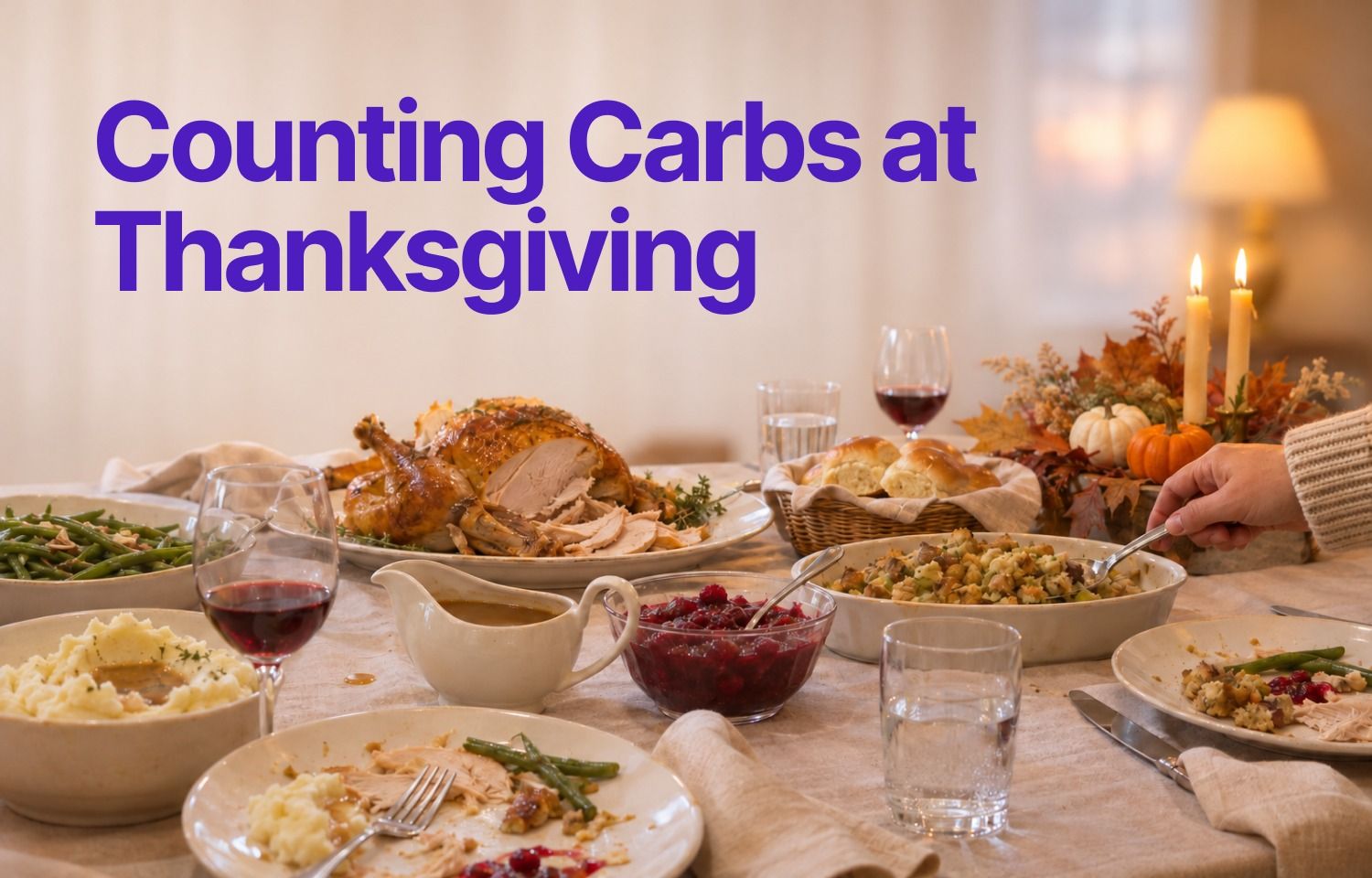
Quick answer: Count Thanksgiving dinner one dish at a time. Give the stuffing, mashed potatoes, gravy, cranberry sauce and dessert their own line, take the carbs from the package label or the recipe, and scale that number to the amount on your plate. A published holiday chart is a useful starting point when there's no recipe, though it won't match every family's version of a dish.
On a Thanksgiving plate, the spoonful of cranberry sauce can carry more carbs than the stuffing next to it. A holiday carb guide from Breakthrough T1D lists a quarter cup of cranberry sauce at about 25 g of carbohydrate and a half cup of stuffing at about 20 g. Stuffing and mashed potatoes add up quickly too, even though they don't taste sweet, because grains and potatoes are starches.
What a published chart can tell you
The Breakthrough T1D guide lists approximate carb values for the dishes most people expect on the table, which makes it a quick way to see which foods need a line in your count. Each entry comes with a household portion, like a half cup or a quarter cup, so you can compare it with what you actually scooped. The values describe a typical version of each dish, though, and your family's recipe can land higher or lower.
| Food | Portion | Carbs | Can vary with |
|---|---|---|---|
| Mashed potatoes | 1 cup | ~30 g | How they were made |
| Cranberry sauce | ¼ cup | ~25 g | Canned or homemade, and the brand |
| Stuffing | ½ cup | ~20 g | The recipe |
| Green bean casserole | ½ cup | ~9 g | The recipe |
| Green beans, plain | ½ cup | ~5 g | Little, since it’s just the vegetable |
| Gravy | ¼ cup | ~4 g | The thickener and recipe |
Source: Breakthrough T1D Thanksgiving Carb Count Guide, page 3. Portions differ by dish, so compare against what you actually served. These are typical values, not recommended portions.
Green beans show how much the recipe matters: plain green beans come in at about 5 g per half cup and green bean casserole at about 9 g, because the casserole's other ingredients bring carbs the vegetable doesn't have on its own.
How to work out the carbs in your portion
The basics of carb counting work the same way at Thanksgiving as any other day. For anything from a package, start with the grams of Total Carbohydrate for one label serving and scale them to the weight of the food on your plate:
Carbs in your portion = carbs per label serving × (your portion's weight ÷ label serving weight)
If you plated twice the label's serving weight, you count twice the label's carbs. Make sure the label matches the food in the state you're weighing it, since a box of dry stuffing mix and a scoop of prepared stuffing are two different things. The label's serving size is only the amount the nutrition numbers describe, and the Total Carbohydrate line already includes sugars and fiber, so there's no need to add them a second time. Some people subtract fiber to get a net carb number, and net carbs vs total carbs walks through how the two compare.
Homemade dishes take one extra step, because the recipe takes the place of the label. Add up the carbs from every ingredient that went into the dish, weigh the whole batch once it's cooked, and scale the total to your portion:
Carbs in your portion = carbs in the whole recipe × (your portion's weight ÷ finished dish weight)
The math assumes the ingredients are spread evenly through the dish, so the result is a recipe-based estimate rather than an exact count. Family recipes rarely come with precise amounts, which is one reason carb estimates for mixed dishes can drift even when the portion is weighed.
A simple ledger for the whole meal
A ledger is just a list with one row per food, and it keeps the gravy and cranberry sauce from disappearing into a single "turkey dinner" entry. Turkey gets its own row too, with a note on how it was cooked, since a glaze or a sweet rub can add carbs to meat that would otherwise have very few. If you're filling a sampler plate with a spoonful of everything, weigh each side on its own, because the total plate weight can't tell you how much of it is stuffing and how much is potatoes. Dessert works the same way: give it a row, include any toppings, and keep a dinner subtotal and a dessert subtotal so you can see both.
| Dish | Get the carbs from | Write down |
|---|---|---|
| Turkey | Recipe, if glazed or rubbed | How it was cooked, weight served |
| Stuffing | Recipe, plus the finished dish weight | Weight of your portion |
| Mashed potatoes | Recipe or package label | Weight of your portion |
| Green beans | Plain vegetable entry, or the casserole recipe | Which version, weight served |
| Gravy | Recipe or gravy mix label | Thickener, amount poured |
| Cranberry sauce | Can label or recipe | Canned or homemade, amount |
| Dessert | Recipe or package label | Slice weight, toppings |
| Totals | Dinner subtotal + dessert subtotal | Anything left out, like drinks |
Work out each row from the label or recipe for the amount you actually served, and weigh each dish separately. No recipe? Use the chart entry and write “recipe unavailable” next to that row.
If you go back for more, only that row changes. Say you end up with one and a half times the stuffing you first weighed: multiply the stuffing row by one and a half, leave every other row as it was, and add them up again.
Counting at someone else's table
A host can usually answer a specific question about one dish much more easily than "How many carbs are in dinner?" Asking before the food reaches the table also gives them time to find the package or the recipe card without interrupting the meal. These four questions cover most of what you'll need:
- What thickens the gravy? Flour, cornstarch and packaged gravy mix all add carbs, so ask which one went in and whether the package or recipe is still around.
- Is the cranberry sauce canned or homemade? For canned sauce the label has what you need, and for homemade sauce it helps to ask for the recipe and how much sugar went in.
- What's in the stuffing besides the bread? Dried fruit, sausage and butter all change the recipe, so an entry for plain bread won't describe the finished dish.
- How big is the serving spoon? Spoon one scoop into a measuring cup before dinner, and you'll know what "a spoonful" means at this table.
When there's no recipe to be had, the chart entry is your best guess, and that's fine as long as you label it. Write that next to the row, something like "homemade stuffing, recipe unavailable," so the rough number doesn't get mixed up with the ones you worked out from a label.
What a carb total can and can't tell you
A carb total only covers the food you counted, so a forgotten sauce or an unlogged second helping sits outside it. A total also can't tell you how your glucose may respond, because the response depends on what's eaten with it, and two meals with similar totals can peak at very different times. Drinks aren't part of the ledger either, so list them beside it, especially wine or cocktails, since alcohol can make glucose curves hard to read. None of the numbers here are carb targets for Thanksgiving dinner. If holiday meals raise questions about your eating plan, your diabetes care team can help you work out how these dishes fit into it.
Checking your plate in SNAQ
If you log meals in SNAQ, a photo of your plate is the quickest way to get a first count: the AI identifies the foods and estimates calories, carbs, protein, fat and fiber in a few seconds. Thanksgiving plates are tricky for any photo, though. Gravy poured over stuffing hides what's underneath and the butter in a dish doesn't show up at all, so meal photos still need a portion check. Manual logging fills those gaps, like the gravy you served from a separate bowl or the butter you know went into the stuffing.
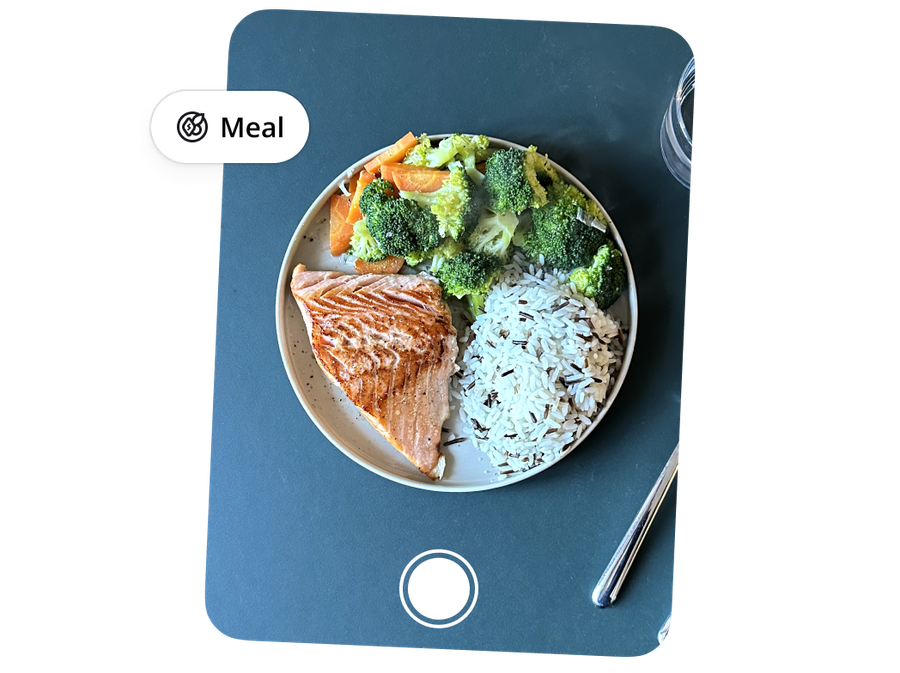
Before you save dinner, put SNAQ's stuffing and cranberry sauce entries next to your own ledger and check them against the amounts you actually served. Anything the photo missed, like a second scoop of potatoes, can go in by hand.