Quick answer: Break the dish into its carb sources (potatoes, beans, rice or pasta, thickeners), estimate each portion against something you can picture, and allow for hidden carbs like flour or sugar. Treat the total as a starting estimate, log it, and note what your bowl looked like so you can compare the same dish next time.
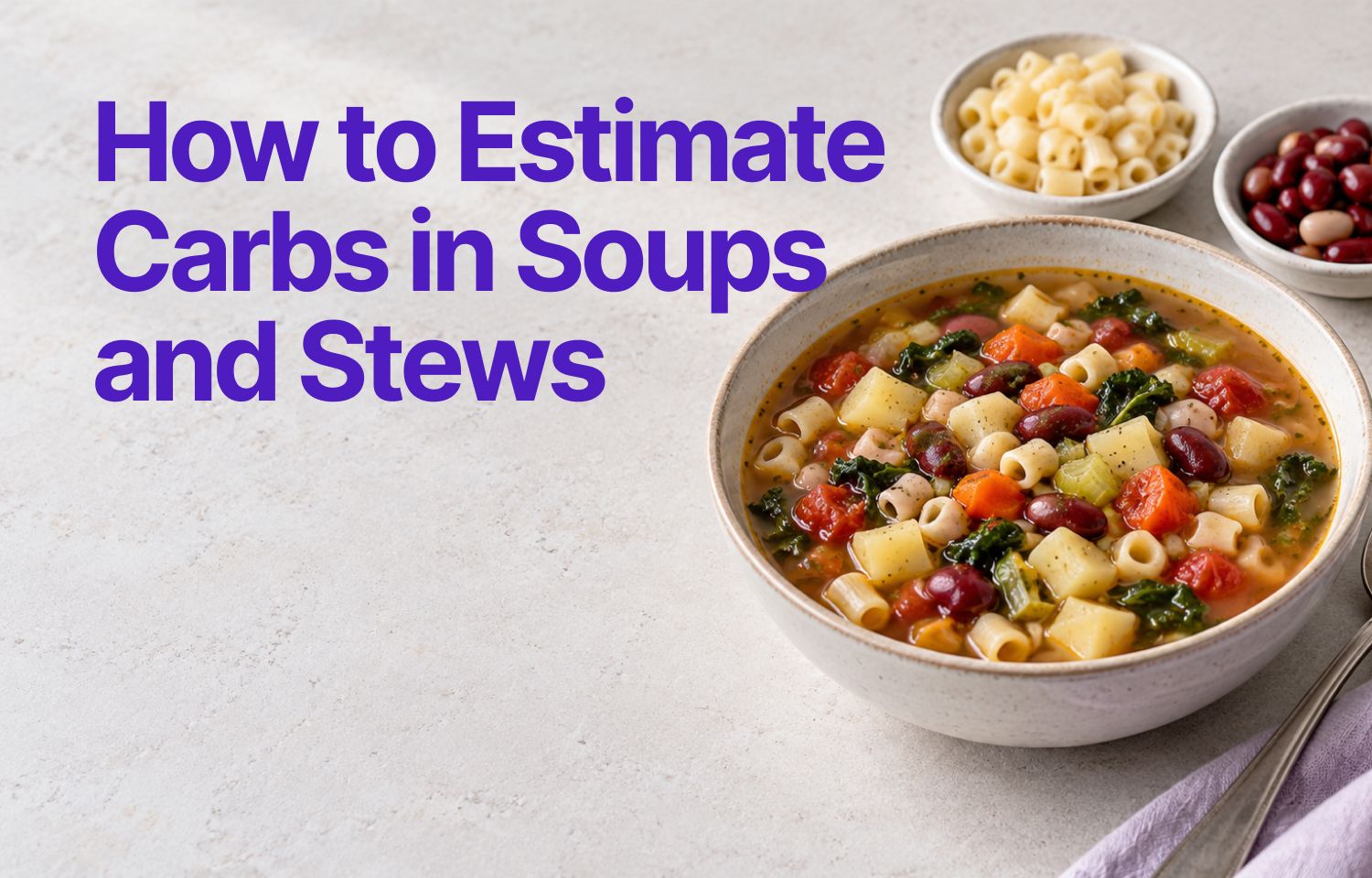
Most carb-counting advice assumes you have a label or a recipe, and a bowl of homemade minestrone at a friend's house comes with neither, just beans, pasta, vegetables and broth you didn't cook yourself. If you count carbs with diabetes, that can feel impossible, but a mixed dish gets much easier to estimate once you see the bowl as a handful of separate ingredients.
Why are mixed dishes harder to estimate?
A grilled chicken breast with a side of rice is easy to size up, because you can see each part and judge each portion separately. A mixed dish blends everything into one serving. The carbs come from grains, beans, starchy vegetables, thickeners, sauces and sweeteners, and some are easy to spot while others dissolve into the broth or sit under a topping. Portion size matters more here, too, since two scoops of the same chili can carry very different carb totals depending on how much rice, beans or corn landed in each one.
How do you break a dish into its carb sources?
Mentally separate the dish back into its ingredients, then ask which of them carry carbs. A beef stew gets most of its carbs from potatoes, carrots, onions and the small amount of flour that thickens the sauce, while a chicken and rice soup leans on the rice, carrots and sometimes noodles (celery adds very little). A vegetable curry over rice usually has the rice, chickpeas or lentils, sweet potato or squash, and a tomato-based sauce that may include added sugar. Once you've listed the carb sources, estimate how much of each is in your bowl, and a rough figure for each one is enough.
How big is a serving of each carb source?
If you can see distinct pieces of pasta, potato or beans, compare them with a portion you know:
- Cooked pasta: about 1 cup is roughly 43 grams of carbs, so half a cup is about 22 grams. Your fist is a handy rough guide for a cup, though hands vary, so check it once against a measuring cup.
- Potato: one medium baked potato (about 2¼ to 3¼ inches across) has around 36 grams.
- Beans: half a cup of canned kidney beans has roughly 19 grams. Other beans differ a little.
| Ingredient | How to eyeball it | Approximate carbs |
|---|---|---|
| Cooked pasta | 1 cup (roughly a fist-sized scoop), or half a cup for a smaller scoop | About 43 g per cup, about 22 g per half cup |
| Baked potato | 1 medium potato, about 2¼ to 3¼ inches across | About 36 g |
| Canned kidney beans | Half a cup | About 19 g |
| Table sugar | 1 tablespoon, as in a sweetened sauce or glaze | About 12 to 13 g |
How to read this: these are rounded values based on USDA nutrient data. Varieties, brands and cooking methods change the numbers, so use them as a starting point for your own bowl.
If the dish is more liquid than solid, picture how much of your bowl is broth and how much is chunky ingredients, since plain broth adds few carbs unless it has been thickened or sweetened. For layered dishes like lasagna or baked pasta, look at how thick the pasta layers are and how much of the plate the serving covers. These vary a lot from recipe to recipe, so treat your number as a rough guide and note what you saw.
Where do hidden carbs come from?
Some carbs don't show up on the surface:
- Thickeners. Flour, cornstarch and roux (flour cooked in fat) thicken soups, stews and gravies, and they all carry carbs.
- Sweeteners. Barbecue-style beans, glazed vegetables, tomato sauces and some curries often contain added sugar. One tablespoon of sugar is about 12 to 13 grams of carbs.
- Breading or batter. Coated proteins in a casserole or stir-fry add carbs that are hard to see once the dish is assembled.
- Creamy sauces. Dairy-based sauces in creamy soups or pasta bakes often use flour or starch as a base.
If someone else cooked, just ask: "Is there any flour, sugar or starch in this?" Most home cooks know whether they thickened a sauce or added honey.
Why does the same dish vary from bowl to bowl?
Scoop from the top of the pot and you'll get more broth, while a scoop from the bottom brings up more beans, pasta or potatoes. A homemade stew also rarely comes out the same twice, since one batch has extra potatoes, the next has a thicker tomato base, and this time the cook added honey. That's why your own bowl matters more than a recipe estimate online: a recipe might say "8 servings, 35 grams of carbs each," but your portion could be bigger, smaller or scooped from a different part of the pot. For a closer look at how often this trips people up, our article on why carb estimates fail in real-world meals covers seven common situations.
If you're the cook, you can weigh or measure the main carb ingredients before they go in and divide the total by the number of servings, which gives you a much more exact per-serving number. If someone else is cooking, watch for patterns, because after a few servings you'll notice whether this cook tends to make a heavier or lighter version and can adjust your starting guess.
What if you can't break the dish down?
Pureed soups, smooth curries and finely ground casseroles hide their carb sources completely, so a fallback helps:
- Compare it with a similar dish. If a butternut squash soup reminds you of a creamy vegetable soup you've logged before, start from that entry.
- Look for a close match with published nutrition info. Many restaurants and packaged soups list nutrition facts, and a similar dish with a label gives you a better anchor than a blind guess.
- Pick a middle-of-the-range number and log it. An imperfect entry you can learn from beats skipping the log because you couldn't get the exact figure.
How can photo logging help with mixed dishes?
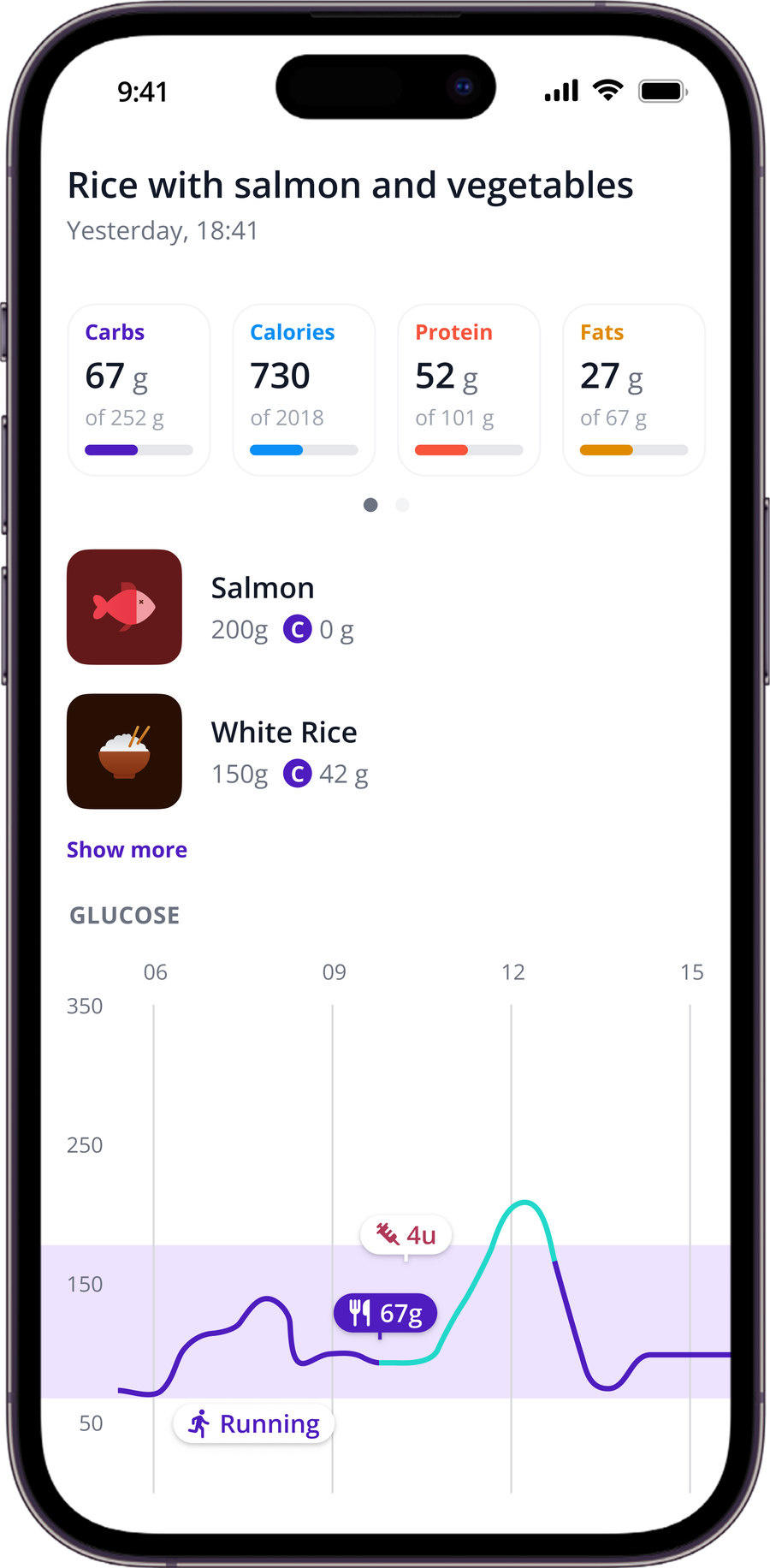
SNAQ's photo logging identifies what it can see in your bowl, such as pasta, beans or potatoes, and gives you a starting carb estimate. It does well with dishes that have distinct, recognizable pieces, like rice bowls, grain salads or plated meals with separate sides. What it can't see is what's hidden, like a thickened broth, a layer under the cheese or a spoonful of sugar in the sauce, which is why blended soups and creamy casseroles are the hardest for any photo tool.
Portion size is the other tough part: a tool can recognize pasta, beans and tomato sauce in a bowl, but judging how much of each sits in a three-dimensional bowl from a flat picture is hard, and our article on why portion size is the hard part of photo-based carb counting goes deeper on that. So use the photo as a first draft. Take it from directly above in good light, then edit or add ingredients so the entry matches what you know about the dish, and mention it if the bowl was heavy on beans.
How do you get better at it over time?
Each time you eat a mixed dish, log it with a quick note on what the bowl looked like, such as heavy on rice, lots of beans, or a thick sauce. The next time that dish shows up, you can put the entries side by side and see how the portions differed. If you use a CGM (a continuous glucose monitor, a sensor that tracks your glucose through the day), you can also look at the glucose curve next to each meal, which is easier to read when the same dish appears more than once. Patterns like these are worth bringing to your care team, who can help you interpret them and set your personal targets.
You don't need to do this for every bite, either. If the mixed dish is a small side, a rough estimate is fine, and if it's most of your meal, it deserves a closer look. It also works to take the photo first, eat, and fill in the details afterward once you know more about the dish.
Where to start
A good place to start is the mixed dishes you eat most often, since those are the ones you'll get to compare. SNAQ lets you log a mixed meal with a photo, edit the ingredients so the entry fits your bowl, and, if you use a CGM, see your glucose curve alongside the meal later.