

Quick answer: Prebiotic fiber feeds bacteria in your gut that produce compounds linked to insulin sensitivity and glucose metabolism, and some studies show small improvements in fasting and after-meal glucose with regular intake. The effect is small and varies a lot from person to person, so it works best as part of a broader fiber strategy, not a stand-in for one.
You've probably seen the claims. Eat more prebiotic fiber, feed your gut bacteria, stabilize your blood sugar. The promises sound simple, even transformative.
The research is messier than that.
Prebiotic fiber does interact with the gut microbiome. The gut microbiome does interact with glucose metabolism. What doesn't follow is a straight line from a supplement scoop to a flatter CGM curve, no matter what the marketing implies.
What Prebiotic Fiber Actually Is
Prebiotic fiber is a type of non-digestible carbohydrate that feeds beneficial bacteria in your gut. Common examples include inulin, chicory root fiber, and certain oligosaccharides found in foods like garlic, onions, asparagus, and bananas.
Unlike soluble or insoluble fiber, prebiotics are defined by what they do in your digestive system. They resist digestion in your upper GI tract and reach your colon intact, where gut bacteria ferment them into short-chain fatty acids.
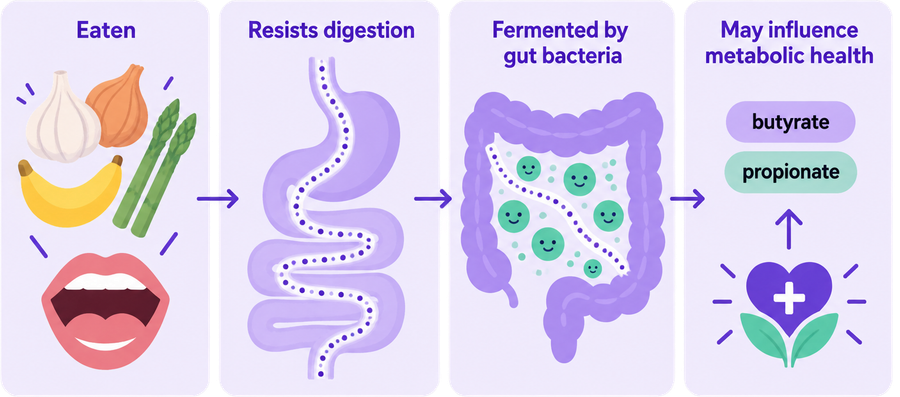
Those short-chain fatty acids, especially butyrate and propionate, may influence metabolic health in several ways. Some research suggests they affect insulin sensitivity, reduce inflammation, and slow glucose absorption. That's also where the mechanism gets complicated.
The Gut Microbiome and Glucose Metabolism: What We Know
A few patterns are clear. People with higher gut microbiome diversity tend to have better metabolic markers, including improved insulin sensitivity and lower fasting glucose. Studies have also linked certain bacterial profiles with better glucose regulation in people with Type 2 diabetes.
Some clinical trials have shown that increasing prebiotic fiber intake, especially through inulin, can modestly improve fasting glucose and after-meal glucose levels in people with insulin resistance or Type 2 diabetes. These effects are real, but small and variable.
The problem is individual variability. Two people eating the same prebiotic fiber supplement may see completely different glucose responses, or no response at all. Your baseline gut microbiome composition, diet history, medication use, and existing metabolic state all influence how your body reacts. That makes prebiotic fiber less like a drug and more like a dietary experiment: small, uneven results.
What the Research Cannot Yet Tell Us
Here's what remains unresolved. We don't know which specific prebiotic fibers work best for which people. We don't know the optimal dose, timing, or duration needed to see measurable glucose benefits. We don't know if the effects hold long-term, or if the gut microbiome adapts and returns to baseline over time.
Most studies are short, with small sample sizes and limited diversity. Many focus on people with prediabetes or Type 2 diabetes, not Type 1. And almost none track real-world data from a CGM, or continuous glucose monitor, the wearable sensor that shows glucose trends throughout the day, over weeks or months, the way you'd actually use one at home.
The evidence suggests potential, but not certainty. Prebiotic fiber may support blood sugar regulation by modulating gut health, but it doesn't work as a standalone strategy.
The Practical Middle Ground
So what's useful now? First, focus on whole-food sources of prebiotic fiber rather than isolated supplements. Foods like lentils, chickpeas, oats, garlic, onions, asparagus, and bananas deliver prebiotic fiber alongside other nutrients, including protein, fat, and additional fiber types that slow digestion and reduce glucose spikes.
Added fiber and natural fiber don't always affect glucose the same way. Whole foods tend to produce more predictable, gradual curves than foods with isolated fiber added back in. For a closer look at why, see Added Fiber vs. Natural Fiber: Does Your Glucose Respond the Same Way?
Second, treat prebiotic intake as part of a broader fiber strategy, not a magic bullet. Increasing total fiber intake, especially soluble fiber, has stronger and more consistent evidence for reducing after-meal glucose spikes. Some types of soluble fibers can help reduce post-meal blood sugar spikes by slowing gastric emptying and carbohydrate absorption.
Third, if you want to experiment with prebiotic fiber, track it like any other dietary change. Pick one prebiotic-rich food or supplement, eat it consistently for two weeks, and log meals alongside your CGM data. Look for patterns in your glucose response, digestive tolerance, and overall energy.
Don't expect dramatic overnight changes. If you see even a slight improvement in post-meal glucose curves or Time in Range after a few weeks, that's meaningful. If you don't, that's useful too.
What About Fiber Supplements?
Inulin, psyllium husk, and other prebiotic fiber supplements are widely available and generally safe at moderate doses. But there are trade-offs.
High doses of prebiotic fiber can cause bloating, gas, and digestive discomfort, especially if your current fiber intake is low. Start small, increase gradually, and pay attention to how your body responds.
Supplements also don't replace whole foods. A scoop of inulin powder in water won't give you the protein, fat, vitamins, or satiety you'd get from a bowl of lentil soup.
If you're already eating a varied diet with plenty of vegetables, legumes, and whole grains, adding a supplement may not change much. If your fiber intake is low and you're looking for an easy entry point, a supplement might help, but whole foods should still be the long-term goal.
For more practical guidance on increasing fiber without overdoing it, see Fibermaxxing With Diabetes: How Much Fiber Do You Actually Need?.
If you're on a GLP-1: these medications already slow how quickly food moves through your gut, which is part of why nausea, bloating, and fullness are common side effects. Adding a lot of prebiotic fiber on top of that, especially from concentrated supplements, can make those symptoms more noticeable. If you want to try it, start smaller than you might otherwise and lean toward whole-food sources first. What to Track While on GLP-1 When Appetite Changes covers other eating patterns worth watching on these medications.
How SNAQ Can Help You Test This
If you're managing type 2 diabetes or prediabetes and want to see whether prebiotic fiber makes a difference for you, SNAQ can help you run a structured experiment.
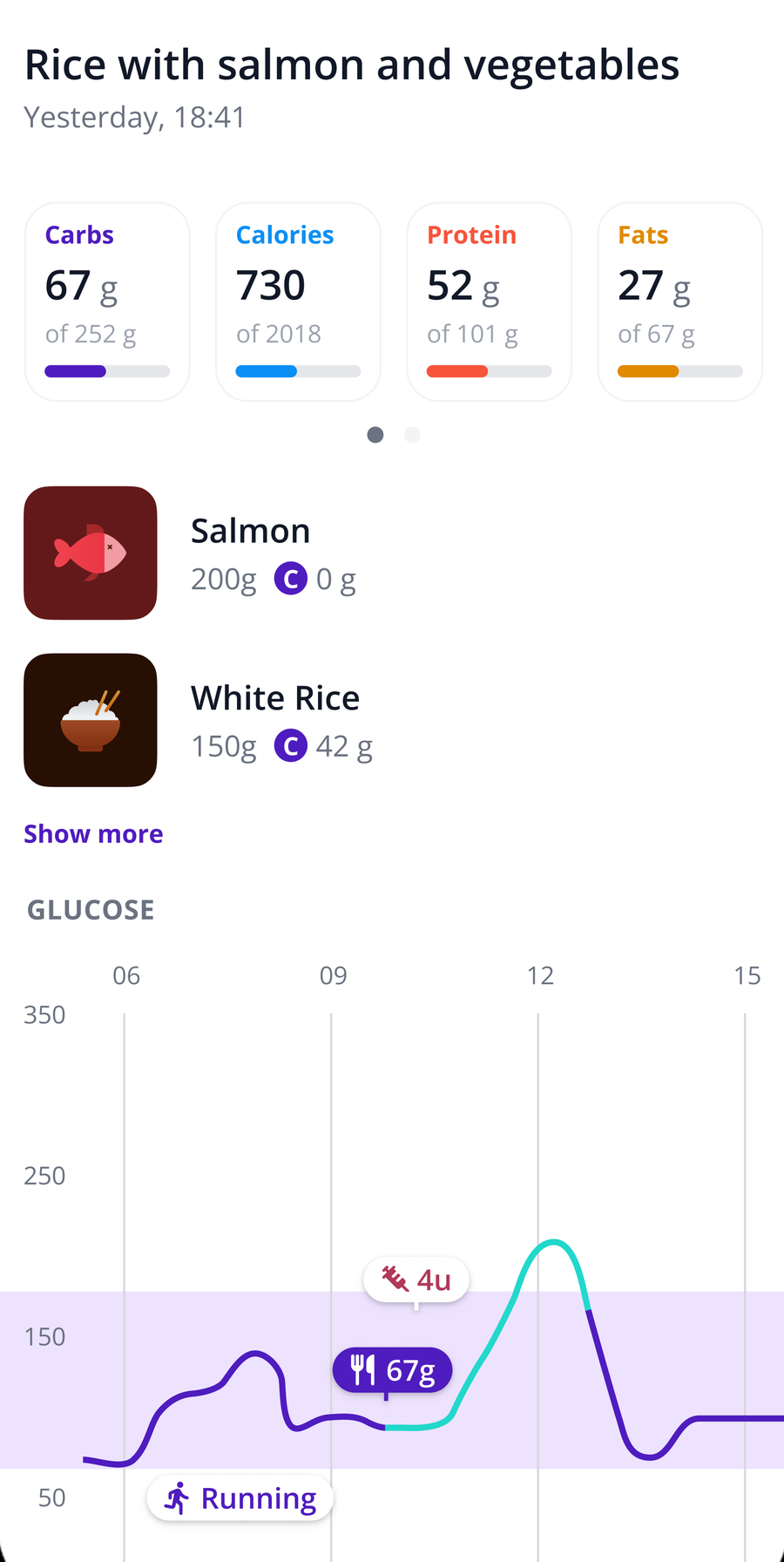
Log the same prebiotic-rich meal several times over two weeks. SNAQ places meal markers on your CGM graph, so you can compare glucose curves side by side. You can also log fiber intake, meal timing, portion size, and any digestive symptoms in the notes field.
After a few repetitions, patterns become clearer. You'll see whether the fiber consistently flattens your post-meal curve, whether timing matters, or whether your response varies day to day. SNAQ's AI Coach can also help you interpret the results and suggest small adjustments, like pairing prebiotic fiber with protein or fat to further slow digestion.
This won't give you lab-grade data. It'll give you a real sense of your own pattern, which is the part a study can't hand you. Download SNAQ to start tracking meals and glucose context in one place.