Quick answer: Cinnamon's effect on glucose is inconsistent across studies, and the trial behind its biggest reported benefit is now under a formal integrity review by its own journal. Any real effect is modest, shows up mainly in fasting glucose over weeks rather than after a single meal, and cinnamon is not a treatment for diabetes. The best way to know if it's doing anything for you is to track it yourself.
Cinnamon appears on most lists of "natural remedies for diabetes," usually with a confident percentage attached. If you've added it to your coffee or oatmeal and seen no difference on your CGM, that's consistent with the research, which is much less certain than those lists make it sound.
What the Clinical Evidence Shows
The human trials don't agree, and the trial with the largest reported effect is the one now under review.
That trial is from 2003. Sixty people with Type 2 diabetes took 1, 3 or 6 grams of cinnamon a day, and after 40 days their fasting glucose was 18 to 29 percent lower. In August 2025, Diabetes Care, the journal that published it, attached a formal Expression of Concern to the paper, flagging problems with the statistical methods, including differences between the study groups at the start that shouldn't happen in a properly randomized trial. The paper hasn't been retracted, but the journal's notice is a good reason to stop treating that 18 to 29 percent figure as settled.
A 2006 study tested a similar idea in 25 postmenopausal women with Type 2 diabetes, who took 1.5 grams of Cassia cinnamon a day for six weeks, and found no improvement in their glucose control. Another 2006 trial gave 79 people an extract equal to 3 grams of cinnamon a day for four months. Their fasting glucose fell by about 10 percent, compared with 3 percent on placebo, their A1C didn't change, and the people who started with the highest glucose saw the largest drops. If cinnamon helps at all, that second trial is probably closer to what it looks like in practice: a small change in fasting glucose that builds over months.
Researchers haven't pinned down why the results differ. The trials used different types and doses of cinnamon in different groups of people, whose glucose was controlled to different degrees at the start, and the most-cited one now has open questions about its data. No major diabetes guideline recommends cinnamon as part of standard care.
| Khan et al., 2003 | Vanschoonbeek et al., 2006 | |
|---|---|---|
| Population | 60 adults with Type 2 diabetes | 25 postmenopausal women with Type 2 diabetes |
| Dose & duration | 1–6g cinnamon daily, 40 days | 1.5g cinnamon daily, 6 weeks |
| Reported result | Fasting glucose down 18–29% | No change in fasting glucose or A1C |
| Current status | Under formal Expression of Concern (2025) for statistical issues | No known integrity concerns |
Why show both: these are the two most frequently cited human trials on cinnamon and glucose, and they point in different directions. That's the core reason the evidence is still considered inconsistent.
How Cinnamon Might Work (When It Does)
When cinnamon does show an effect, researchers usually point to its polyphenols, plant compounds that may help cells respond to insulin.
In lab experiments, compounds isolated from cinnamon increased insulin-dependent glucose metabolism in cells. Results like that come from isolated cells under controlled conditions, though, and it's still unclear whether they translate into a measurable glucose change when someone eats cinnamon as part of normal meals.
Cassia vs. Ceylon: Does the Type Matter?
Most supermarket cinnamon is Cassia, the cheaper variety. Ceylon, sometimes sold as "true cinnamon," costs more and is harder to find. The main difference for this question is coumarin, a compound that Cassia contains in much higher amounts and that can harm the liver in large doses.
Most of the glucose studies used Cassia, and there's no strong evidence that either type works better for glucose, so the more useful comparison is safety. Ceylon is generally considered the safer choice if you plan to take cinnamon daily in supplement-sized amounts.
| Khan et al., 2003 | Vanschoonbeek et al., 2006 | |
|---|---|---|
| Population | 60 adults with Type 2 diabetes | 25 postmenopausal women with Type 2 diabetes |
| Dose & duration | 1–6g cinnamon daily, 40 days | 1.5g cinnamon daily, 6 weeks |
| Reported result | Fasting glucose down 18–29% | No change in fasting glucose or A1C |
| Current status | Under formal Expression of Concern (2025) for statistical issues | No known integrity concerns |
Why show both: these are the two most frequently cited human trials on cinnamon and glucose, and they point in different directions. That's the core reason the evidence is still considered inconsistent.
What About Dosage?
There's no agreed-upon dose for glucose. Trials have used anywhere from 1 to 6 grams a day, roughly half a teaspoon to just over 2 teaspoons of ground cinnamon. Some used water-based extract capsules instead, which concentrate the polyphenols and generally contain much less coumarin.
Capsules vary a lot from brand to brand. Look for one that lists its coumarin content, and talk with your care team before starting, especially if you're on diabetes medications or have liver concerns.
Can Cinnamon Replace Diabetes Medications?
Nothing in the research suggests it can. At most, cinnamon may add a small benefit for some people alongside their treatment. It doesn't stand in for insulin, metformin, GLP-1s or anything else you've been prescribed, and any change to your treatment plan belongs in a conversation with your care team.
Safety and Interaction Considerations
The amount you'd sprinkle on toast or stir into yogurt is generally safe.
Supplements carry more risk because the doses are higher and taken every day. Over time, high doses of Cassia can damage the liver because of the coumarin. If you already have liver concerns, take blood thinners, or use several diabetes medications, check with your care team before you start a cinnamon supplement.
There's also a theoretical risk of cinnamon adding to the glucose-lowering effect of insulin or sulfonylureas (a class of diabetes tablets that also lowers blood sugar). Actual reports of hypoglycemia from cinnamon are rare, but if you take either one, raise it with your care team before you add cinnamon.
The Practical Takeaway
Cinnamon is unlikely to make a noticeable difference to your glucose on its own. As a low-risk addition it might help a little, alongside habits with stronger evidence behind them, like eating more fiber, adjusting portion sizes, or meal sequencing.
If you'd like to know whether it does anything for you, you can test it the way you'd test any other change to your meals:
- Pick one type and one amount, and stick with both for at least a week.
- Keep your meals and meal timing as steady as you can.
- Log what you eat and when, so the cinnamon week and the week without it are actually comparable.
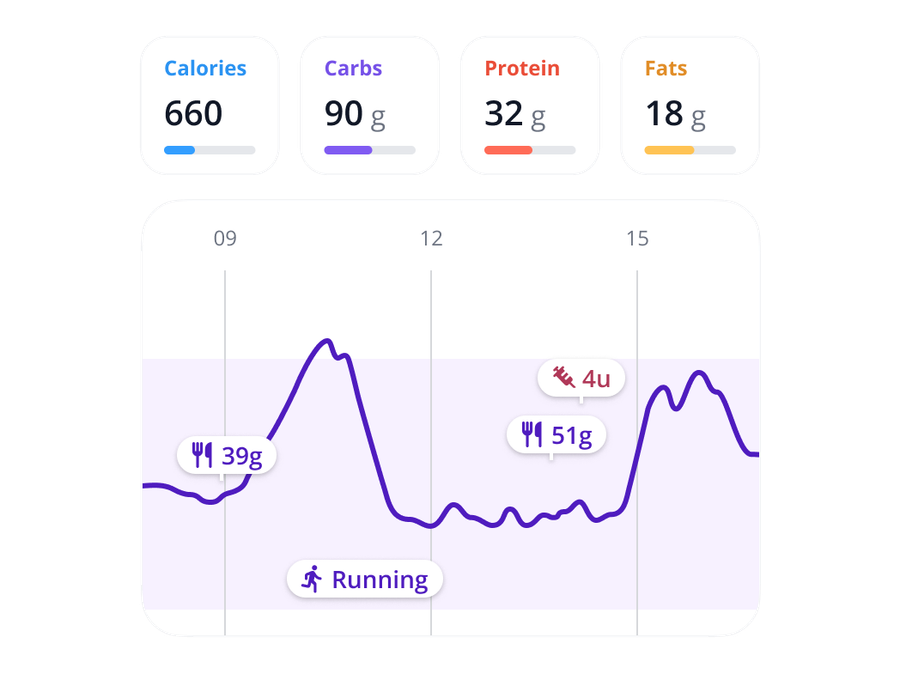
- If you're using a CGM, compare fasting glucose trends and post-meal curves across the two weeks.
Any difference is likely to be small, and you may not see one at all. Either result is useful to know before you spend money on months of capsules.
SNAQ can help you log meals, overlay glucose context, and compare repeated patterns across days or weeks, so you can judge cinnamon on two weeks of your own data. Download SNAQ to start your own two-week test.