Quick answer: Most of the carbs in a Mexican meal come from the starch base: tortillas, rice, beans, and chips. Grilled protein with vegetables and a smaller portion of one starch is usually the lowest-carb way to order, while burritos, quesadillas, and nachos stack several starches in one dish. Count the starch first, add sauces and toppings, then check how the meal actually went for you.
You thought you chose carefully. Chicken fajitas, no tortillas. Black beans on the side, some pico de gallo, a few chips while you waited. Two hours later, your glucose reading is higher than you expected.
Mexican food is hard to estimate because a lot of the carbs sit where you don't look: the starch under the meal, the sauce on top, the drink in your hand. This article shows where they hide, what to order, and how to count a Mexican meal in parts. At the end, we'll go back to that plate and add it up.
What should you order at a Mexican restaurant?
Grilled protein with vegetables and one starch in a smaller portion is the lowest-carb pattern on most Mexican menus. Burritos, quesadillas, and nachos stack several starches in one dish. The numbers below are built from the table in the next section, so you can see where each one comes from.
Lower-carb orders
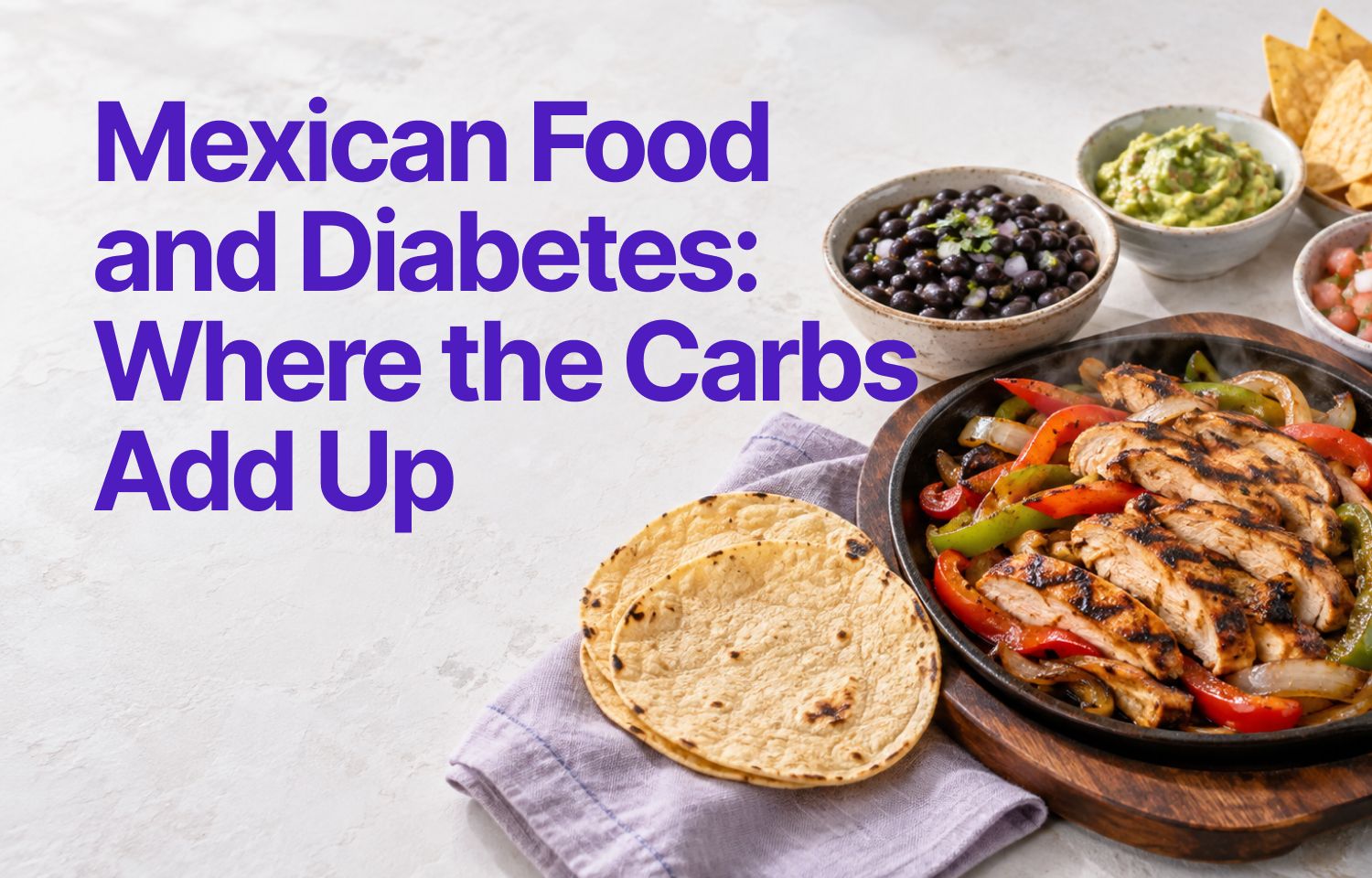
- Fajitas without tortillas: grilled chicken, steak, or shrimp with peppers and onions. Guacamole, cheese, sour cream, and lettuce add little carb. Watch the marinade, rice, and beans.
- Carne asada or pollo asado: grilled meat with a salad or grilled vegetables in place of rice and beans.
- Ceviche: raw fish cured in citrus, with minimal carbs on its own. Tostadas (flat fried tortillas) or chips served with it count like any other chips.
- Taco salad without the fried shell: lettuce, meat, cheese, and salsa are low in carbs. Beans, rice, and dressing change that, so count them.
Moderate-carb orders
- Tacos: two tacos with one corn tortilla each carry about 22 g of carbs from the tortillas. Some street-style tacos double up the tortillas, which brings that to about 44 g. Fillings and toppings come on top.
- Enchiladas: two corn tortillas add about 17 to 22 g. The sauce and any rice and beans on the side come on top. One enchilada with a salad or vegetables is a smaller option.
- Tortilla soup: often made with beans, corn, and fried tortilla strips, so the carbs vary more than the broth suggests. Ask what's in it.
- Tamales and elote (street corn): both are built on corn (masa, which is corn dough, or whole kernels), so count them as a starch. Sizes vary a lot.
Higher-carb orders
- Burritos: a 12-inch flour tortilla alone is about 47 g. Add half a cup each of rice and beans (about 22 g and 20 g) and you're near 90 g. With a full cup of rice, it's closer to 110 g. A burrito bowl drops the tortilla and gives you more control over portions.
- Quesadillas: one 10 to 12 inch flour tortilla is 32 to 47 g, and more if the quesadilla uses two. Cheese adds little carb. Sides come on top.
- Nachos: chips are about 19 g per ounce, then beans and toppings on top. Because the plate is shared, it helps to move your portion onto a separate plate first.
Restaurant portions can also be big. If a plate looks like two meals, ask for a box when it arrives and pack half away before you start. That makes your portion a decision you made, not a guess.
For a closer look at why restaurant estimates miss, see Restaurant Carbs Are Hard: 7 Reasons Your Estimate Is Off.
Where do the carbs add up fast?
The starch base: tortillas, rice, beans, and chips. This table uses USDA data, so you can check each number.
| Food | Portion | Carbs | Fiber |
|---|---|---|---|
| Corn tortilla | 1 tortilla (24 g) | about 11 g | about 1.5 g |
| Flour tortilla, 10 inch | 1 tortilla (65 g) | 32 g | about 1 g |
| Flour tortilla, 12 inch | 1 tortilla (95 g) | 47 g | 2 g |
| White rice, cooked | 1 cup (158 g) | about 45 g | under 1 g |
| Black beans, cooked | 1/2 cup (86 g) | about 20 g | about 7.5 g |
| Pinto beans, cooked | 1/2 cup (86 g) | about 22 g | about 7.7 g |
| Refried beans, canned | 1/2 cup (121 g) | about 16 g | about 6 g |
| Tortilla chips | 1 oz (28 g, roughly 10 chips) | 19 g | 1.5 g |
Source: USDA FoodData Central values for plain, standard foods. The 10 inch and 12 inch flour tortilla rows come from one branded product in the USDA database, so other brands will differ.
Restaurant note: restaurant versions of rice, beans, and chips are cooked differently, so treat these as a starting point, not an exact count.
A few things worth knowing about the table:
- Corn tortillas are smaller than most flour ones, so the size difference matters more than the type.
- Beans carry carbs and fiber together. Canned refried beans come in a little lower per half cup than whole beans, but restaurant versions vary with how they're cooked.
- Half portions mean half the numbers. Half a cup of rice is about 22 g.
What the menu doesn't tell you
Sauces and marinades. Mole can be built from chocolate, dried fruit, nuts, and sometimes tortilla or bread. Some marinades and restaurant sauces include sugar, and some are thickened with masa, flour, or cornstarch. None of that is on the menu, and there's no reliable general number for it. Ask whether a sauce is sweetened or thickened, and give it its own line in your estimate.
Fat and timing. Fat doesn't add carbs, but it can slow digestion. A burrito with extra cheese, sour cream, or guacamole may raise glucose more slowly than the same burrito without them, and a big meal can push the rise later than you'd expect. Guacamole itself is mostly fat from avocado and adds little carb on its own. This varies from person to person, which is one reason the same carb count can give different results.
Drinks. Horchata (a rice-based drink), jamaica (hibiscus tea), and tamarindo (made from tamarind) are often sweetened, and so are many aguas frescas (fruit waters). If you're unsure, ask whether it's sweetened. Water, unsweetened iced tea, and sparkling water with lime have no added sugar.
How do you count a Mexican meal?
Break it into parts and count the starch first.
- Count the starch base: tortillas, rice, beans, and chips, using the table above. Estimate portions in cups, ounces, or tortilla sizes.
- Add the starchy extras: corn, tamales, and anything thickened with masa, flour, or cornstarch.
- Note what you couldn't see: the marinade, the sauce, the drink. You can't count them, but you can write them down, so you know what to look at when the result surprises you.
Taking a photo before you eat helps with all three. It gives you something to review later, and a good carb counting app turns that photo into an estimate you can adjust. For the basics of counting, see our carb counting guide.
Back to the plate from the start. Fajitas with no tortillas, half a cup of black beans, pico de gallo, and about a handful of chips:
- Half a cup of black beans: about 20 g
- About an ounce of chips (roughly 10 chips): about 19 g
- What you can count: about 39 g
What isn't in that number: the marinade, the onions and peppers, and anything in the pico. So the total you wrote down was probably lower than what was on the plate, and that gap is what you can look into next time. Sleep, stress, and activity also move glucose, so one meal rarely tells the whole story.
How can you learn what works for you?
Order the same dish twice, a week apart, and change one thing the second time: skip the rice, swap flour tortillas for corn, or ask for the sauce on the side.
Then compare how each meal went. If you wear a continuous glucose monitor (CGM), compare the two curves. If you don't, compare the readings you normally take after eating. Because sleep, activity, and stress also move glucose, one comparison is a hint, not proof. A few repeats show what holds up.
Leftovers work the same way. Eat the other half of the plate the next day and compare, keeping in mind that your day may look different.
How does SNAQ help with restaurant meals?
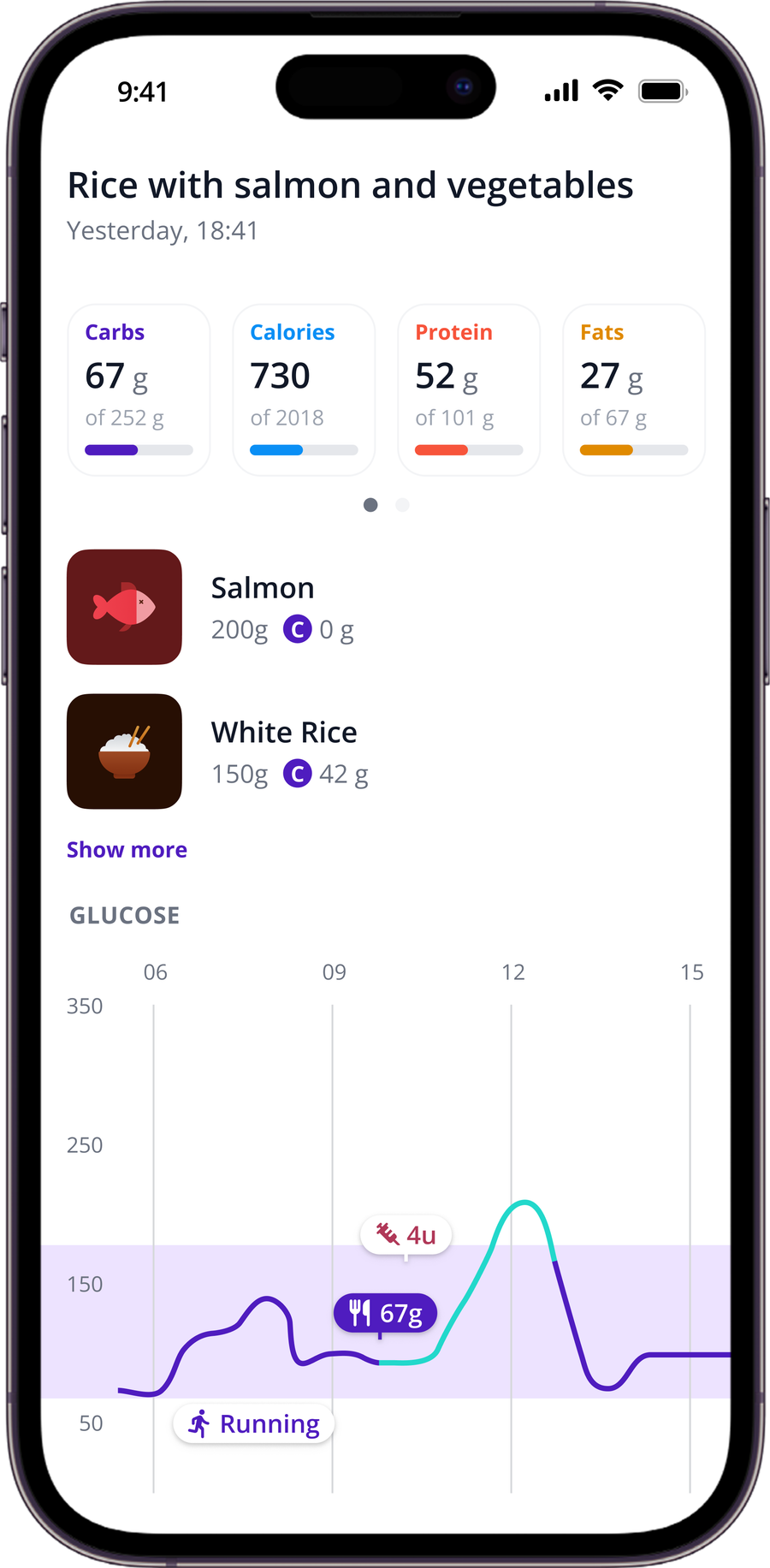
Restaurant meals are where memory and estimates break down. With SNAQ, you snap a photo of the plate and get an estimate of carbs, protein, fat, and fiber. You can adjust it for the sauce or the extra tortilla you know about. If you use a CGM, the meal shows up as a marker on your glucose curve, so when you look back hours later, you can see when you ate and how the curve moved without trying to remember what was on the plate.
Over a few visits to the same restaurant, that history shows which meals work for you and which ones keep surprising you. Your targets and any treatment decisions stay with your care team. See how it works for CGM users or read more about food tracking with SNAQ.
Download SNAQ to start logging Mexican meals and seeing how they affect your glucose over time.