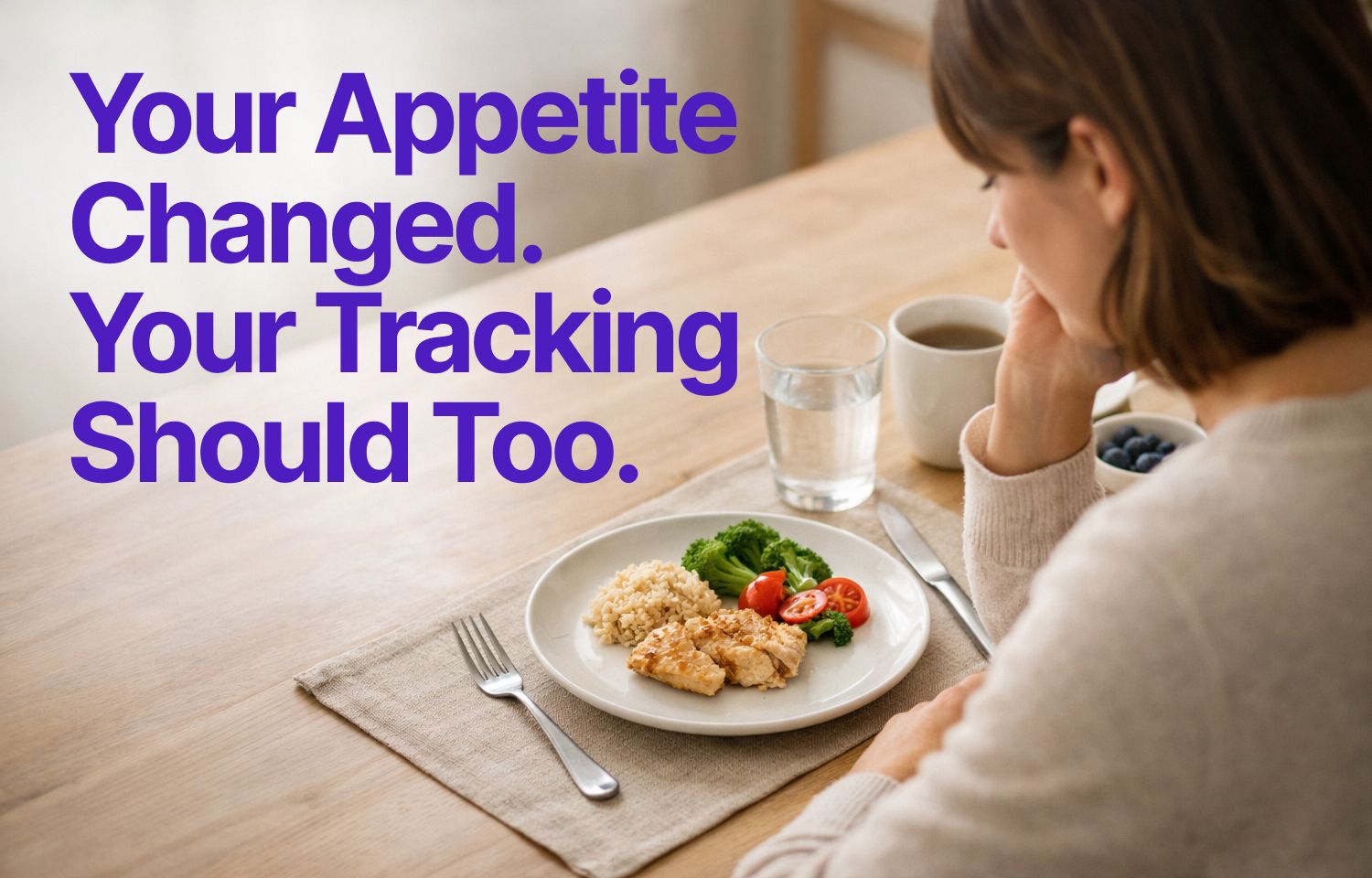
Your usual hunger cues disappear. You sit down to eat and feel full after three bites. Or you realize at 4 PM you forgot to eat lunch entirely.
These shifts are common when you start a GLP-1 medication like Ozempic or Wegovy. The medications slow gastric emptying and quiet appetite signals, which helps with weight management and glucose control. But the shift can feel disorienting, especially if you're used to planning meals around consistent hunger.
That's where tracking comes in. Not to count calories, but to answer the questions that actually matter: Are you eating enough protein? Are certain meals sitting better than others? Is your glucose staying stable even when your eating window shrinks?
This guide covers what to track, why it matters, and how to keep it simple.
How GLP-1 Medications Change Your Appetite
GLP-1 medications mimic a hormone your gut releases naturally after eating. They stimulate insulin secretion, suppress glucagon, and slow how quickly food moves through your stomach. The result: smaller portions feel satisfying, and the urge to eat between meals fades.
For some people, this is welcome. For others, it means forgetting to eat altogether, or feeling nauseous after a meal that would have felt normal a week earlier.
Common appetite-related changes include reduced hunger between meals, feeling full faster during meals, nausea or discomfort after rich or fatty foods, and longer stretches between feeling hungry.
These effects can ease as your body adjusts. But they can also create gaps in nutrition you won't notice unless you're paying attention.
If you're managing diabetes alongside GLP-1 therapy, appetite changes can affect your glucose patterns too, making it even more useful to understand how meals and timing fit together.
What to Track
Not everything needs to be measured. Focus on the markers that show whether your eating pattern is meeting your needs or creating gaps.
1. Meal Frequency and Timing
When appetite drops, it's easy to skip meals without realizing it. Track how often you eat and whether those meals are spaced reasonably through the day.
Eating only once or twice a day makes it hard to meet protein and nutrient needs. Smaller, more frequent meals tend to work better on GLP-1, especially in the first weeks.
Ask yourself: am I eating at least three times a day? Are my meals spaced three to five hours apart? Am I eating because I'm physically hungry, or because I know I should?
2. Protein Intake
Protein is easy to shortchange when appetite drops, but it matters more when you're eating less overall. Adequate protein supports muscle maintenance, keeps you fuller between meals, and helps your body manage the demands of weight loss.
Aim to include a source of protein at each meal: eggs, Greek yogurt, chicken, fish, beans, tofu, or cottage cheese. If tracking grams feels like too much, a simpler check is whether each meal included a palm-sized portion of protein.
3. Portions That Feel Comfortable
Your tolerance for food volume changes on GLP-1. A portion that felt normal two weeks ago might now leave you bloated or nauseous.
Keep notes on portion sizes that felt good versus ones that didn't. Over time, a picture emerges: maybe half a plate of pasta works better than a full serving, or a smaller snack at 3 PM means you can actually eat dinner without discomfort.
4. Foods That Sit Well vs. Foods That Don't
Some foods are harder to tolerate on GLP-1. Fried foods, heavy sauces, and large amounts of red meat are common culprits for nausea or a prolonged sense of fullness.
A simple log of what felt good and what didn't helps you spot those patterns faster. Lighter proteins, cooked vegetables, and whole grains tend to be easier to digest than rich, fatty dishes.
For specific guidance on food choices, see what to eat and avoid on GLP-1.
5. How Your Body Responds to Meals
Notice how you feel 30 to 60 minutes after eating. Are you energized or sluggish? Comfortable or bloated? These signals matter even without a glucose monitor.
If you do wear a CGM, overlay your meals on your glucose graph to see how smaller portions, different macronutrient combinations, or shifted meal timing affects your levels. GLP-1 medications often flatten glucose curves, but individual responses vary. Tracking helps you confirm your new eating pattern is supporting stable glucose, rather than creating unexpected dips or spikes.
Simple Tracking Methods That Work
You don't need a complicated system. Pick one method that fits your day.
Photo logging: Snap a picture of each meal. Review them at the end of the day to check for protein, variety, and portion size. Photos also give you a visual record of what worked and what didn't.
Voice notes: Record a quick note after eating: "Lunch: grilled chicken salad, felt good. Dinner: pasta, too heavy, nauseous after." Thirty seconds while you clean up is usually enough.
Pen and paper: Write down meal times, what you ate, and a single feeling check: comfortable, too full, still hungry, nauseous.
App-based tracking: A meal logging app that handles macros, meal timing, and notes in one place can speed up the process. SNAQ's AI Photo Analysis estimates carb and macro content from a photo, which is useful if you're also watching your glucose.
Whatever method you choose, two consistent weeks will teach you more than two months of sporadic notes.
Simplifying as You Go
Appetite changes aren't permanent for everyone. Some people find they adjust within weeks. Others notice continued appetite suppression for as long as they stay on the medication.
Track enough to understand your patterns, then scale back.
Once you know which foods sit well, how much protein you're getting, and what portion sizes feel right, you don't need to log every meal. Check in weekly instead of daily. Snap a photo if something feels off. Adjust as your body keeps adapting.
SNAQ's meal logging, trend insights and AI coach work whether or not you use a CGM. You can track meals by photo, monitor patterns over time, and understand how your eating habits are shifting. If you do use a CGM, connecting it gives you an additional layer: weekly glucose patterns alongside your meals, so you can see how everything fits together.
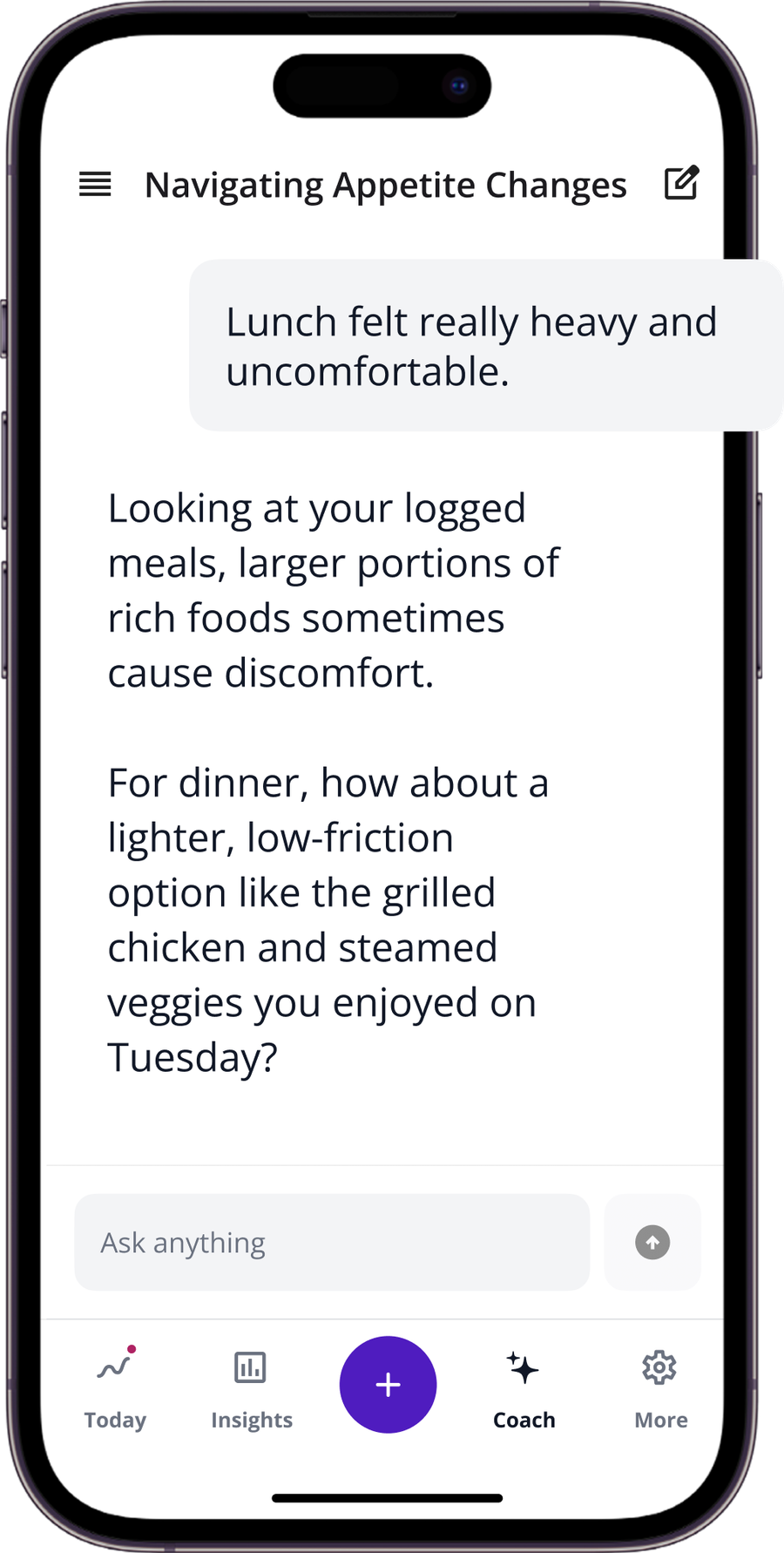
The goal isn't to track forever. It's to gather enough information to eat confidently, meet your nutritional needs, and feel good while your appetite adjusts.
If you want to understand your eating patterns while your appetite adjusts, try SNAQ. Log meals with a photo, track what sits well, and spot trends over time - with or without a CGM. Download the SNAQ app.