Quick answer: Soluble fiber dissolves into a gel that slows digestion, so glucose rises later and lower. Insoluble fiber stays intact. It moves things along but barely touches your glucose. Nutrition labels lump both together as "dietary fiber," so two foods with the same fiber count can behave nothing alike.
The oatmeal box says "high in fiber, good for glucose." So does the bread bag. Eat both anyway and the curves come out nothing alike.
The label's not built to explain that part. Soluble and insoluble fiber handle a meal completely differently. "Dietary fiber" on a nutrition label doesn't say which one you're getting.
What Soluble Fiber Does
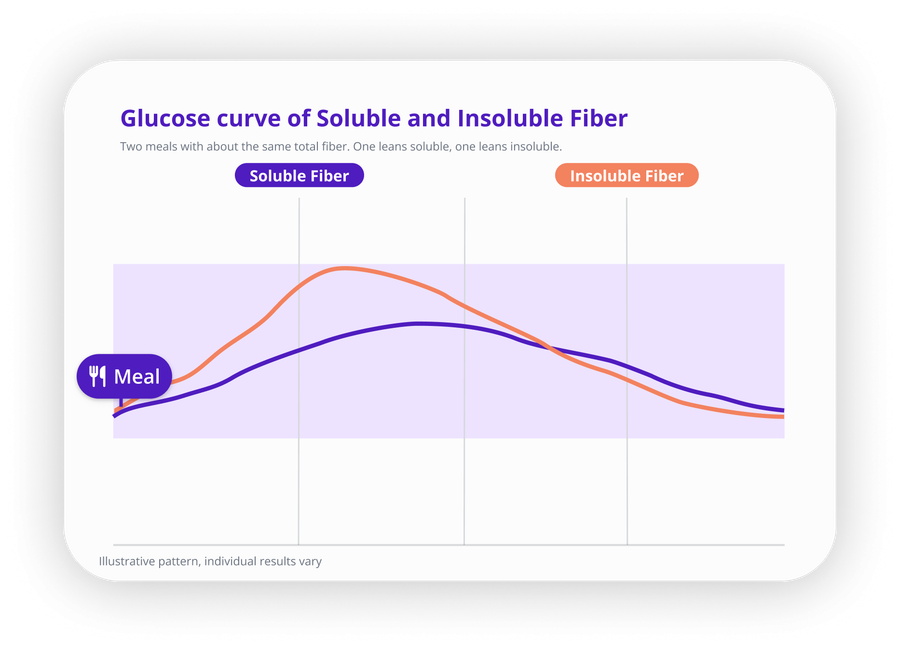
Soluble fiber dissolves in water and turns into a gel inside your gut. That gel does the actual work: it slows everything moving through your stomach and small intestine, glucose included, so the peak comes in both lower and later.
Foods high in soluble fiber include:
- Oats and oat bran
- Barley
- Legumes (beans, lentils, chickpeas)
- Apples, oranges, and berries
- Carrots and sweet potatoes
- Chia seeds, flaxseeds, and psyllium husk
It's also the type most studied for its effect on after-meal glucose, and research reviews consistently link more of it to better glycemic control and insulin sensitivity, in people with diabetes and without.
There's a satiety angle too. That same gel takes up real estate in your stomach, which can help you feel full longer, useful for portion sizes generally, or for appetite while on GLP-1 medications.
What Insoluble Fiber Does
Insoluble fiber has one job, and it isn't glucose. It moves through your gut mostly unchanged, adding bulk and speeding up transit, which is why it's the one linked to regularity.
It doesn't slow glucose absorption the way soluble fiber does. There's a minor dilution effect, since more bulk in a meal means slightly less carb per bite, but it doesn't amount to much.
Foods high in insoluble fiber include:
- Whole wheat, bran, and whole grains
- Nuts and seeds (especially the outer shells)
- Cauliflower, green beans, and celery
- Potato skins
- Brown rice
Insoluble fiber still earns its keep. It supports digestive health, and plenty of high-insoluble foods are nutrient-dense in their own right. Glucose just isn't where it does its work.
The confusion comes from nutrition labels, which lump both types into one number. A food showing 6 grams of fiber could be mostly insoluble or mostly soluble, and the label won't say which, even though the glucose response depends entirely on that split.
Why the Same Fiber Count Can Produce Different Curves
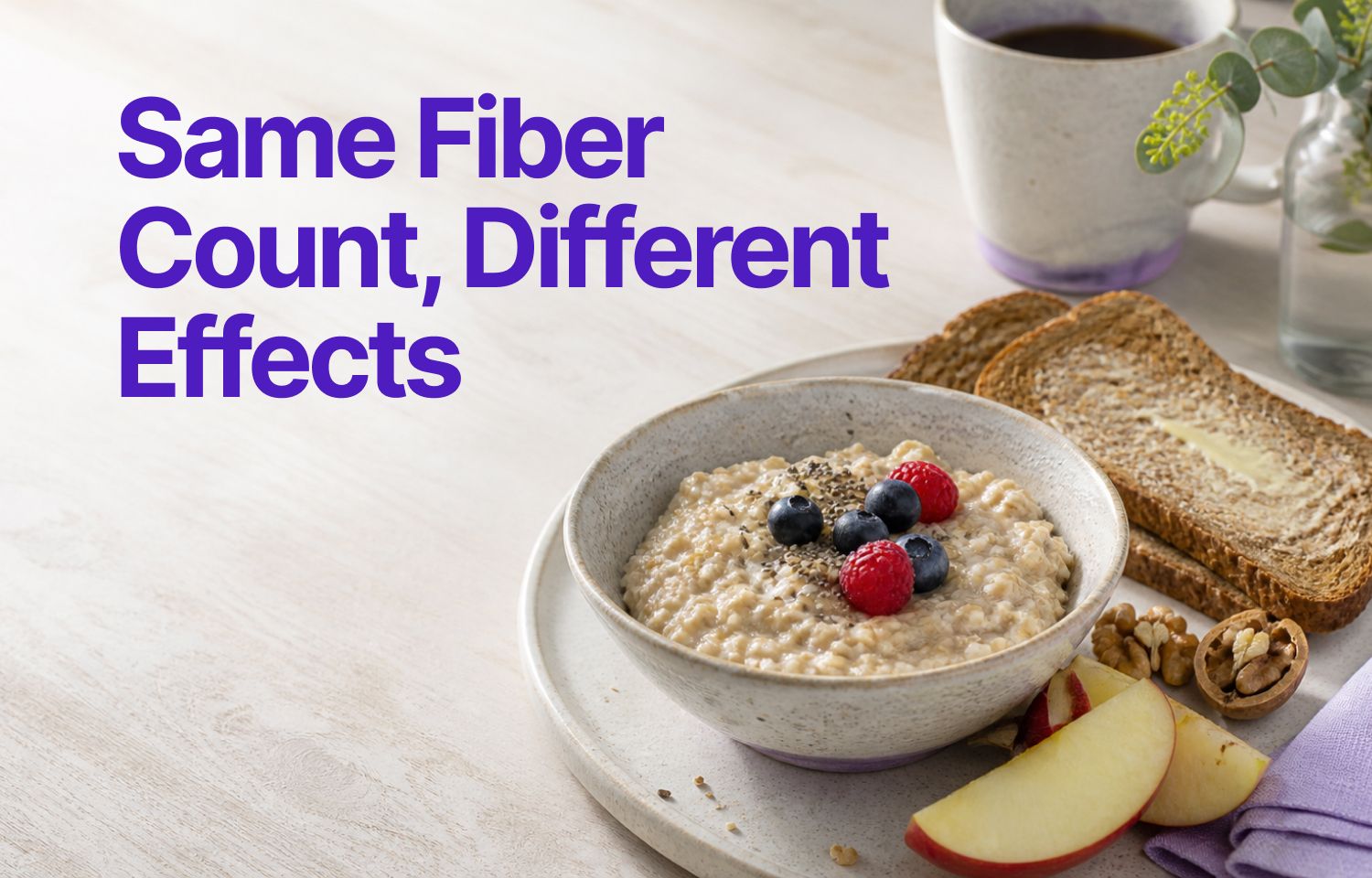
Two slices of whole wheat bread and a bowl of oatmeal can both list 5 grams of fiber. The bread's fiber is mostly insoluble. The oatmeal's is mostly soluble. Once they're actually in your gut, they stop having much in common.
The bread adds bulk and helps digestion along, but it barely touches glucose absorption, so its curve ends up close to what plain white bread would do, just a little lower. Oatmeal works differently: the soluble fiber gels up and softens both the rise and the peak.
If you've been picking foods by total fiber count alone, this probably explains why some "high-fiber" meals still spike you. The label was never designed to make that distinction for you.
How to Use This When Planning Meals
Soluble fiber is what actually moves the needle on glucose peaks: oats, barley, beans, lentils, and chia, stacked onto an otherwise carb-heavy meal, tend to soften the curve. Insoluble fiber won't do much there, but it's the better call for regularity or for bulking up a meal without adding calories: vegetables, whole grains, nuts.
A handful of foods carry both. An apple has soluble fiber in the flesh and insoluble fiber in the skin. Beans do too.
What About Added Fiber?
Protein bars and low-carb breads often lean on added fiber, ingredients like chicory root, inulin, or resistant starch, to trim the net carbs on the label. They get classified as soluble fiber, but they don't necessarily act like the soluble fiber in oats or beans.
The glucose response to these is genuinely inconsistent from person to person: smaller spikes for some, no real change for others, occasionally digestive discomfort or a delayed rise instead.
Worth testing with your own CGM if you eat these regularly. Log the meal, check the curve, and compare it against a similar meal without the added fiber.
We covered this topic in more detail in Added Fiber vs Natural Fiber: Does Your Glucose Respond the Same Way?
How Fiber Timing Affects the Curve
Eating fiber at the start of a meal can produce a different glucose response than eating it at the end. The theory is simple: fiber that arrives first starts forming its gel before the carbs even show up.
This isn't universal, and the effect size varies, but if you're already eating high-soluble-fiber foods, testing the order costs you nothing. Try a small portion of beans, a chia seed pudding, or a fiber-rich salad 10 to 15 minutes before your main meal, then compare the curve to a similar meal eaten all at once.
A flatter curve is worth repeating. Otherwise, timing's probably not your lever.
What This Does Not Fix
Fiber helps. It won't erase a spike by itself, and it doesn't cancel out portion size either, twice the pasta with a scoop of beans still beats a smaller plain plate. Carb type, protein, fat, and timing still matter just as much.
Practical Next Steps
Start with whichever of these already fits a meal you eat: oats, beans, lentils, chia seeds, barley.
If you're not used to much fiber, ease in gradually. A sudden jump, especially from beans or chia seeds, is a fast way to a rough, bloated afternoon, so give your gut a week or two to catch up.
Add one of these to a meal you already eat, then compare the glucose curve to the same meal without it. Log both in SNAQ so you can line up timing and peak height side by side.
A difference that holds up on a second try is worth building around. One that doesn't, or one that just leaves you uncomfortable, means picking a different soluble fiber source or trimming the portion.
Fiber responses tend to hold steady within a person, so once you know your sources, you can build meals around them.
Try SNAQ to log fiber-rich meals, compare glucose curves, and notice which ones tend to run lower.