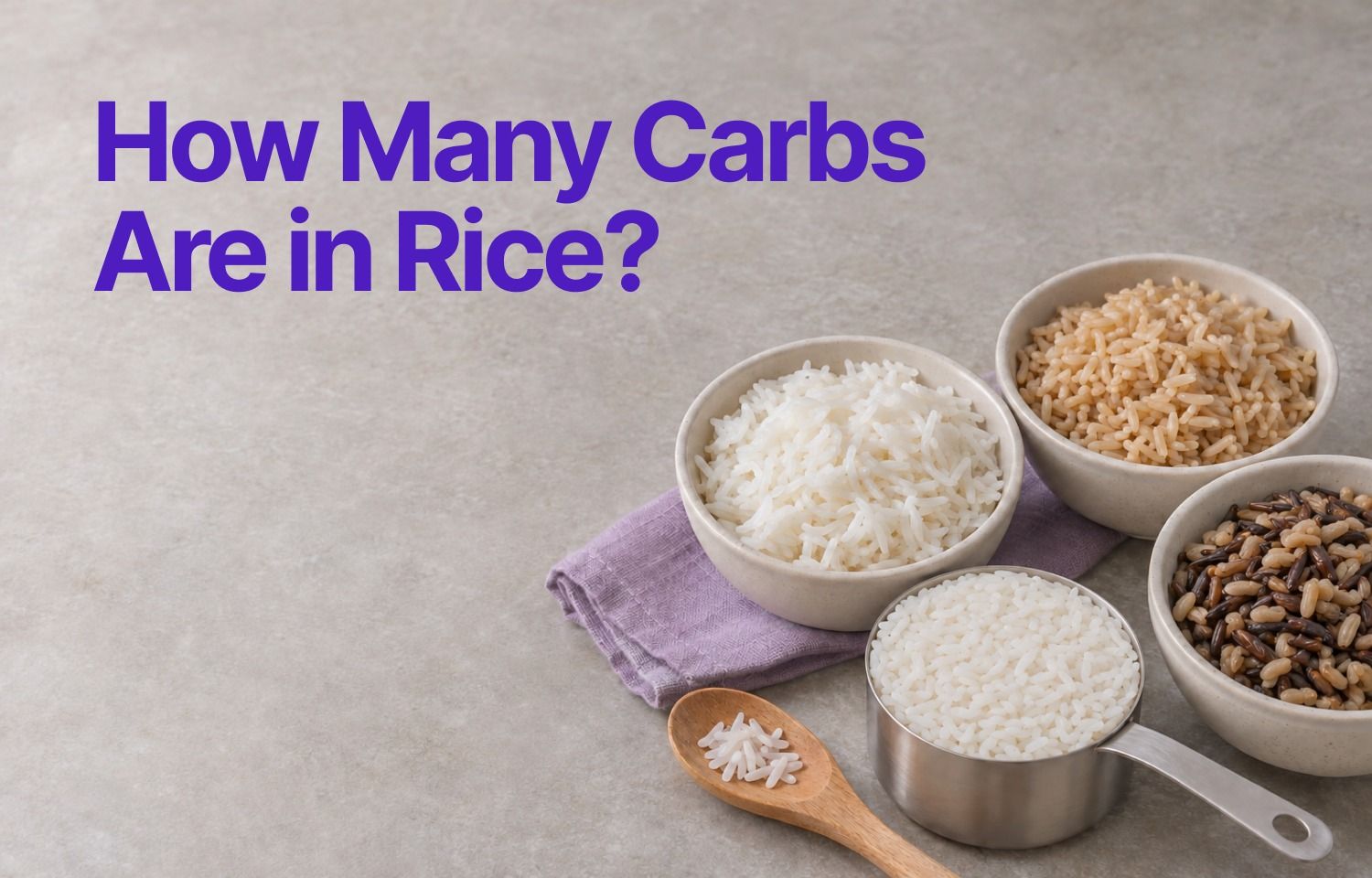
Quick answer: A cup of cooked long-grain white rice has about 45 grams of carbs, and the 12 rice types below range from 35 to almost 59 grams per cooked cup. Brown rice isn't lower by the cup: a cup of cooked long-grain brown rice has 51.7 grams.
Rice is one of the harder foods to estimate by eye, because nutrition numbers describe one measured cup and the rice in your bowl is rarely exactly one cup. Brown and white rice also compare differently depending on whether you measure by the cup or by weight. A closer estimate comes down to picking the rice that matches yours and knowing how much of it is actually in the bowl.
Carbs in a cup of cooked rice, by type
All the numbers below are total carbs for one cup of cooked rice, with fiber included and nothing subtracted. The first seven come from the USDA, and the last five are Ben's Original Ready Rice products, so they describe that brand and not jasmine or basmati in general. A cup of one rice doesn't weigh the same as a cup of another, which is why each one lists its own weight.
| Rice (1 cup, cooked) | Serving weight | Total carbohydrate | Source |
|---|---|---|---|
| White rice, long-grain, regular | 158 g | 44.5 g | USDA NDB 20045 |
| Brown rice, long-grain | 202 g | 51.7 g | USDA NDB 20037 |
| Brown rice, medium-grain | 195 g | 45.8 g | USDA NDB 20041 |
| White rice, short-grain | 205 g | 58.9 g | USDA NDB 20453 |
| White rice, long-grain, parboiled | 158 g | 41.2 g | USDA NDB 20047 |
| White glutinous (sticky) rice | 174 g | 36.7 g | USDA NDB 20055 |
| Wild rice | 164 g | 35.0 g | USDA NDB 20089 |
| Ben's Original Jasmine | 143 g | 51 g | Ben's Original Ready Rice page |
| Ben's Original Basmati | 133 g | 45 g | Ben's Original Ready Rice page |
| Ben's Original Fried Rice | 143 g | 42 g | Ben's Original Ready Rice page |
| Ben's Original Rice Pilaf | 138 g | 39 g | Ben's Original Ready Rice page |
| Ben's Original Garden Vegetable | 145 g | 40 g | Ben's Original Ready Rice page |
Total carbohydrate: Every figure is total carbohydrate, which includes starch, sugars and fiber, with nothing subtracted. The USDA white rice rows are enriched except the short-grain and glutinous rows, which are unenriched.
Cup weights differ on purpose: Each row uses the serving weight that belongs to that rice, so the cups hold different amounts of food.
Packaged products: The Ben's Original rows describe those specific Ready Rice products, and Garden Vegetable Rice is a different preparation from vegetable fried rice. All figures are reference estimates, and when you're checking an exact product, its package label takes priority.
Does brown rice have fewer carbs than white rice?
Brown rice actually has more carbs per cup. A cup of cooked long-grain brown rice has 51.7 grams and a cup of long-grain white rice has 44.5, but the brown rice cup also weighs more, 202 grams against 158. Compare the same weight and the result flips: 100 grams of the white rice has 28.17 grams of carbs and 100 grams of the brown has 25.58, and brown rice still has plenty of carbs either way.
Brown rice does have other things going for it, since the ADA's 2026 Standards of Care include whole grains among the nutrient-dense foods in recommended eating patterns. When you log it, though, use the brown rice number and the amount you actually ate, the same as you would for white.
Why a bowl of rice has no single carb number
A label's numbers only apply to the serving size it lists, and the FDA's Nutrition Facts guide is clear that a serving size is a reference amount and doesn't tell you how much to eat. So the carbs in your bowl go up or down with how much rice you serve yourself. Here's how that looks for cooked long-grain white rice:
| Amount of cooked rice | Food weight | Total carbohydrate |
|---|---|---|
| ½ cup | 79 g | about 22 g |
| 1 cup | 158 g | 44.5 g |
| 2 cups | 316 g | about 89 g |
How this was calculated: The half-cup and 2-cup rows scale the USDA long-grain, regular, enriched, cooked rice figure (NDB 20045) to half and twice the 1-cup amount.
Not a bowl size: These amounts are arithmetic examples for this one USDA figure, and they aren't standard bowl sizes or recommended portions.
Measure the rice after it's cooked. If the bag lists nutrition for dry rice, that number won't match a cup from the pot, since rice takes on water as it cooks, and everything in the comparison table is cooked or ready-to-heat. A kitchen scale works too, as long as you weigh the cooked rice and compare it with the weight listed for that rice.
Plain rice, packaged rice or a restaurant bowl
The plain rice numbers cover the rice and nothing else, so sauce, oil, meat and vegetables need their own estimates before you add everything up. The Ben's Original Fried Rice, Rice Pilaf and Garden Vegetable Rice work differently, because their numbers cover the whole packaged product as it comes. Anything you stir in after heating one of them still counts separately.
Homemade and restaurant rice take a little more guesswork. At home, the closest match in the table is a reasonable starting point if you use the same type of rice and measure it cooked, though it can't account for butter, broth or anything else in your recipe. Restaurant carb estimates are hard for several reasons, and rice shows two of them clearly: there's no label, and the kitchen's rice and portion can differ from anything listed here.
What a carb table can't tell you
These numbers tell you how many carbs are in the rice, and they can't predict what your glucose does after you eat it. How much rice fits your day depends on your own meal plan, which the ADA's 2026 guidelines say should be individualized, and that's something to work out with your care team. What food labels leave out goes further into why a carb count and a glucose response are two different things.
Rice also raises two questions a carb table can't settle. One is whether cooling and reheating it changes how it affects blood sugar, which the cooled rice research looks at closely. The other is whether rice belongs in a diabetes eating plan at all, and this recheck of "foods to avoid" takes that on.
Estimating a rice bowl from a photo
Measuring cooked rice in a cup, or weighing it, gets you closest to the numbers in the table, though that isn't always practical. A photo is quicker, but a flat image can't show how deep or tightly packed the rice is, and this look at photo carb counting explains why portions are the hard part. SNAQ's AI photo analysis identifies the foods in a meal photo and estimates calories, carbs, protein, fat and fiber, and it works best on iPhone Pro models, which have a LiDAR depth sensor. It can still miss hidden oils, sauces and portion details, so treat the result as a starting estimate and edit it with what you know about the rice type and amount.
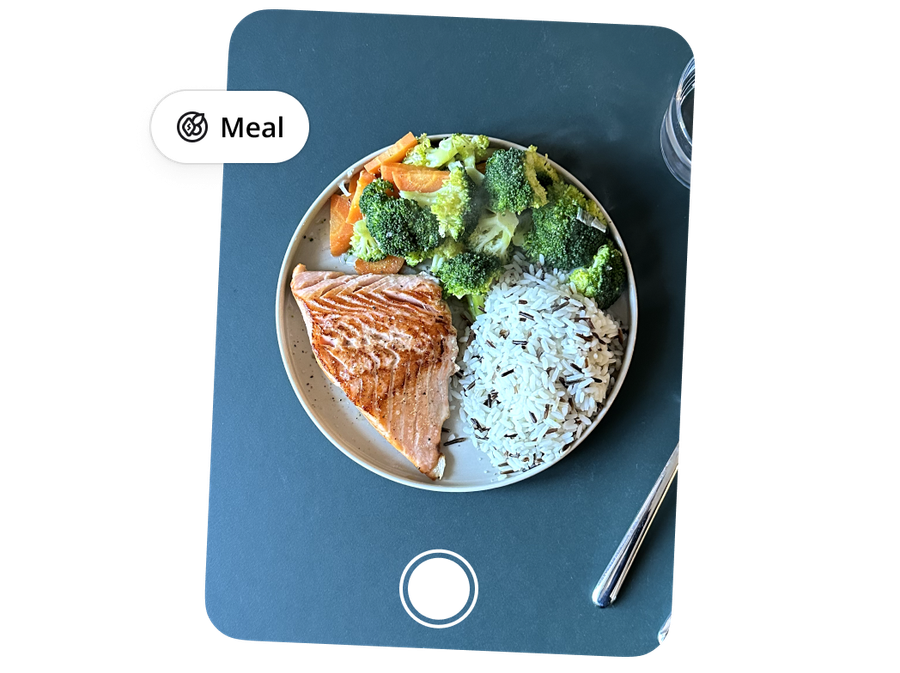
When you log a rice bowl in SNAQ, add the rice type, the amount you measured or know, and any sauce or topping, so the log matches what was actually in the bowl. If it's a bowl you eat often, saving it as a favorite means you don't have to rebuild it next time.