
Quick answer: For most adults with diabetes, a bedtime glucose of 100 to 140 mg/dL is the general target. But the number alone tells you less than the pattern does. What matters most is what happens after you go to sleep, and that depends on your meals, activity, and how your body responds overnight.
You check your glucose before turning off the lights. 120 mg/dL. Good? Too high? Should you worry about going low overnight, or waking up at 200?
The standard bedtime glucose target for adults with diabetes is usually 100 to 140 mg/dL, according to the American Diabetes Association. But that range is a starting point, not a rule that works for everyone. Your personal target depends on how stable your overnight glucose tends to be, whether you're prone to lows while sleeping, and what your care team recommends based on your history.
Why Bedtime Glucose Targets Exist
Bedtime glucose targets help reduce two risks: going low during sleep and waking up high because glucose drifted upward overnight.
The 100 to 140 mg/dL range gives most people enough of a buffer. Starting closer to 100 mg/dL may work well if your glucose stays flat overnight. Starting closer to 140 mg/dL may make more sense if you tend to drop while sleeping, especially if you use some diabetes medications.
The International Society of Pediatric and Adolescent Diabetes suggests adjusting targets based on age, diabetes type, and individual risk factors. A person who doesn't feel lows coming on may need a slightly higher bedtime target to stay safe overnight.
What Affects Your Glucose Overnight
Even if your bedtime number looks stable, glucose can shift while you sleep. A few patterns come up again and again.
Dinner Timing and What You Ate
If you ate dinner late or had a high-fat meal, your glucose may still be rising hours later. Fat slows digestion, which can delay the glucose peak. A meal with pasta, cheese, and olive oil might not peak until 3 or 4 hours after eating, long after you've gone to bed.
If you check your glucose at bedtime and it's 115 mg/dL but dinner was only 90 minutes ago, you may still be on the upward slope.
Activity Before Bed
Exercise can lower glucose for hours afterward, sometimes into the next morning. If you went for a walk or worked out in the evening, your glucose may drop overnight even if your bedtime number looks stable.
This delayed effect is why some people see lows between 2 and 4 a.m. after evening activity.
Stress and Sleep Quality
Stress raises cortisol, which can push glucose higher overnight. Poor sleep or interrupted sleep can do the same. If you're anxious, sick, or dealing with a stressful week, your glucose may climb even if your bedtime number was in range.
Short or fragmented sleep has been linked to less stable glucose the next day.
Dawn Phenomenon
Many people experience a natural glucose rise in the early morning hours, typically between 4 and 8 a.m. This happens because the body releases hormones to prepare for waking up. Those hormones make it temporarily harder for your body to process glucose, which can push levels higher even without food.
If you go to bed at 120 mg/dL and wake up at 160 mg/dL, dawn phenomenon is a common explanation. For a closer look at why it happens and what drives it, see our guide to dawn phenomenon and why blood sugar rises overnight.
How to Identify Your Personal Bedtime Pattern
The guideline range is helpful, but your real target comes from tracking what happens after you go to sleep.
Start by logging your bedtime glucose and your waking glucose for a week. Note the timing of your last meal, any evening activity, and how you slept. If you use a CGM (continuous glucose monitor), review the overnight curve to see whether glucose stayed flat, drifted up, dropped, or spiked.
Look for repeated patterns:
- Do you consistently wake up lower than your bedtime number?
- Do you wake up higher, even when bedtime glucose was in range?
- Does your glucose drop in the middle of the night, then rise again before morning?
- Does a late dinner always push your morning glucose higher?
Once you can see the pattern, you have a clearer sense of what bedtime glucose range keeps you stable overnight.
For more on how timing affects what a glucose number means, see our guide to blood sugar numbers in context.
When a "Good" Bedtime Number Still Leads to a Morning Problem
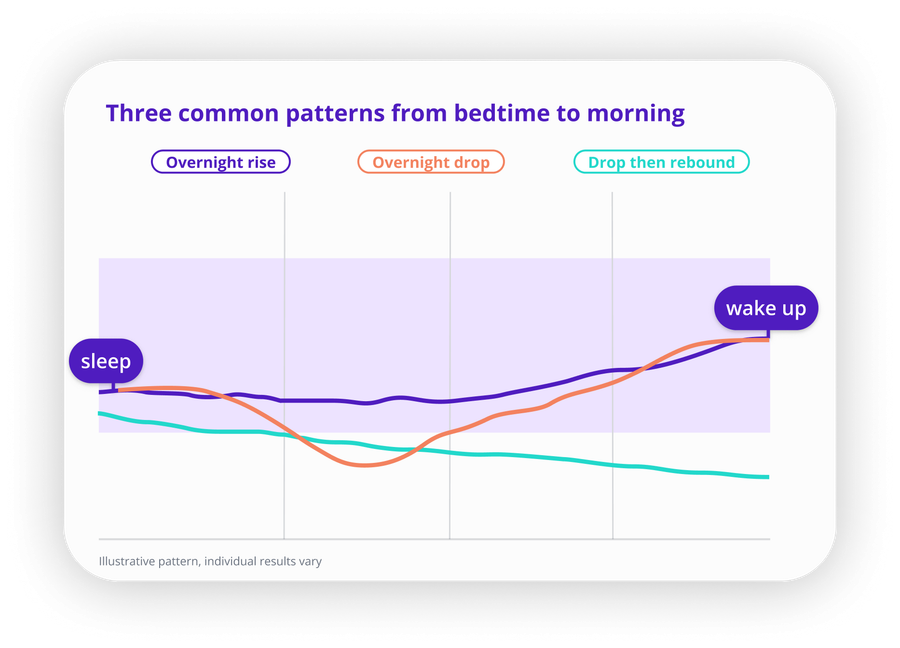
The overnight rise is often linked to dawn phenomenon or a late dinner still digesting. The overnight drop commonly follows evening exercise or a smaller, low-carb meal. The drop then rebound happens when glucose falls too low during the night and the body's stress response pushes it back up, sometimes past where it started.
Sometimes your bedtime glucose looks fine but you still wake up high or low. Here's what to check.
You Go to Bed at 130 mg/dL and Wake Up at 180 mg/dL
Possible causes:
- Your dinner is still digesting. A high-fat or high-carb meal may peak hours after eating.
- Dawn phenomenon is raising your glucose in the early morning.
- You're getting sick, stressed, or experiencing hormonal changes.
What to track: meal timing, what you ate, overnight CGM curve if available, recent stress or sleep quality.
You Go to Bed at 110 mg/dL and Wake Up at 65 mg/dL
Possible causes:
- Evening activity is lowering glucose hours later.
- Your last meal was small or low in carbs, and glucose drifted down overnight.
- Your medication routine may need a review. Bring this to your care team.
What to track: evening activity, dinner size and timing, any overnight CGM alerts.
You Go to Bed at 140 mg/dL, Drop to 70 mg/dL at 2 a.m., Then Wake Up at 190 mg/dL
This pattern is called a rebound high. Your glucose drops low overnight and your body releases counter-regulatory hormones (stress hormones that kick in when glucose falls too low) to bring it back up. Sometimes those hormones overshoot, and glucose climbs well above where it started.
What to track: overnight lows, evening activity, bedtime snack size, CGM alert history.
If you see this pattern often, bring it to your care team. They can help you figure out what to adjust.
What to Do When Your Bedtime Glucose Is Outside the Target Range
If your glucose is below 100 mg/dL at bedtime and you're at risk of going lower overnight, a small snack with carbs and protein may help stabilize it. Examples: a few crackers with cheese, half an apple with peanut butter, or a small handful of nuts and dried fruit.
If your glucose is above 140 mg/dL at bedtime, check the context. Did you eat late? Are you still digesting a large meal? Is this a one-time spike, or does it happen most nights?
A single high bedtime reading is not an emergency. But if it happens consistently, it's worth discussing with your care team. They may suggest adjusting your evening meal timing, portion size, or medication plan.
How SNAQ Helps You Track Bedtime Patterns
If you keep waking up confused about why your morning number doesn't match what you went to sleep at, that's the exact gap SNAQ is built to close. The app lets you log dinner timing, what you ate, and glucose context together, so overnight patterns stop feeling random.
If you connect a CGM, SNAQ overlays your meals on the glucose curve. You can see whether a late dinner is still affecting your glucose at bedtime or into the morning.
Over time, reviewing repeated nights in SNAQ makes it easier to spot whether your bedtime glucose reliably predicts your morning number, or whether meal timing, activity, or sleep are driving the difference.
If you don't use a CGM, SNAQ still helps. Log your bedtime reading, dinner details, and morning number, then review trends over time to see what bedtime range tends to keep you stable.
For more strategies on tracking glucose and meals together, see how to track meals and learn what affects your blood sugar without a CGM.