
Quick answer: In people without diabetes, blood sugar rises after eating and typically peaks around 60 minutes, usually staying below 140 mg/dL, then returns to baseline within two to three hours. An occasional higher reading after a large meal is normal. Consistent patterns above those thresholds are worth discussing with your doctor.
You checked your glucose after breakfast and saw 165 mg/dL. You don't have diabetes. Should you worry?
Blood sugar rising after a meal is normal. Your body breaks down carbohydrates, glucose enters the bloodstream, and insulin brings it back down within a couple of hours. What most people don't know is what size spike is typical, and what patterns are worth taking seriously.
This guide walks through what glucose spikes look like in people without diabetes, what drives them, and how to tell the difference between normal variation and something worth discussing with your doctor.
What Does a Normal Glucose Response Look Like?
In people without diabetes, fasting glucose sits in the range of 70 to 99 mg/dL. After eating, glucose typically peaks around 60 minutes, though high-fat or mixed meals can push that closer to 90 minutes. In most healthy adults, the peak stays below 140 mg/dL and glucose returns to pre-meal levels within two to three hours.
| Timing | What the number might mean | What to check next |
|---|---|---|
| Fasting / on waking | Can fit the ADA general pre-meal target range of 80 to 130 mg/dL for many nonpregnant adults, though targets are always individualized. | Was it truly fasting? Is this repeating across mornings? |
| Pre-meal (before lunch/dinner) | Often consistent with ADA general pre-meal targets, though higher numbers warrant a closer look at the trend. | Check the trend arrow. Is this your usual pre-meal pattern? |
| After eating (post-meal) | Post-meal rises are expected. You may not have peaked yet. Or you are already past the peak. Timing is everything here. Many care plans use a peak post-meal goal of under 180 mg/dL. | How long since the meal? Rising or falling? Does it come back down over time? |
| During / after exercise | Could be stable or rising fast. Check the trend arrow first. This is when CGM lag tends to show up most. | The trend matters more than the number here. Watch the direction. |
| Bedtime / overnight | One reading at bedtime does not describe the full night. Your target range depends on your care plan. | Look for recurring overnight highs or lows. Discuss patterns with your care team. |
These are averages. Some healthy people briefly touch 160 mg/dL after a large, carb-heavy meal. What matters more than the peak is how consistently glucose returns to normal.
If you want to understand what a specific glucose number means in context, our detailed guide to interpreting CGM readings walks through ranges and timing.
What Causes Glucose to Spike in Non-Diabetics?
Several factors influence how high and how fast glucose rises after a meal.
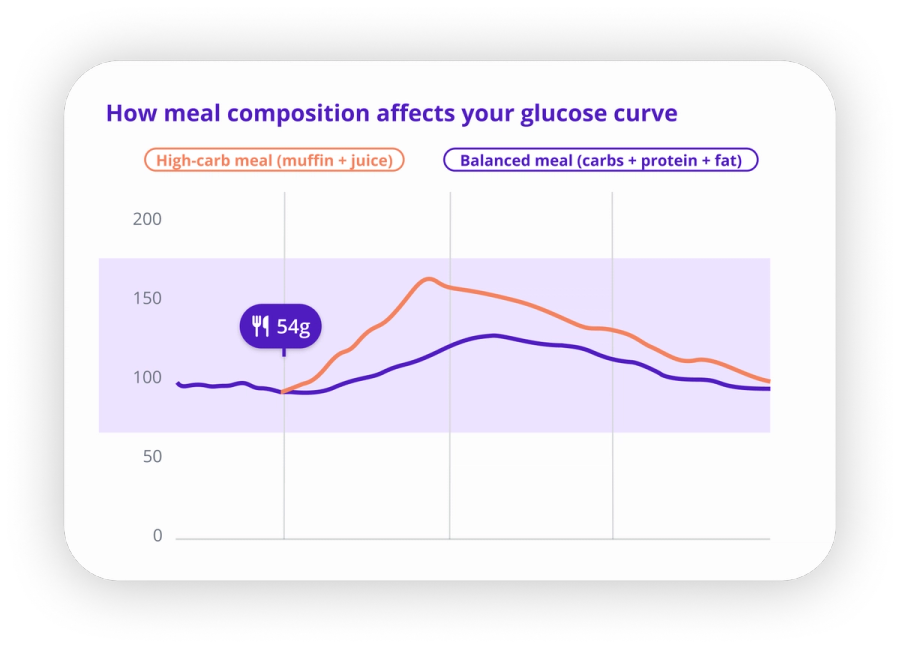
Carbohydrate type and quantity play the biggest role. Foods high in refined carbs like white bread, soda, and pastries digest quickly and push glucose up fast. Meals with fiber, protein, or fat slow digestion and produce a softer rise.
Meal composition matters beyond just carb count. A bowl of pasta eaten alone will produce a sharper spike than the same pasta served with grilled chicken, olive oil, and vegetables. The other components slow gastric emptying and change how quickly glucose enters the bloodstream.
Stress can raise glucose even without food. Physical or emotional stress triggers the release of cortisol and adrenaline, both of which signal the body to release stored glucose. A tense morning or poor sleep the night before can shift your response to the same breakfast you ate without issue yesterday.
Activity level affects how the body uses glucose. Exercise draws on glucose for fuel, which often keeps post-meal peaks lower. On sedentary days, the same meal may produce a noticeably higher spike.
Time of day also plays a role. Many people see higher glucose readings in the morning due to the dawn phenomenon, an early-morning rise in hormones including cortisol and growth hormone that prompt the liver to release stored glucose as a natural wake-up signal. In people without diabetes, the body usually compensates well, so the effect is mild. But it can make the first meal of the day produce a bigger response than lunch or dinner.
For more on how different variables affect glucose, see Factors Impacting Your Glucose Levels and What You Can Do About It.
When Is a Spike Not Normal?
A single high reading after a large meal is rarely cause for concern. Patterns are what matter. A few worth paying attention to:
Fasting glucose consistently over 100 mg/dL. According to ADA criteria, a fasting level between 100 and 125 mg/dL may indicate prediabetes. One morning reading doesn't confirm anything, but a recurring pattern does.
Post-meal glucose consistently over 140 mg/dL. If most meals push you above this threshold and keep you there, it suggests your body is working harder than usual to bring levels back down.
Slow return to baseline. If glucose is still elevated three or four hours after eating, that's a longer recovery than typical and may be worth flagging with your doctor.
Symptoms. Persistent fatigue after meals, excessive thirst, frequent urination, or unexplained weight changes are worth discussing with your doctor regardless of the numbers you're seeing.
These patterns don't diagnose anything on their own, but they can prompt useful testing. A fasting blood draw or an A1C can give a clearer picture.
If You're Seeing One High Reading
If you're reading this after a single high number following a stressful day or an unusually large meal, that context matters. One spike doesn't indicate a problem. If you're noticing a consistent pattern over days or weeks, or if symptoms have appeared alongside the numbers, it's worth checking in with your healthcare provider.
How to Track Your Patterns
Understanding your glucose response starts with observation. The goal isn't to react to every reading. It's to collect enough data that patterns become visible.
Choose a tracking method
A CGM worn for a week or two gives you continuous data. You can see the full shape of each rise and fall, when you peaked, and how long it took to return to baseline. That curve shape tells you things a fingerstick reading cannot. For example, it can show whether your glucose is still climbing when you check it an hour after eating, or whether it's already on its way down.
If a CGM isn't accessible, fingerstick testing before a meal and again two hours after still gives you useful before-and-after data. It won't show you the full curve, but it can confirm whether a meal kept you in a normal range or pushed you above it.
Log the context, not just the number
A glucose reading without context is hard to interpret. Note what you ate, portion size, how much activity you got that day, how you slept, and whether you were stressed. Over a week or two, patterns that seemed random start to make sense. You'll often find the same meal behaves differently depending on what else was going on that day.
Look for trends, not single events
One high reading after pizza night isn't a trend. Five similar readings after five similar meals is. Try to make the same meals in similar conditions a few times before drawing conclusions. Differences in portion, preparation, or what else was on the plate can produce meaningfully different results.
If you don't have access to a CGM, our guide on How to Track Meals and Learn What Affects Your Blood Sugar Without a CGM walks through practical methods that don't require continuous monitoring.
Real Scenarios: What Spikes Look Like in Practice
Scenario 1: The rushed breakfast. You grab a muffin and orange juice on your way out the door. Glucose shoots to 170 mg/dL within an hour. You feel jittery, then crash by mid-morning. This is a typical response to a high-carb, low-protein, low-fat meal. Adding protein or choosing a lower-glycemic option like oatmeal with nuts would likely produce a softer curve.
Scenario 2: The stressful meeting. You ate your usual lunch, but today you had a tense presentation right after. Glucose climbed higher than normal and stayed elevated longer. Stress hormones likely played a role, not the food.
Scenario 3: The post-workout snack. After a long run, you ate a banana and peanut butter. Glucose barely moved. Exercise had depleted muscle glycogen, so your body shuttled the incoming glucose into muscle cells rather than leaving it in the bloodstream.
Using SNAQ to Understand Your Patterns
If you're using a CGM or thinking about trying one, SNAQ connects your meals to your glucose data so you can see the relationship directly.
Logging a meal in SNAQ places it on your glucose graph, so you can see the rise that followed: the shape, the timing, and how quickly it came back down. Over days and weeks, that builds a picture of which meals tend to spike you and which keep you steady.
The AI Photo tool lets you snap a picture of a meal and get an instant carb, protein, and fat breakdown. Voice logging works for meals on the go. Both feed into the same timeline so your data stays complete without requiring manual entry for every bite.
Weekly and monthly summaries highlight patterns you might miss day to day. You might notice your glucose response to the same breakfast varies consistently with how much sleep you got the night before. That kind of pattern is hard to spot without a summary view.
These tools are built to show you what's happening, not to tell you something is wrong.
Small Adjustments, Visible Difference
Once patterns are visible, small changes often produce a noticeable shift. This is where observation becomes useful rather than just interesting.
Swapping refined carbs for whole grains, or adding a protein source to a carb-heavy meal, typically softens the spike. A short walk after eating, even 10 minutes, helps muscles absorb glucose and tends to bring peaks down. Consistent sleep has a measurable effect on how the body handles food the next morning.
None of this requires tracking every meal forever or aiming for perfection. The goal is to find a few changes that feel sustainable and see whether the patterns shift. If they do, you've learned something useful about how your body works. If your numbers stay elevated despite those changes, that's a signal to bring to your doctor rather than something to manage alone.
Want to turn your CGM data into patterns you can actually act on? Download SNAQ here.