Quick answer: A fasting glucose of 100 to 125 mg/dL is in the prediabetes range, which the American Diabetes Association (ADA) calls impaired fasting glucose. It isn't a diabetes diagnosis. Diabetes starts at 126 mg/dL and needs a second abnormal result to confirm, so your doctor will usually repeat the test or add an A1C or an oral glucose tolerance test.
You opened your lab results and one number is flagged: a fasting glucose somewhere between 100 and 125. One reading can't tell you much on its own, but it's a good reason to take a closer look.
Fasting glucose is a routine blood test. It measures the sugar in your blood after at least eight hours without food, which makes it a snapshot of where your body keeps glucose when you're not eating.
What does a fasting glucose of 100 to 125 mg/dL mean?
The ADA sets the ranges. Under 100 is normal. A result of 100 to 125 is called impaired fasting glucose, which is one of three ways to land in the prediabetes range. The other two are an A1C of 5.7% to 6.4% and a two-hour result of 140 to 199 mg/dL on a glucose tolerance test.
| Test | Normal | Prediabetes | Diabetes |
|---|---|---|---|
| Fasting glucose | Under 100 mg/dL (under 5.6 mmol/L) |
100 to 125 mg/dL (5.6 to 6.9 mmol/L) |
126 mg/dL or higher (7.0 mmol/L or higher) |
| Glucose tolerance test (2-hour result) |
Under 140 mg/dL (under 7.8 mmol/L) |
140 to 199 mg/dL (7.8 to 11.0 mmol/L) |
200 mg/dL or higher (11.1 mmol/L or higher) |
| A1C | Under 5.7% | 5.7% to 6.4% | 6.5% or higher |
How to read it: A result in the prediabetes column on any one of the three tests puts you in the prediabetes range. A diabetes diagnosis needs a second abnormal result to confirm.
Fasting: no calories for at least 8 hours before the test.
Source: American Diabetes Association, Standards of Care in Diabetes 2026.
Being in this range means a higher chance of developing type 2 diabetes over time, and studies link it to a higher risk of heart disease too. Those are group averages, so they say little about any one person.
Why do some sources say 110 instead of 100?
The ADA lowered its cutoff from 110 to 100 mg/dL in 2003. The World Health Organization kept 110. So a 112 counts under both systems, while a 104 counts only under the ADA's. US diabetes guidelines follow the ADA.
Does one borderline reading mean you have diabetes?
No. Diabetes is diagnosed at a fasting glucose of 126 or higher, an A1C of 6.5% or higher, or a two-hour glucose tolerance result of 200 or higher. It takes a second abnormal result to confirm. A fasting number of 100 to 125 falls below the first of those lines.
Single readings also bounce around. A few things can push one fasting result higher:
- Not fasting long enough. The ADA defines fasting as no calories for at least eight hours.
- Being sick, or fighting off an infection, in the days before the test.
- A stressful few weeks. Stress hormones like cortisol raise blood sugar.
- Certain medicines. Steroids are one example.
If any of these applied to you, tell your doctor. A repeat test under normal conditions can clear things up.
Which tests usually come next?
Each test looks at your glucose from a different angle. Fasting glucose is a snapshot. A1C is an average. The glucose tolerance test is a stress test.
Repeat fasting glucose
The same test on another morning. It shows whether the first result was a one-off or holds steady.
A1C
A1C reflects your blood glucose over roughly the past two to three months, so a single rough night barely moves it. You don't need to fast for it. The prediabetes range is 5.7% to 6.4%.
Glucose tolerance test (OGTT)
Your lab paperwork may call this an oral glucose tolerance test, or OGTT. You fast, give a baseline blood sample, drink a 75-gram glucose solution, and give a second sample two hours later. It shows how well your body clears a sugar load, which a fasting number can't show. Some people have a normal fasting result and a higher two-hour result.
Because the tests look at glucose differently, the results don't always match. That's normal, and your doctor will read them together.
What pushes fasting glucose up?
Two things play a big role in your fasting number: how much glucose your liver releases, and how well your cells respond to insulin.
Insulin resistance
Insulin is the hormone that moves glucose from your blood into your cells. With insulin resistance, your cells respond less to it, so your pancreas makes more to compensate. Eventually it can fall behind, and fasting glucose rises. Insulin resistance is linked to excess weight, especially around the belly. It also shows up in people at lower weights.
Liver glucose output
While you sleep, your liver releases glucose to keep your brain and muscles fueled. If the liver doesn't respond well to insulin's signal to slow down, it keeps releasing. Your morning number climbs even though you haven't eaten.
Dawn phenomenon
Early in the morning, hormones like cortisol and growth hormone rise and can push glucose up before you wake. That's the dawn phenomenon. You can read more about why blood sugar rises overnight.
What does the research say helps?
The best evidence comes from the Diabetes Prevention Program (DPP), a large US trial published in 2002. Adults with prediabetes joined a structured lifestyle program with two goals: lose at least 7% of body weight and get at least 150 minutes of physical activity a week, at about the intensity of brisk walking. Over roughly 2.8 years, new cases of type 2 diabetes dropped 58% compared with placebo. After 15 years, a 27% lower risk still held. The program combined several changes, so it's hard to credit any single one. Current ADA recommendations for prediabetes build on this trial.
Movement
The DPP goal was at least 150 minutes a week. Your muscles pull glucose out of your blood while they work, which is one reason activity matters here. If you're not active now, your doctor can help you choose a starting point that fits your health.
Eating
Dietary advice for prediabetes usually centers on whole, fiber-rich foods like vegetables and legumes, with fewer sugary drinks and refined carbs. If you're new to tracking carbs, start with carb counting basics, then check out this guide to low glycemic index foods. A registered dietitian can tailor it to you.
Sleep
In controlled studies, one or two nights of short sleep lowered insulin sensitivity in healthy adults, according to a meta-analysis of randomized trials. Fasting glucose itself changed less consistently.
Those are study findings. A plan that fits your health and medications is something to work out with your care team.
Before your appointment
A few notes can make the appointment more useful. Bring these, or jot them down beforehand:
- When you last had anything with calories before the blood draw.
- Your medicines and supplements.
- Any recent illness, a rough week of sleep, or unusual stress.
- A week or two of meal notes, if you can.
- Your family history of diabetes.
Questions to ask your doctor:
- Should I repeat the test, or get an A1C or a glucose tolerance test?
- How often should I be retested?
- Are there diabetes prevention programs near me?
For reference, the ADA recommends testing people with prediabetes at least once a year.
If you're scheduled for a glucose tolerance test, ask the lab for prep instructions. ADA guidance calls for a mixed diet that includes at least 150 grams of carbohydrate a day for the three days before.
Where a CGM fits
A continuous glucose monitor (CGM) is a small sensor you wear on your skin that reads your glucose every few minutes. Since 2024, adults 18 and older who don't use insulin can buy some CGMs without a prescription, including the Dexcom Stelo and Abbott Lingo. They show how your glucose moves after meals, activity, and sleep. They can't diagnose prediabetes or diabetes, so they work alongside the lab tests above.
You don't need a CGM to learn from your numbers. Fingerstick checks before meals and one to two hours afterward can show useful patterns, and this guide covers how to track meals and glucose without a CGM. If you do wear one, here's how food tracking with a CGM works.
How SNAQ can help
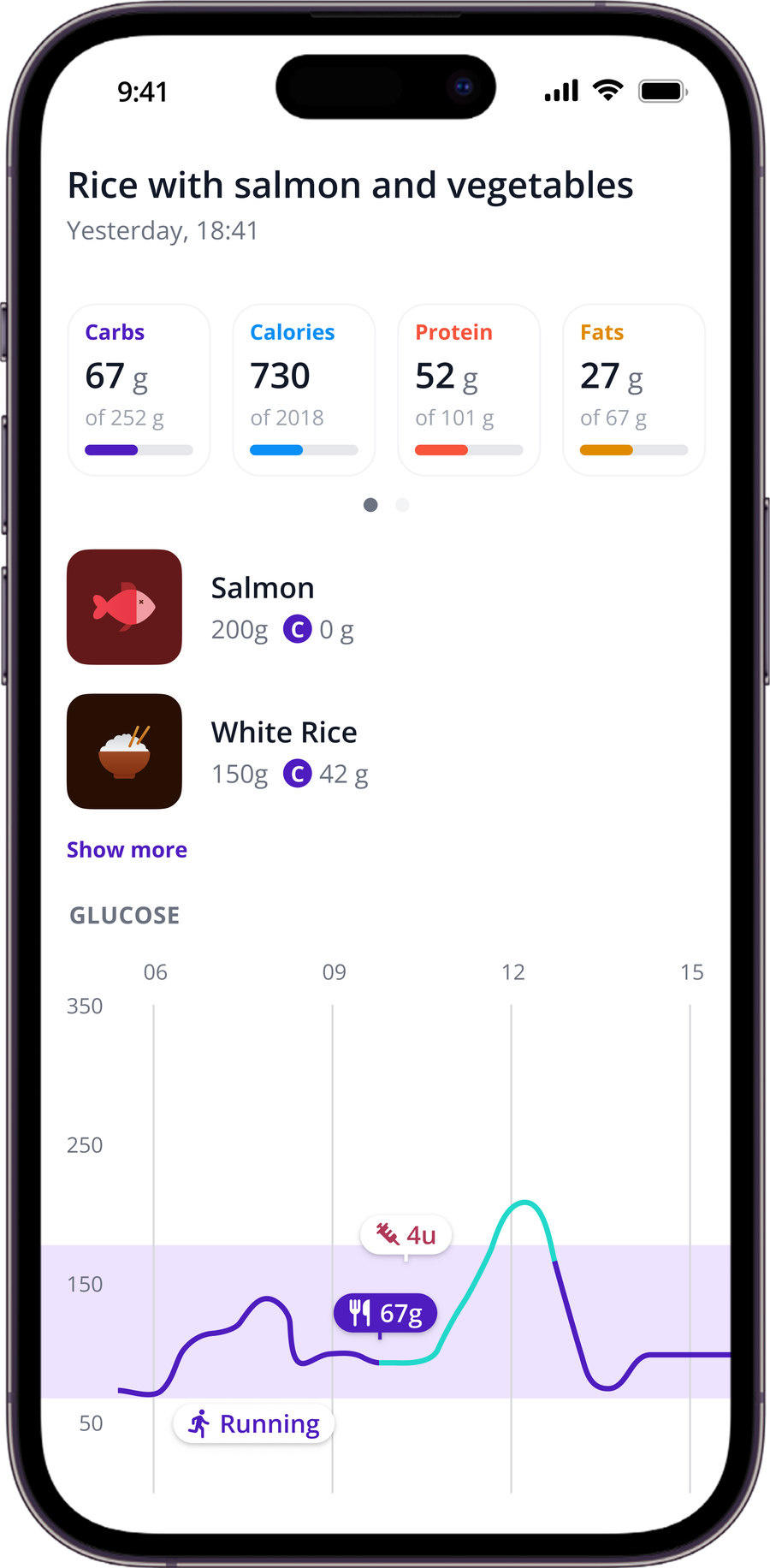
After a borderline result, a common next question is what in your day is moving the number. SNAQ is a food and glucose tracking app for prediabetes that helps you answer it with your own data. Snap a photo of a meal or describe it, and SNAQ estimates carbs, protein, fat, and fiber, with no database searching.
If you wear a CGM, including over-the-counter sensors like Stelo or Lingo, SNAQ shows your meals on your glucose curve so you can see how each one lined up with your response. If you check with fingersticks, you can log those readings next to your meals. A few weeks of that gives you something concrete to bring to your doctor, who's the right person to interpret it.