Quick answer: A short walk of about 10 minutes, started soon after you finish a meal, can noticeably lower how high your glucose rises and help it come back down faster. The effect shows up consistently in research and tends to be more pronounced after higher-carb meals. It's a supportive habit, not a replacement for insulin, medication, or meal planning.
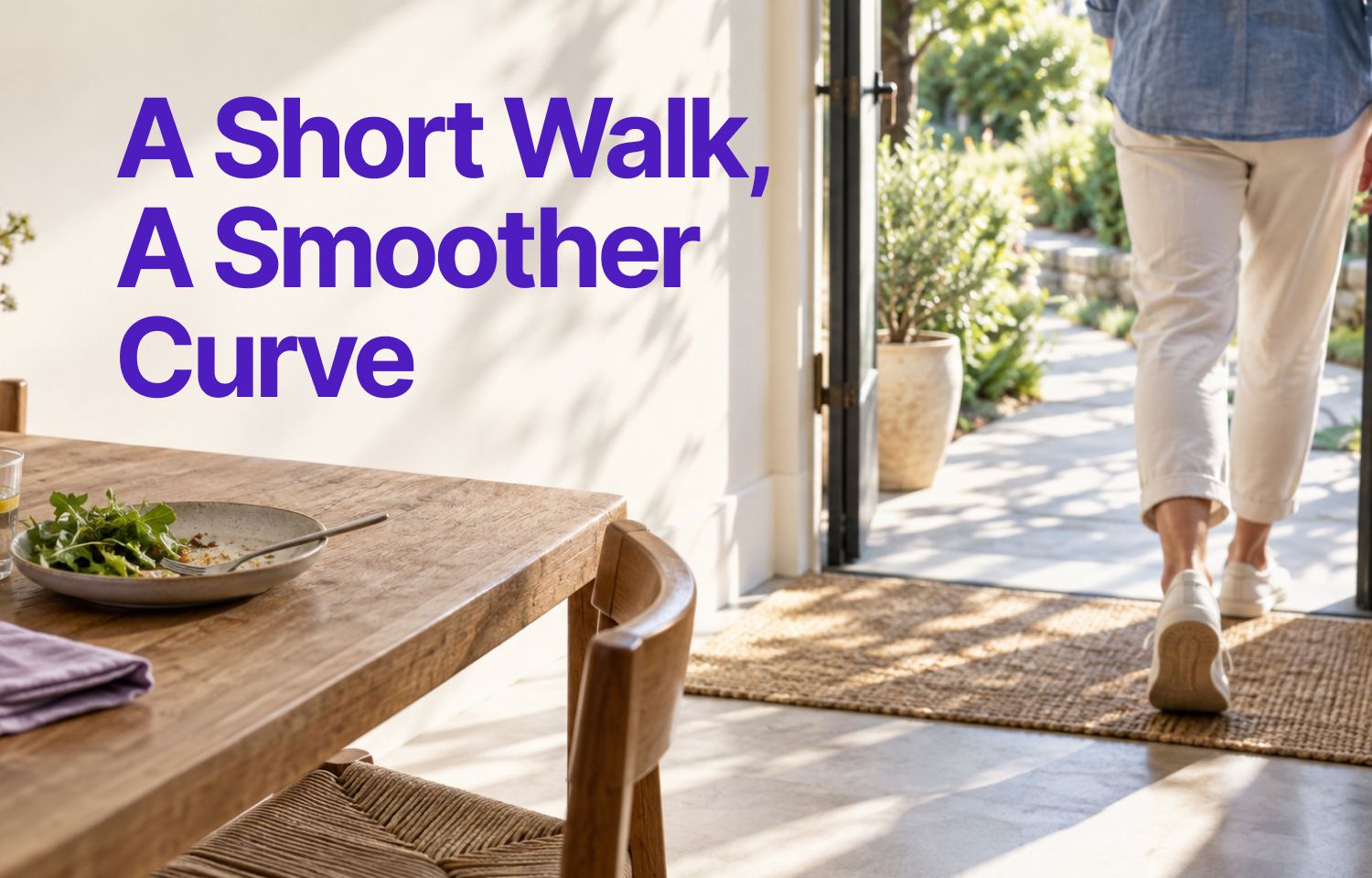
You finish lunch, lace up your shoes, and walk around the block for 10 minutes. When you check your CGM later, the post-meal peak is noticeably lower than yesterday when you sat at your desk.
Is this repeatable? How much of a difference can a short walk actually make?
This article explores what happens to your glucose curve when you add a brief walk after eating, how quickly the effect appears, and what to expect based on the meal, timing, and your diabetes type.
What Happens to Glucose During a Post-Meal Walk
When you eat, glucose enters your bloodstream. Your muscles are one of the main places that glucose goes, especially when they're active.
Walking after a meal increases glucose uptake by your muscles without requiring extra insulin. This process happens through a pathway called non-insulin-mediated glucose uptake, which works alongside insulin to clear glucose from your blood.
The result: your post-meal glucose peak is often lower, and the curve may return to baseline faster.
This effect has been studied across multiple trials. Research shows that even light-to-moderate walking after meals can reduce post-meal glucose levels, particularly when the walk happens within 30 minutes of finishing the meal.
How Much Can a 10-Minute Walk Change the Curve?
The magnitude varies depending on the meal, your insulin sensitivity, and your activity baseline.
A crossover trial in 41 adults with Type 2 diabetes tested exactly this. Participants spent two weeks walking 30 minutes once a day, and two weeks walking 10 minutes after each main meal. The post-meal version lowered the area under the glucose curve by around 12% on average, and by 22% after the evening meal, the meal that carried the most carbohydrate.
A smaller trial put a number on the peak itself. In healthy young adults, a 10-minute walk straight after a 75 g glucose drink brought the peak down from roughly 182 mg/dL to roughly 164 mg/dL, a difference of about 18 mg/dL.
Two things are worth pulling out of that. The benefit is largest after the carb-heaviest meal of your day. And the shape of it, a lower peak and a quicker return, shows up in insulin-resistant and healthy metabolisms alike.
For someone with Type 1 diabetes, the effect may be smaller or more variable depending on insulin timing, but many CGM users still notice a visible difference in curve shape when walking becomes a consistent habit.
One useful pattern: if you compare the same meal on two separate days, once with a post-meal walk and once without, the walked meal often shows a flatter, shorter peak. This kind of comparison can help you understand your own response.
When to Start Walking After a Meal
Timing matters more than most people expect.
What the research supports is walking soon after you eat, not a precise number of minutes. The trials with the clearest results have people moving within the first half hour, while glucose is still on its way up. In the healthy-adult trial above, walking immediately after the glucose drink actually lowered the peak more than a longer walk started 30 minutes later did.
If you wait too long, say an hour or more, you may miss the window where walking has the strongest impact on the peak. The glucose has already peaked, and your body has already managed most of the post-meal rise.
If walking immediately after eating leaves you uncomfortable, a 10 to 15 minute buffer is usually enough to feel settled without giving up the benefit. That part is about comfort, not physiology, so use whatever you'll actually stick to.
The timing of activity can be just as important as the food itself when you're managing Time in Range after meals.
Does It Work for Both Type 1 and Type 2 Diabetes?
Yes, but the mechanism and magnitude differ slightly.
In Type 2 diabetes, post-meal walking helps counter insulin resistance. Muscles take up glucose more efficiently during activity, reducing the burden on your pancreas and improving the glucose curve even when insulin levels are lower or less effective.
In Type 1 diabetes, walking still increases glucose uptake, but the effect is harder to predict. Mealtime insulin is already working in the background, and exercise changes how your body responds to it. That combination is part of why two people with Type 1 can eat the exact same meal, walk the same way, and see two different curves, and why the same person can get a different result on different days.
This is also why walking and insulin together carry a real risk of lows that walking alone doesn't. If you have Type 1, it's worth talking with your care team about how activity fits into your plan before making it a habit.
Many people with Type 1 notice their curve looks smoother on days they add a short walk after a moderate-carb meal, even without changing anything else about how they manage it.
How Quickly Does Walking Affect Glucose?
The glucose-lowering effect starts during the walk itself and continues for 30 to 60 minutes afterward.
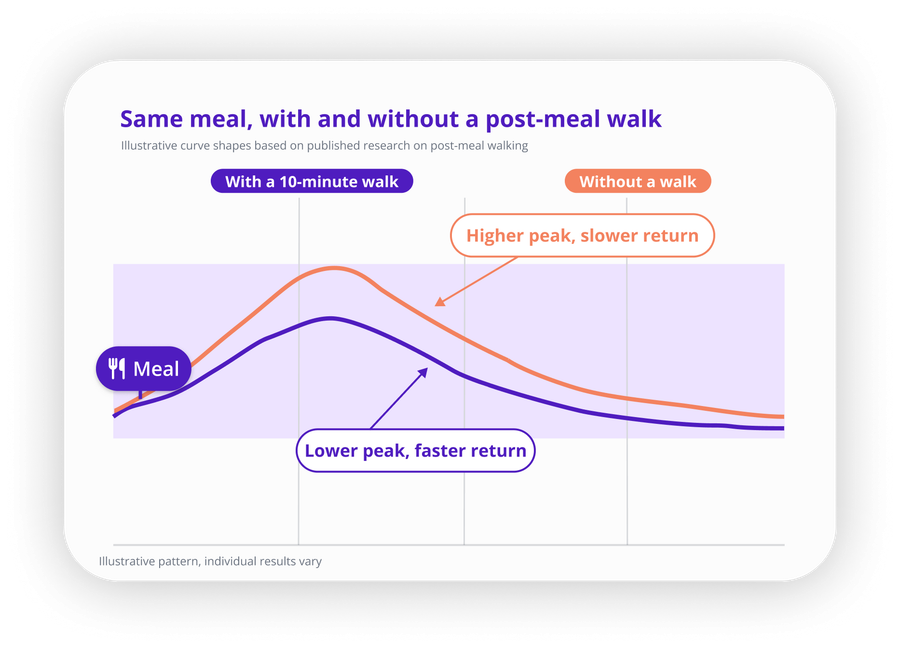
On your CGM, you might see:
- A smaller peak than usual.
- A slower rise to peak.
- A faster return to baseline.
Some people notice the effect within the first 15 minutes. Others see the biggest difference when they compare the 90-minute post-meal window between walked and non-walked meals.
The effect is not instant in the way that insulin or glucose tablets are. It's a modulation of the curve, not a correction.
What If You Can't Walk for 10 Minutes?
Any movement is better than sitting still.
Even 5 minutes of walking, standing and doing dishes, or light stretching can shift the curve in a helpful direction. The dose-response relationship is not perfectly linear, but shorter bouts of activity still improve glucose uptake compared to remaining sedentary.
If 10 minutes feels too long or you're in a setting where walking isn't practical, consider:
- Walking in place.
- Taking the stairs.
- Standing while doing a task.
- A short walk to the bathroom or around your building.
Consistency matters more than duration. A 5-minute walk after most meals will likely have more impact over time than a 20-minute walk once a week.
Does the Type of Walk Matter?
Light to moderate intensity works best for most people.
You're aiming for gentle effort, not a workout. A pace where you can still talk comfortably is usually enough to activate glucose uptake without triggering a stress response or making your body release stress hormones like cortisol or adrenaline.
Very intense activity immediately after eating can sometimes cause glucose to rise temporarily due to the release of stored glucose from the liver. This is more common in high-intensity interval training or sprinting, not in a casual neighborhood walk.
For post-meal glucose management, think "after-dinner stroll," not "cardio session."
What About Walking Before a Meal?
Walking before a meal can also improve insulin sensitivity, but the effect on the post-meal curve is less direct.
If you walk 30 to 60 minutes before eating, your muscles may be more receptive to glucose during the meal, which can lead to a slightly lower peak. But the timing is harder to control, and the effect is generally smaller than walking right after eating.
For people who want the most reliable impact on the post-meal curve, after-meal walking is the clearer strategy.
Common Patterns You Might See on Your CGM
Here are a few curve shapes that become more common when you add post-meal walking:
| Scenario | Curve pattern without walking | Curve pattern with walking |
|---|---|---|
| Moderate-carb meal | Sharp peak at 60–90 min, slow return | Lower peak at 60–75 min, faster return |
| High-carb meal | High peak at 90 min, extended tail | Moderated peak, shorter tail |
| Mixed meal (carbs + fat + protein) | Delayed peak at 2–3 hours | Earlier peak, less prolonged elevation |
| Breakfast with dawn effect | High fasting + large post-meal spike | Smaller spike, earlier return to range |
These are tendencies, not guarantees. Your own response depends on insulin timing, meal composition, and baseline glucose when you start the walk.
Dawn effect: a natural rise in blood sugar in the early morning, driven by hormone changes rather than food. That's why a walk right after breakfast can look like a bigger visible shift for some people.
If you're curious about why breakfast spikes your glucose more than lunch or dinner, post-meal walking is one of the few strategies that consistently helps with morning insulin resistance.
Can You Rely on Walking Instead of Adjusting Insulin or Medication?
No.
Walking is a supportive habit, not a replacement for your insulin, medication, or meal plan.
If you're consistently seeing high spikes after meals, walking may take the edge off, but it won't fix a bigger mismatch between what you're eating and how your treatment is dosed. That's a conversation for you and your care team. Walking also doesn't protect against lows. If you're noticing those, treat them the way you normally would and flag the pattern to your provider.
Think of post-meal walking as one habit that supports your glucose response, not a substitute for the rest of your diabetes management.
Practical Tips for Making Post-Meal Walking a Habit
Start with one meal per day. Breakfast or dinner are often the easiest to anchor a walking habit to.
Set a timer for 10 to 15 minutes after you finish eating. This removes the guesswork about when to start.
Keep shoes near the door. Reducing friction makes it easier to follow through.
If you live somewhere with weather extremes or limited outdoor access, walking indoors works just as well. Hallways, living rooms, or even marching in place while watching TV all count.
Track the habit and the glucose response together. SNAQ can help you log the meal, mark the walk as a note or activity, and review the glucose curve afterward so you can see if the pattern holds across repeated meals.
Using SNAQ to Track Post-Meal Walking and Glucose Response
SNAQ is built to do more than log the walk, it's meant to help you notice patterns like this one.
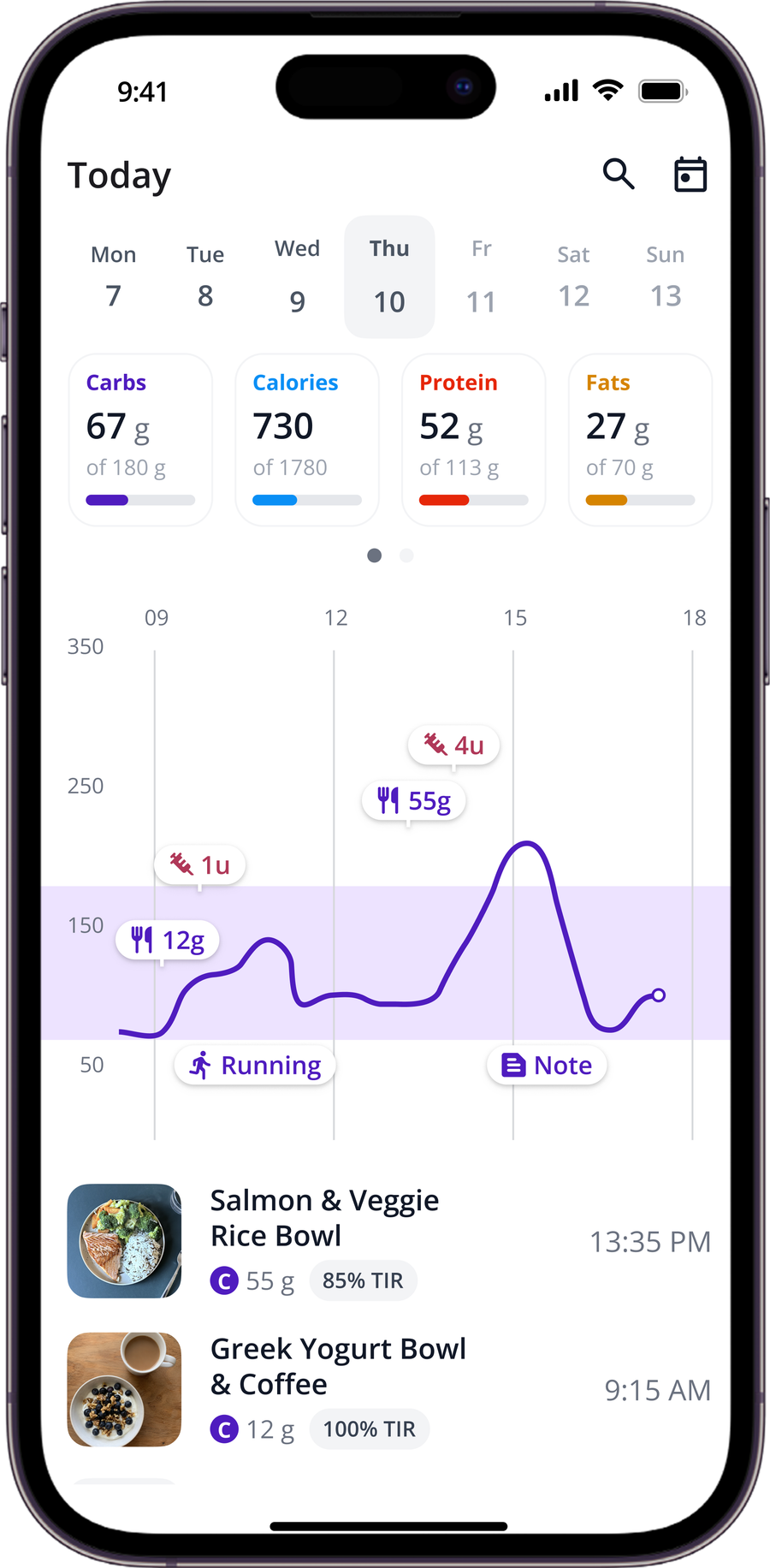
Log the meal the way you normally would, then add a quick note when you take a post-meal walk. SNAQ keeps that note next to your CGM curve, so when you check your insights later, you're not just looking at raw data, you're looking at a curve that's already tied to what you did around it.
Over time, that's how you find out whether a post-meal walk is actually doing something for your numbers, not by guessing, but by comparing it side by side.
Download SNAQ to start tracking meals, activity, and glucose patterns together.