
Quick answer: Low-carb meals can still raise blood sugar because protein triggers glucagon, which tells your liver to release stored glucose. Fat delays digestion rather than preventing a rise. Stress, hidden carbs, and morning insulin resistance can all add to the effect, even when your carb count looks right.
Low-carb eating is supposed to keep glucose steady, so when your CGM climbs after a meal you thought was safe, it's genuinely confusing. The reflex is to blame a hidden ingredient or a bad label read, and sometimes that's right. But often the rise has nothing to do with the carbs you ate at all.
Protein, fat, stress, and even the time of day can all move your glucose, independent of your carb count. Understanding which one is actually driving the spike is what helps you fix it.
This article walks through the most common culprits, what to check first, and how to troubleshoot when it keeps happening.
The Protein Problem: Glucagon and Insulin Both Matter
Protein doesn't raise glucose as quickly as carbs do, but it still affects your blood sugar in two ways.
First, protein stimulates insulin release. That's useful if you have some insulin production left, but it also means glucose won't stay flat even when carbs are very low.
Second, and more importantly for low-carb eaters, protein triggers glucagon. Glucagon signals your liver to release stored glucose into your bloodstream. This happens even when you haven't eaten carbs. The liver is responding to amino acids from the protein, not to glucose directly.
The effect is most noticeable in meals that are high in protein with little else alongside them: a plain grilled chicken breast, a large steak with no sides, or a protein shake with no fat or fiber to slow things down.
If your low-carb meal included 40 to 50 grams of protein and not much else, this is the most likely driver of the rise.
Fat Slows Digestion, But Doesn't Always Prevent a Rise
Fat delays gastric emptying, which means food moves more slowly from your stomach into your intestines. That typically flattens the glucose curve and pushes the peak later.
But "later" is not the same as "lower."
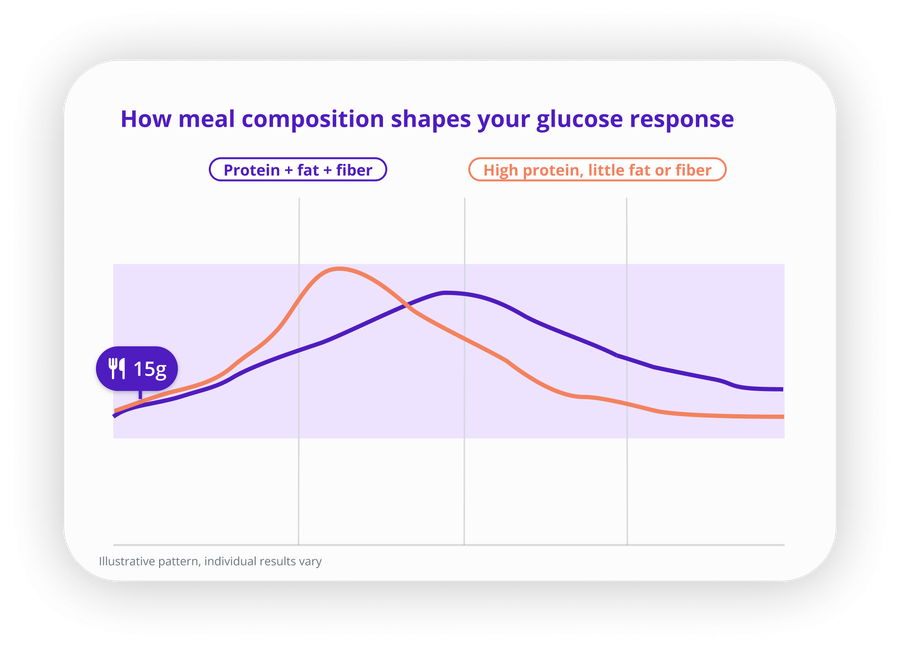
When a meal combines protein, fat, and a small amount of carbs, the fat may stretch the glucose rise over two to three hours rather than preventing it. You might see a slow climb starting 90 minutes after eating instead of a sharper move at 45 minutes. That can make it harder to connect the meal to the spike if you're only checking your CGM in the first hour.
This pattern is common with meals like:
- Cheese and nuts
- Salmon with olive oil and non-starchy vegetables
- Fatty cuts of meat with a small portion of roasted vegetables
The total rise can still be significant. It just arrives late.
Stress and Cortisol: The Silent Spike Driver
Stress raises cortisol. Cortisol is well-established as a driver of hepatic glucose output and insulin resistance, and the mechanism is documented in clinical research. Whether the cortisol rise from everyday stressors like a tense meeting or a rushed meal is large enough to move your glucose meaningfully will vary by person. But if you consistently see higher readings on days that feel harder, cortisol is a plausible contributor worth tracking.
This is especially noticeable around meals because the food and the cortisol often arrive at the same time.
Everyday stressors that may play a role:
- A tense work meeting before lunch
- Reading something frustrating while eating breakfast
- Eating in a rush because you're running late
- Worrying about whether the meal will spike your glucose
That last one matters more than people expect. Meal-related anxiety can create a feedback loop where stress about glucose raises glucose, independent of anything on the plate.
If your low-carb meals spike more on stressful days and flatten on calm ones, cortisol is likely part of the pattern.
Hidden Carbs and Portion Creep
Sometimes the meal isn't as low-carb as you thought.
Common sources of untracked carbs in meals that seem low-carb:
- Sauces, marinades, and dressings: barbecue sauce, teriyaki, honey mustard, balsamic glaze
- Breading or coating on meat, even when minimal
- Vegetables that carry more carbs than expected in larger portions: carrots, onions, bell peppers, tomatoes
- Processed meats with added fillers or sugars: certain sausages, deli meats, bacon cured with brown sugar
Even 10 extra grams you didn't account for can produce a noticeable rise, especially if you were expecting near-zero glucose impact from the meal.
Portion creep is a separate factor. A serving of roasted vegetables that looks moderate might be closer to a cup than half a cup. A handful of nuts can be 15 grams of carbs instead of 5 if you're not measuring. Neither is a mistake, but both can explain a consistent pattern of unexpected spikes.
If this keeps happening, logging one or two meals with exact measurements is usually faster than guessing.
For more on why carb estimates often miss in real-world eating, see why carb estimates fail in common scenarios.
Meal Timing and Morning Insulin Resistance
Your body's sensitivity to insulin changes throughout the day.
Most people are more insulin-resistant in the morning because of the dawn phenomenon, a natural hormone shift that happens before you wake up. Cortisol and growth hormone rise to help you get going, but they also make it harder for insulin to move glucose into your cells.
That means a low-carb breakfast with protein and fat can spike your glucose more than the exact same meal eaten at dinner. The food hasn't changed. Your body's response to it has.
If low-carb eggs and bacon cause a rise at 8 a.m. but the same meal at dinner doesn't, morning insulin resistance is the most likely explanation.
For a deeper look at why breakfast tends to behave differently, see why breakfast spikes glucose more than lunch or dinner.
What to Check First
When a low-carb meal spikes your glucose, start with these three questions.
How much protein was in the meal, and what else was alongside it? If you had 40 grams or more of protein with little fiber or fat, glucagon-driven glucose release is a likely contributor. Try the same protein portion with added vegetables or fat and see whether the curve changes.
What was your stress level before and during the meal? If you were rushed, anxious, or distracted, cortisol may have raised your baseline glucose before food started digesting. Eating the same meal on a calm day and comparing the two curves is a useful test.
Are the portions and ingredients what you think they are? Look at sauces, coatings, and dressings. Measure one meal carefully to see whether portions were larger than estimated. It's worth doing once, even if you don't do it every time.
Tracking the Pattern Over Time
One meal tells you very little. Three or four repetitions of the same meal start to tell you something.
If the same low-carb meal spikes you consistently, the meal is probably the issue. If it only spikes you sometimes, the context matters: time of day, stress, sleep quality, how active you were earlier.
This is where a meal log becomes more useful than memory. SNAQ lets you overlay meal context on your glucose curve across multiple days, so you can see whether a spike was consistent or whether it only happened on the Tuesday you were running late and ate at your desk.
That kind of comparison makes it much easier to separate a true food response from a timing or stress spike.
When a Rise Isn't Worth Troubleshooting
Not every glucose movement after a meal needs investigating.
A moderate rise that returns to your baseline within two hours is a normal post-meal response for most people. It doesn't mean the meal was wrong or that something needs to change.
A rise that climbs significantly and stays elevated for three hours or more is worth a closer look. The goal isn't to prevent every movement. It's to understand which rises are expected, which ones are connected to factors you can adjust, and which ones are worth discussing with your care team around meal planning or medication timing.
(The specific numbers that matter depend on your personal targets and medication. Your care team is the right source for those thresholds.)
Three Experiments to Try This Week
If low-carb meals keep spiking your glucose, these three comparisons can help narrow down the cause.
Eat the same low-carb meal at different times of day. If breakfast spikes but dinner doesn't, morning insulin resistance is likely the main factor, not the food.
Log one low-carb meal with exact measurements of every ingredient, including oils, sauces, and toppings. See whether hidden carbs or larger portions explain part of the rise. If you're using SNAQ, log the meal alongside your glucose data so the context is all in one place.
Eat the same meal once in a rush and once sitting down with no distractions. If the calm-day curve is noticeably flatter, stress is contributing more than the food is.
See Your Patterns Clearly
The experiments above work best when you're not relying on memory. SNAQ connects your meals, context, and glucose data in one view, so you can actually see what's driving your spikes instead of guessing after the fact.