Quick answer: Log a long grazing session as one entry that covers the whole window, or split it into two or three rounds based on when you went back for food. Add a note on your timeline so the glucose curve has context later. Rough portions are enough, and you can fill in details later if you remember them.
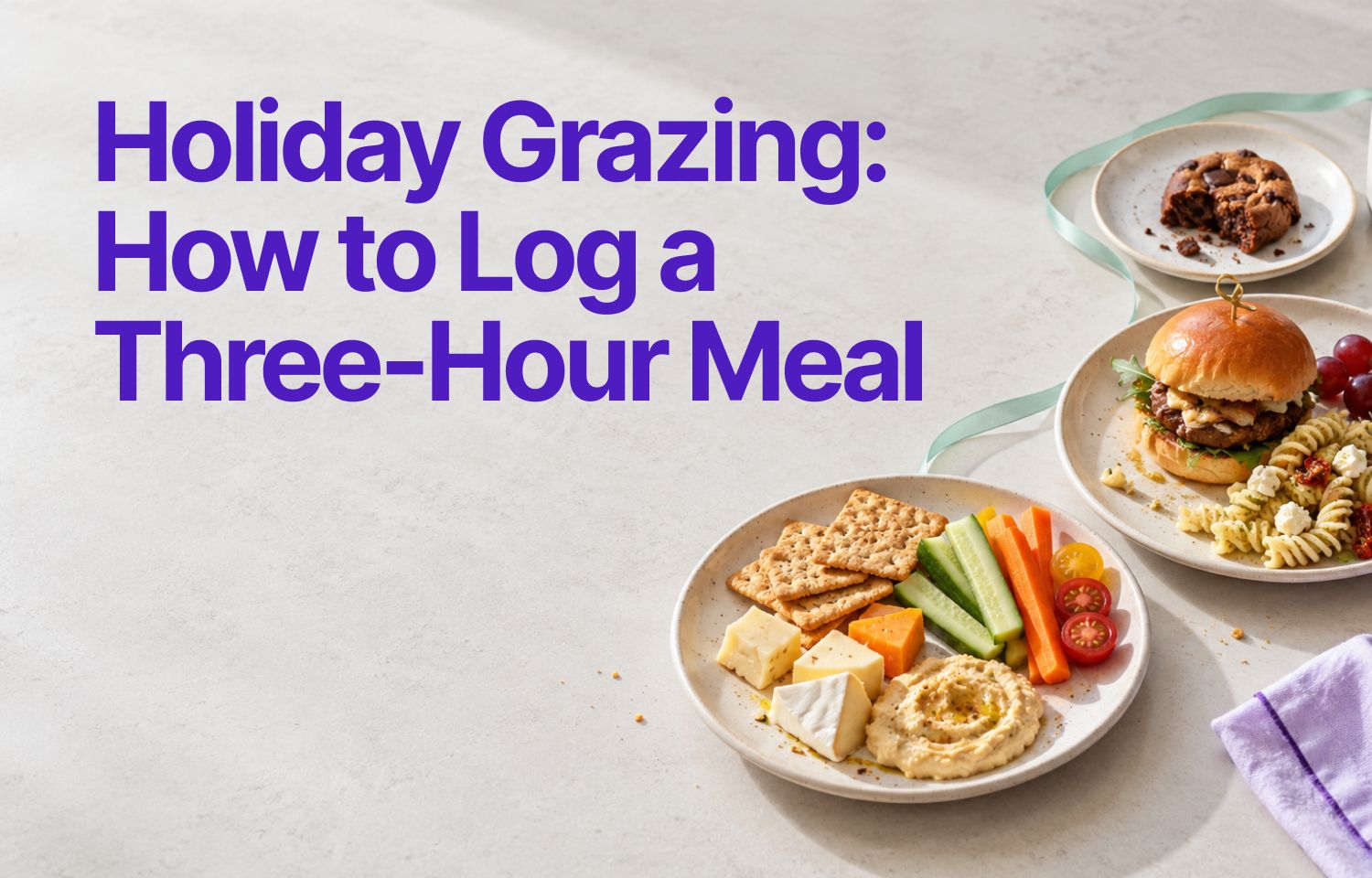
Holiday grazing means eating small amounts on and off for hours, and it's hard to log because there's no clear start or finish and it's easy to lose count of what you ate. At a party that starts at 3 PM, with appetizers on the counter, a cheese board on the table, and someone constantly refilling the snack bowls, you can eat the equivalent of a full meal by 6 PM in a dozen separate handfuls. By then your meal log has a few scattered entries, or none, and nothing that looks like "lunch" or "dinner."
Your CGM (the sensor that tracks your glucose around the clock) is awkward to read afterward too. A glucose graph is easiest to interpret when a meal has a clear starting point, and a three-hour session shows up as a slow hill with no clear peak.
How do you log a meal that lasts three hours?
You can log it once at the end, in two or three rounds, or as you go, depending on how much attention you want to spend at the party.
| Approach | Best for | Effort at the event | Timing detail | Main catch |
|---|---|---|---|---|
| Log it once, at the end | A single event lasting two to three hours | Almost none | Low: one entry covers the whole window | You have to remember what you ate |
| Log in rounds | Events with clear phases, like appetizers, dinner and dessert | A few quick entries | Medium: one marker per round | Small handfuls between rounds go unlogged |
| Log as you go | Low-key events or grazing at home | High | High: every snack has its own time | Pulling out your phone gets old fast |
How to read it: timing detail is how closely your log lines up with your glucose graph. More entries mean a clearer link between what you ate and when the curve moved.
Strategy 1: Log it once, at the end
Wait until the event is over, then log everything you remember as a single entry. This works best when the session lasted two to three hours and you can roughly recall what you ate. Create one meal entry, list the main items with rough portions, and set the time to when the grazing started. Then add a note on your timeline, like "party grazing, about 3 to 6 PM," so you remember later why this stretch of the curve looks different. In SNAQ, describing the whole thing in one sentence works fine:
Cheese, crackers, hummus and veggies, grapes, a handful of nuts, and two small cookies, grazing over about three hours at a party.
Your carb estimate won't be exact, but the meal shows up on your glucose graph and you'll have something to compare against similar events later. If you forgot to log until 9 PM, the approach is the same with one step first: jot down what you remember in a notes app right away, while the details are fresh, then log it as one entry. Photos from the party help too, because your camera roll shows what was on the table and roughly when.
Strategy 2: Log in rounds
Split the session into two or three entries based on the natural phases of the event, and give each one its own start time. This works when the party has clear stages, like appetizers when you arrive, a dinner plate, then dessert. A three-round split might look like this:
- 3:15 PM: cheese, crackers, veggies
- 4:30 PM: small plate with sliders, pasta salad, fruit
- 5:45 PM: brownie and coffee
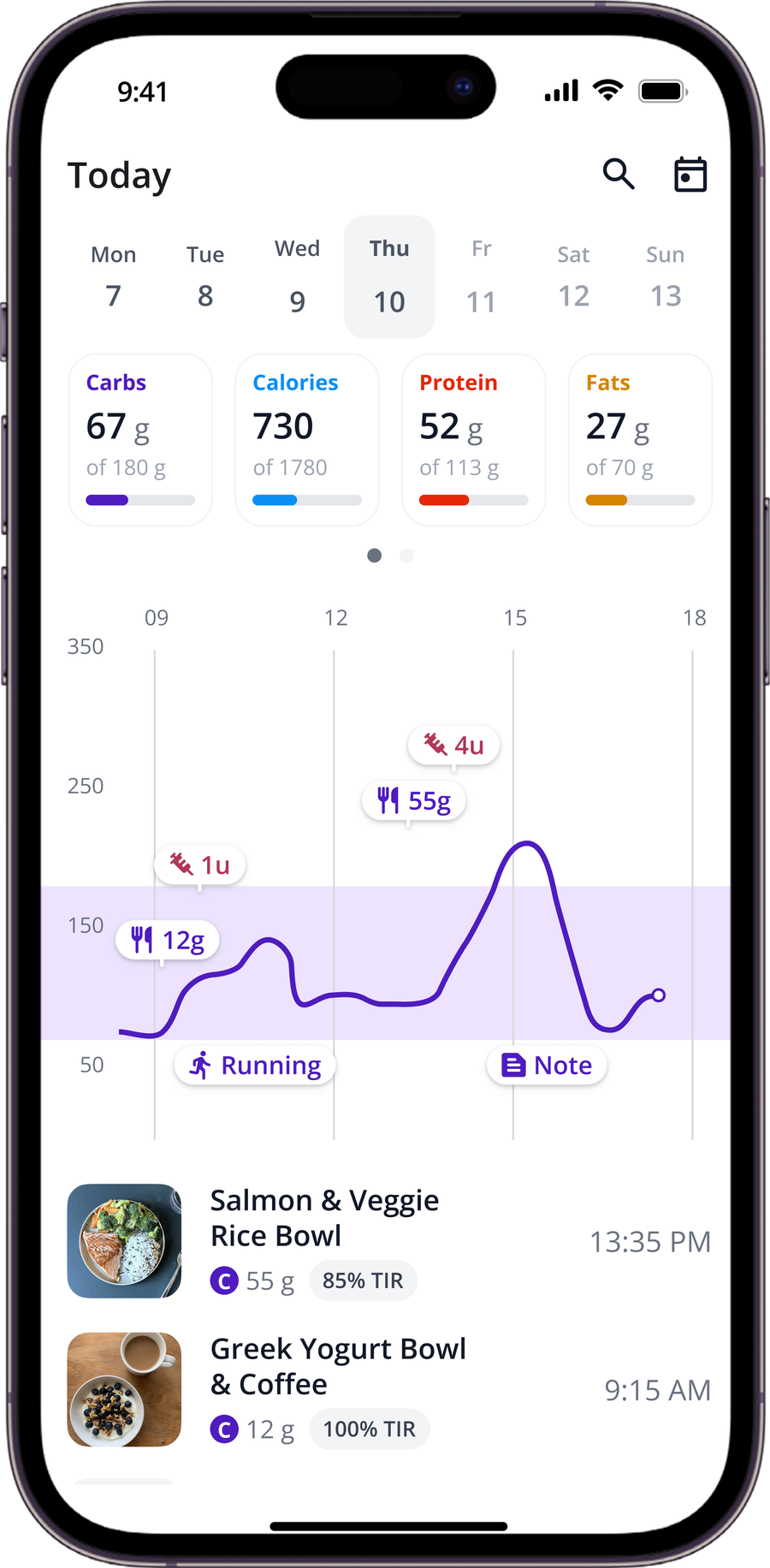
With each round on its own marker, you can see on your glucose graph which round lines up with the steepest climb or the longest stretch above your target range. A quick photo of each plate helps when you log later, because it settles questions like "was it three crackers or six?"
Strategy 3: Log as you go
Log each snack when you eat it, using a barcode scan, a saved favorite, or a quick description. This gives you the most detail, since you'll know when you hit the cheese board and when your glucose graph started to climb. It also takes the most effort and can get tiring at a party. It fits better at home, like during a movie marathon or a slow weekend afternoon.
How do you read your CGM curve after grazing?
Expect a slower climb and a longer stretch up high than after a sit-down meal, often with no clear peak, because nothing marks the start of a single meal. Four things are worth checking when you review the curve:
- Compare the highest point to your target range, the range you and your care team have set. Many CGM reports summarize how much time you spend in that range.[2]
- Check how long it stayed above target, because the climb can last longer when you keep adding food.
- Note when it came back to baseline, the level you started at before eating. Because the eating itself lasted longer, it can take longer to get back there than after a quick meal.
- Look at any bumps you can't explain. If part of the curve doesn't match your log, think back to what else you had, like a drink, some bread, or something sweet.
Same carbs, different timing
Illustrative example, not real data. Real curves vary from person to person and meal to meal.
What you graze on matters too. In one study of 36 adults, half with type 2 diabetes and half without, the same amount of glucose eaten with protein and fat produced a smaller glucose rise than glucose eaten alone.[1] For a closer look at why timing and composition change glucose curves, see why some meals peak at 1 hour and others at 3 or 4.
Should you try to avoid grazing?
Not necessarily, because grazing is a normal way to eat at a holiday gathering. It's just harder to log and harder to read than a sit-down meal. If you want to know how your own body handles it, log a grazing session and a sit-down meal with similar foods, then compare the two curves. No two parties are identical, so treat it as a rough comparison. For questions about what's right for you, your care team is the place to start.
How does SNAQ help with grazing sessions?
SNAQ, a CGM food tracker, shows your logged meals right where they happened on your glucose graph. You can log your food with a photo of your plate, which estimates carbs, protein, fat and fiber, or by describing it in a sentence.
If you log a few sessions like this, the AI Nutritionist can help you spot patterns, like how party days compare with your usual days. For more on keeping logging practical when you can't be perfect, see minimum viable meal logging: what to track when you can't be perfect.
Your next step
Before your next holiday event, pick one of the three approaches and try it once. Afterward, look at the curve and ask whether your log gave you enough context to read it. If it didn't, try a different approach next time. Try SNAQ and see your party meals on your glucose graph.