
Quick answer: Illness triggers stress hormones like cortisol and adrenaline, which push your liver to release stored glucose and make your cells more resistant to insulin, so blood sugar can climb even if you're barely eating. Dehydration from fever, vomiting, or diarrhea can push it higher still. The rise usually settles once you recover, but frequent monitoring and staying hydrated help you ride it out safely.
Your appetite disappears. You're sipping broth, maybe forcing down a few crackers. And your blood sugar climbs to 250 mg/dL anyway.
That's not a carb counting error, and it's not something you did wrong. It's one of the stranger realities of illness and diabetes: glucose can rise sharply even when you're eating almost nothing.
What Causes Blood Sugar to Rise During Illness?
When your body detects infection or inflammation, it releases stress hormones like cortisol, adrenaline, and glucagon. These hormones are part of the immune response, designed to mobilize energy and help you fight whatever made you sick.
But they also trigger the liver to release stored glucose into the bloodstream. They make cells less responsive to insulin, too. Glucose can't move into cells as efficiently. So it accumulates in your blood instead.
The result: elevated blood sugar, even if you haven't eaten a full meal in hours.
Dehydration Makes It Worse
When you're sick, especially with fever, vomiting, or diarrhea, dehydration becomes an issue quickly. As fluid levels drop, glucose becomes more concentrated in your bloodstream. That concentration can push your blood sugar readings even higher.
Staying hydrated doesn't eliminate the stress hormone effect, but it helps prevent glucose from spiking further due to volume loss alone.
Keeping fluids down can be hard when you're nauseated, but small sips of water, broth, electrolyte drinks, or diluted juice every 10 to 15 minutes can be easier to tolerate than drinking a full glass at once.
Why Fasting Doesn't Help
It might seem logical to skip meals when your blood sugar is high and you have no appetite. But fasting during illness can sometimes trigger additional glucose release from the liver, especially in people with Type 1 diabetes. Your body interprets fasting as stress, and it responds by releasing more glucose to "fuel" you through the perceived emergency.
If you can't stomach solid food, focus on liquids that contain a small amount of carbohydrate. This signals to your body that energy is coming in and may reduce some of the stress-driven glucose release.
Examples of gentle carb sources when appetite is low:
- Clear fruit juice diluted with water
- Popsicles
- Applesauce
- Crackers
- Broth with a small amount of pasta or rice
Check your glucose more frequently than usual. If blood sugar rises above your target range and stays elevated for several hours, contact your care team for guidance on next steps.
What to Track During Sick Days
Frequent monitoring gives you a clearer picture of what's happening and helps you respond more safely.
| Track | Why it matters |
|---|---|
| Glucose checks | Check every 2 to 4 hours, even overnight if you're running high or feeling unwell. If you use a continuous glucose monitor (CGM), set alerts for high and low thresholds so you don't have to watch the screen constantly. |
| Meals & fluids | Log what you're able to eat and drink, even if it's minimal. This context helps you and your care team see whether a rise is purely stress-driven or influenced by what you consumed. |
| Symptoms | Note fever, vomiting, diarrhea, or trouble keeping fluids down. These signal dehydration risk and may change how your care team advises you. |
If you have Type 1 diabetes: ketone tracking belongs on this list too, see the callout below for what to ask your care team.
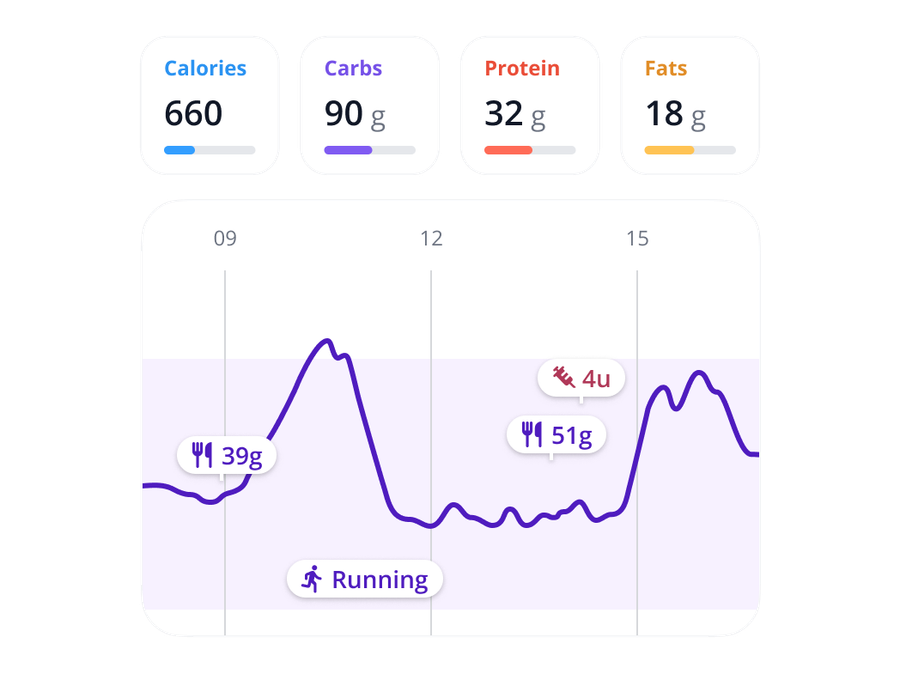
SNAQ can help here. It keeps meal context, glucose readings, and symptoms together in one timeline, not scattered across notes and memory. If you use a continuous glucose monitor (CGM), seeing your sick-day curve next to a typical day makes it easier to tell what's illness and what's food. That's useful in the moment, and later, when you're reviewing patterns with your care team.
For more on how to track effectively when your usual eating patterns are disrupted, see How to Track Meals and Learn What Affects Your Blood Sugar Without a CGM.
If You Have Type 1 Diabetes
If you have Type 1 diabetes, illness raises your risk of diabetic ketoacidosis, DKA for short, when ketones build up alongside high blood sugar. Ketones are what's left when your body burns fat instead of glucose for fuel. Ask your care team what glucose and ketone levels should prompt you to test, and what counts as an emergency for you specifically. Insulin needs can shift too. One more reason a written sick-day plan from your endocrinologist is worth having before you actually need it.
Managing Medication During Illness
Most diabetes medications, including insulin and other options like GLP-1s or sulfonylureas, can behave differently when you're sick. That's not something to work out on your own. A written sick-day plan covers when to check in, what symptoms mean you should call, and how illness might affect your regimen. If you don't have one yet, ask your care team for it. For general guidance in the meantime, the ADA's sick day guidelines are a solid starting point.
If you're unsure whether your current situation requires medical attention, err on the side of reaching out. High blood sugar combined with vomiting, difficulty breathing, confusion, or persistent ketones requires urgent evaluation.
For additional guidance on recognizing when glucose patterns shift, see Factors Impacting Your Glucose Levels and What You Can Do About It.
Why Sick Day Glucose Is Different From Everyday Highs
During illness, glucose often behaves differently than it does after a large meal. The spike may last longer. It may not respond as predictably to your usual strategies. And it may fluctuate unpredictably as your body fights infection, recovers, or cycles through fever.
Illness temporarily changes your body's chemistry. It's not a reflection of how well you manage things day to day, it's your immune system pulling extra fuel to fight what's making you sick.
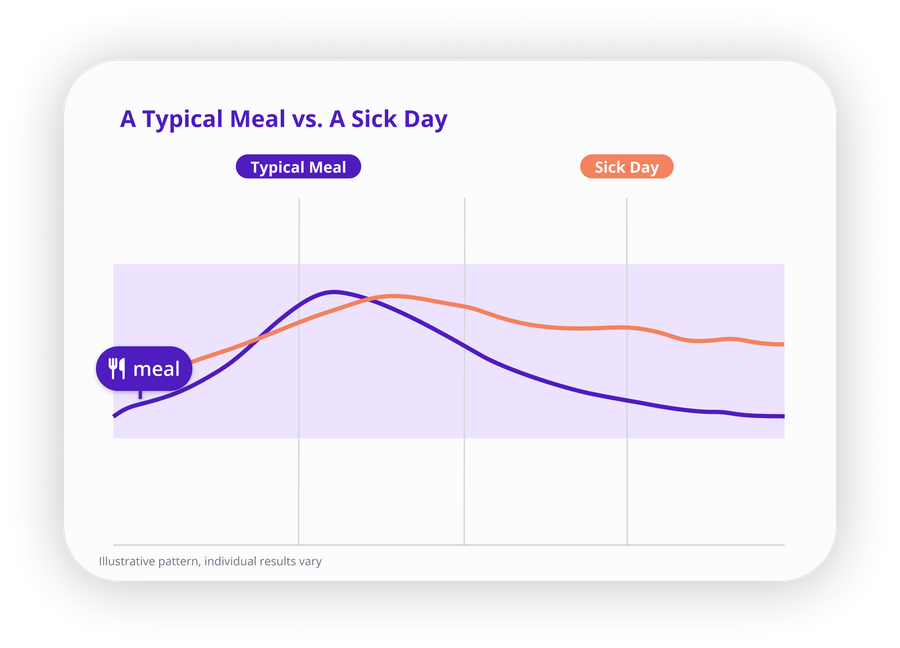
Once you recover, blood sugar patterns typically return to baseline. If they don't, or if you notice lasting changes in how your glucose responds to food or medication after illness, follow up with your care team.
Recovery and Returning to Baseline
As you start feeling better, glucose control often improves gradually. Stress hormone levels drop. Appetite returns. Hydration normalizes. Insulin sensitivity improves.
During recovery, keep monitoring glucose closely. You may notice your usual meals start producing more predictable responses again. If you were advised to adjust medication during illness, ask your care team when and how to return to your regular plan.
SNAQ can help you compare glucose patterns from before, during, and after illness side by side. Logging small meals, hydration, symptoms, and recovery foods in one timeline makes it easier to see when things settled back to your normal range, and gives your AI Nutritionist more context to work with the next time your routine gets disrupted. Start using SNAQ here.