Quick answer: The best sandwich for diabetes depends on your body, but the biggest levers are bread fiber, protein-and-fat balance, and what's on the side. Pick a bread with at least 3g of fiber per slice, pair it with lean protein and a little healthy fat, and swap high-carb sides for vegetables or nuts to keep your response steadier.
A turkey sandwich on whole wheat sounds simple enough, until one version keeps your glucose steady and another sends it climbing for two hours. More often than not, the difference comes down to the oil baked into the bread, the sugar folded into the deli meat, the sauce you didn't measure, and the chips that rode along on the side.
The Bread Variable: Fiber Count Matters More Than "Whole Grain"
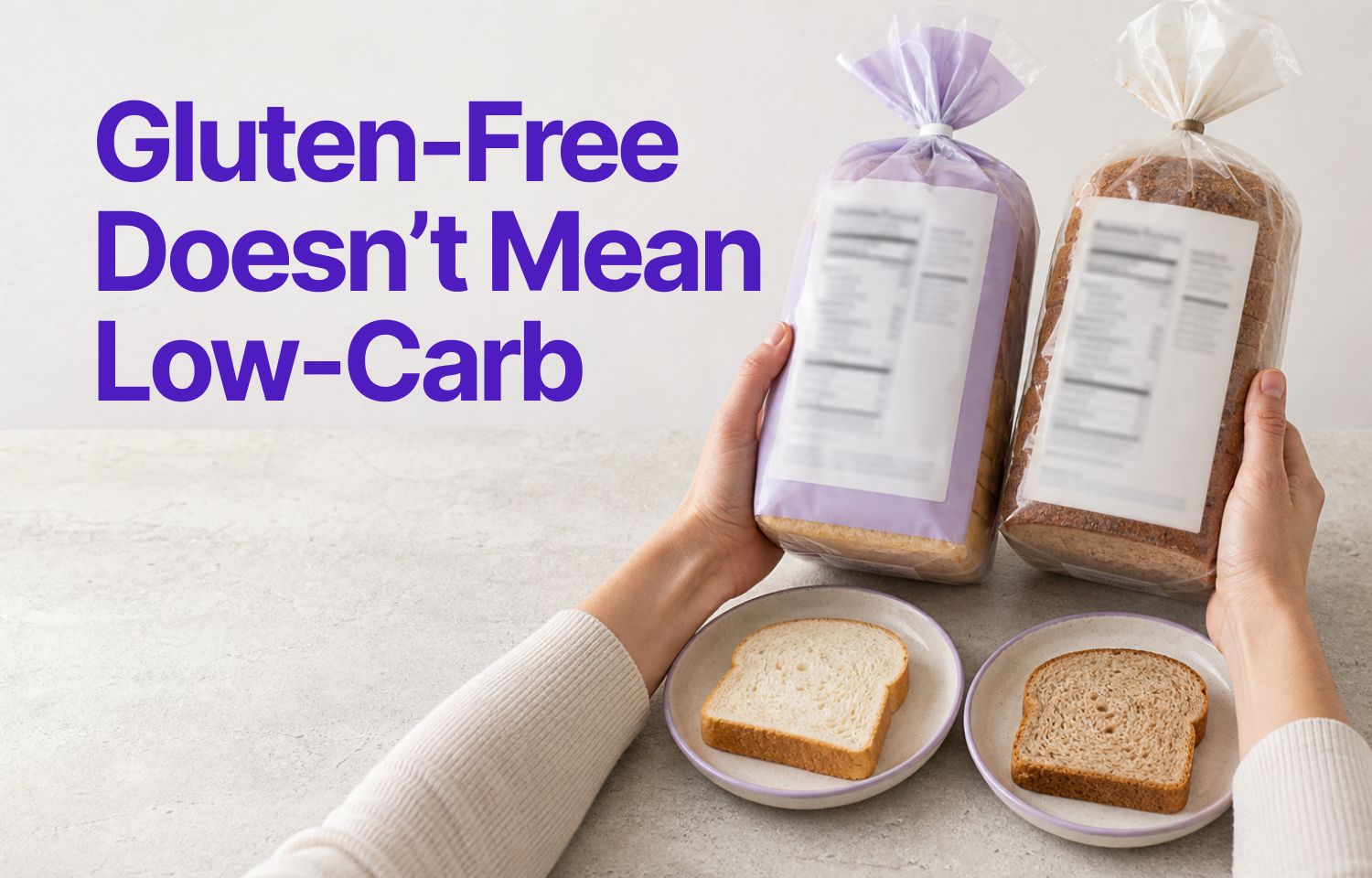
Whole grain bread has a lower glycemic index than white bread, which can help slow the rise in glucose, but not all whole grain breads are created equal. The fiber count matters more than the label: aim for at least 3 grams per slice, ideally closer to 4 or 5, and know that 100% whole wheat, pumpernickel, and rye tend to fare better here, especially when the brand adds seeds, oats, or resistant starch.
The ingredient list tells the real story. If "wheat flour" or "enriched flour" appears first, the loaf is mostly refined flour with a little whole grain stirred in for the label, less a reader's mistake than the packaging doing exactly what it was designed to do. Total carbs deserve a look too: some thick-cut "artisan" loaves pack 25 to 30 grams of carbs per slice, roughly double what a standard slice contains.
| Bread type | Fiber per slice | Total carbs per slice | What to look for |
|---|---|---|---|
| White bread | 0–1g | ~13–15g | "Enriched flour" listed first, minimal fiber |
| Standard whole wheat | ~2g | ~12–14g | "Whole wheat flour" first, but fiber varies a lot by brand |
| 100% whole wheat, rye, pumpernickel | 2–4g | ~12–17g | Added seeds, oats, or resistant starch push fiber higher |
| Thick "artisan" bread | 1–3g | 25–30g | Thick slice size drives carbs up more than fiber goes up |
If you track with a CGM, try the same sandwich on two different breads across a few days. The comparison usually settles the question faster than any label can.
Protein and Fat Slow the Curve
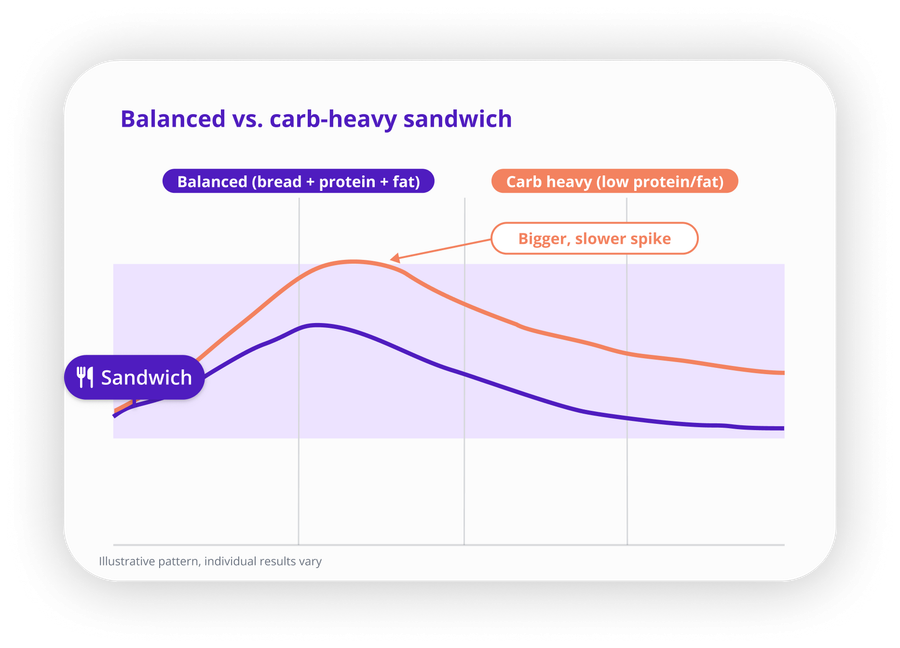
Lean protein, turkey, chicken, or tofu, helps stabilize the glucose response by slowing digestion, though it won't rescue a sandwich built on low-fiber bread and sweetened condiments. Fat works on a similar principle: avocado, cheese, or a thin spread of nut butter slows gastric emptying and can flatten the glucose peak, especially on a sandwich that's otherwise carb-heavy.
The goal is balance without doubling the calories. A sandwich built on roughly 40 grams of carbs, 20 grams of protein, and 10 to 15 grams of fat tends to produce a steadier response than one with 50 grams of carbs and little else to slow it down.
Vegetables Add Volume and Fiber Without Spiking Glucose
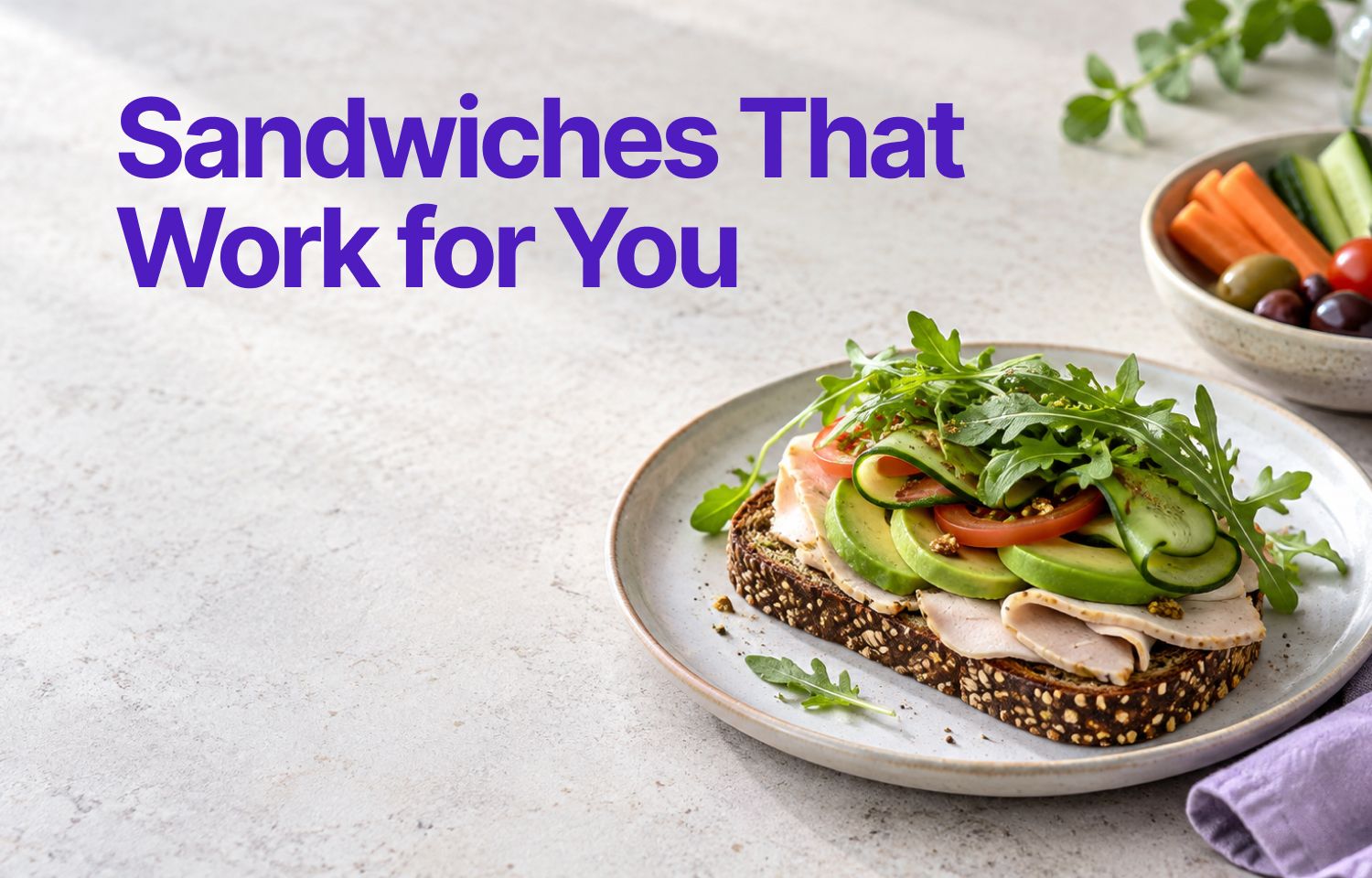
Spinach, arugula, bell peppers, cucumbers, tomatoes, and shredded cabbage add fiber, micronutrients, and volume. They won't flatten a glucose curve on their own, but they fill out a sandwich without adding fast-acting carbs, and they tend to slow down how quickly you eat, which can blunt how fast glucose shows up. If you're building a sandwich at home, aim to fill at least a third of it with vegetables.
Sauces and Condiments Are Where Hidden Carbs Live
Ketchup, honey mustard, barbecue sauce, and sweetened mayo can add 5 to 10 grams of carbs per tablespoon, while mustard, hot sauce, vinegar-based sauces, and plain mayo cost almost nothing by comparison. Hummus sits in between: it carries some carbs, but also protein and fiber, so it tends not to spike as sharply as a sugary sauce.
When you're eating out, ask for the sauce on the side. Restaurants typically use two to three times what you'd add at home.
For more on hidden restaurant carbs, see Restaurant Carbs Are Hard: 7 Reasons Your Estimate Is Off.
The Sides Matter as Much as the Sandwich
The sides matter just as much as the sandwich itself. A sandwich built on 40 grams of carbs, paired with chips, fries, or a sweetened drink, can push the full meal to 70 or 80 grams of fast carbs. If your glucose holds steady after the sandwich but rises with the full meal, the sides are usually the culprit.
Better pairings include a small side salad with an oil-based dressing, raw vegetables with hummus or guacamole, a handful of nuts, or pickles and olives. If chips are non-negotiable, baked or lentil-based versions tend to produce a gentler response than standard potato chips.
Open-Faced Sandwiches Cut Carbs in Half
Dropping to one slice of bread instead of two cuts the carb load by 15 to 20 grams, depending on the bread, and you can still build a satisfying meal by adding more protein, vegetables, and a side. This works especially well at breakfast, when insulin resistance tends to run higher. For more on why morning meals spike differently, see Why Breakfast Spikes Your Glucose More Than Lunch or Dinner.
Timing and Pairing: When You Eat the Sandwich Can Change the Curve
Eating a sandwich alone as the first meal after waking can produce a higher spike than the same sandwich eaten mid-afternoon, largely because of the dawn phenomenon, when cortisol and other hormones raise insulin resistance in the early morning. Eating protein or fat a few minutes before the sandwich, a practice some call food sequencing, may also blunt the peak. It doesn't work for everyone, but it's worth testing if lunch sandwiches consistently spike you.
Putting It Together: What Actually Changes the Response
If you only fix one variable, fix the bread: it's the easiest swap, and it touches every bite. Sides come a close second, since that's where the biggest hidden carbs tend to hide and the place most people forget to check.
Protein, fat, and vegetables help too, but they play a supporting role: they can soften a bad sandwich, though they can't rescue a genuinely carb-heavy one. Timing remains the wildcard, since the same sandwich eaten at 7am and 2pm can behave like two different meals entirely.
Using Your CGM to Test Real Sandwiches
There's no single best sandwich for diabetes, only the one that fits your body, your schedule, and your preferences better than any recipe could. Your CGM can show you which bread produces the flattest response, whether cheese or avocado helps, how much sauce you can use before the shape changes, and whether pairing the sandwich with a salad makes a difference.
Repeat the same sandwich two or three times before drawing conclusions. One comparison shows you what happened that day; a handful in a row reveal the pattern.
How SNAQ Helps You Compare Sandwich Builds Over Time
SNAQ, a food tracker built for diabetes, goes beyond simple logging. It lets you log different sandwich versions with photos, compare their glucose responses, and identify which combinations actually work for you, so instead of guessing whether last week's rye held up better than the whole wheat, you can pull up both meals and see them side by side.
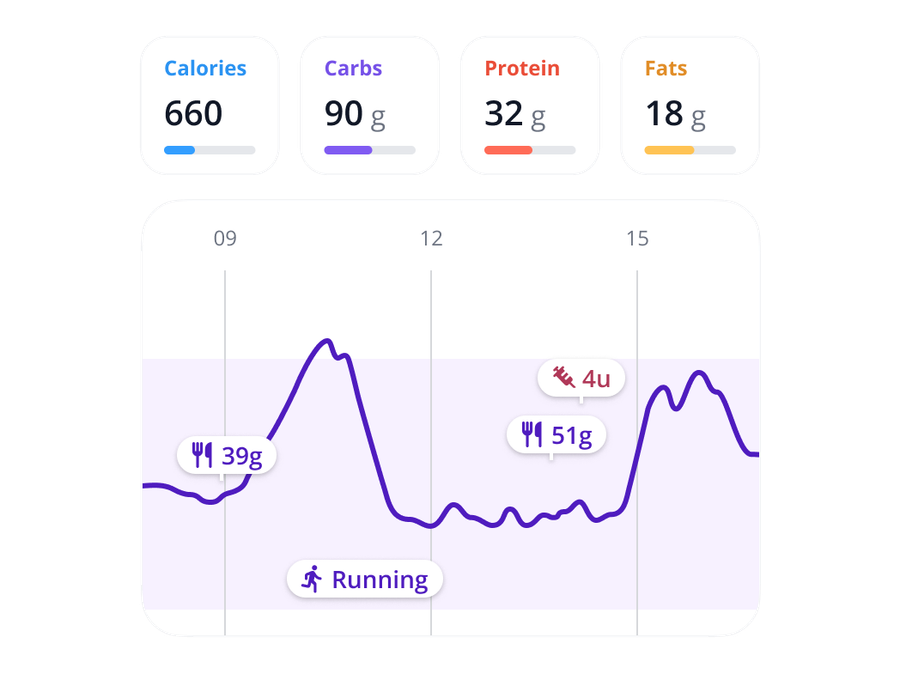
At home, SNAQ's Photo logging can estimate carbs, protein, fat, and fiber directly from a photo, which saves the trouble of measuring everything by hand. Eating out, you can log the sandwich by voice or text, add a note about the bread or sauce, and track the response. Over a few weeks, you'll have enough meal-and-response pairs to see what actually works, not just what's supposed to work in theory.