Quick answer: You can eat fruit with diabetes. The question is not which fruits are allowed, but how much of a given fruit fits your glucose targets, and what you eat it with. Portion size, pairing, and your own body's response matter more than the fruit itself.
Fruit contains natural sugar, mainly fructose and glucose, along with fiber, vitamins, and water. That combination affects blood sugar very differently than candy or juice. The fiber slows digestion, which slows how fast glucose enters your bloodstream.
The confusion comes from conflicting advice. Some sources say avoid fruit entirely. Others say eat as much as you want. Neither helps if you are trying to keep glucose in range after meals. The reality is simpler: fruit can fit into a diabetes meal plan, but portion size and what else is on the plate change the glucose response more than the fruit type itself.
This article walks through which fruits tend to have lower glucose impact, how to reduce spikes when you eat fruit, and how to read your CGM or glucose meter to find what works for your body.
Glycemic Index vs Glycemic Load
Glycemic index (GI) ranks how quickly a food raises blood sugar compared to pure glucose. Foods with a GI below 55 are considered low-GI. But GI does not account for portion size, which is where it starts to mislead people.
Glycemic load (GL) combines the GI with the actual carbohydrate content in a typical serving. A food can have a high GI but a low GL if the serving is small or the carb content is low.
Watermelon is the clearest example. It has a high GI (around 72), but a one-cup serving contains only about 11 grams of carbs, giving it a low glycemic load. A small portion of a high-GI fruit can cause less of a glucose rise than a large portion of a low-GI fruit.
This is why lists that rank fruits by GI alone can send you in the wrong direction. For more on why low-GI foods do not always behave as expected, see our breakdown of GI bait foods.
Fruits with Lower Glucose Impact
These fruits tend to have a lower glycemic load per typical serving and more fiber per portion. As a general reference, one serving of fruit is around 15 grams of carbs, which is how the ADA frames fruit portions in a diabetes meal plan.
- Berries: strawberries, blueberries, raspberries, blackberries. Strawberries contain about 8 grams of carbs per cup. Blueberries run closer to 21 grams per cup, so portion size still matters.
- Apples: especially with the skin, which adds fiber
- Pears: also higher in fiber than many other fruits
- Cherries: fresh, not canned in syrup
- Grapefruit and oranges: whole fruit, not juice
- Peaches and plums: fresh or frozen without added sugar
These are not free foods. They still contain carbs and will raise glucose. But they tend to cause slower, smaller rises compared to tropical fruits, dried fruits, or juice, mainly because of their fiber content and water volume.
Frozen fruit without added sugar is nutritionally similar to fresh and often more affordable. It is a good option when fresh fruit is out of season or out of budget.
Canned fruit packed in its own juice or labeled unsweetened is fine if you account for the carbs. Avoid heavy syrup, which adds extra sugar. Rinsing canned fruit removes some of the added sugar if syrup is the only option.
Fruits That Tend to Spike Faster
These fruits tend to have higher glycemic loads per typical serving, or are easy to eat in portions with more carbs than expected.
- Dried fruits: raisins, dates, dried apricots, dried mango. Drying removes water and concentrates the sugar. Two tablespoons of raisins contain as many carbs as a full cup of grapes. Portion sizes for dried fruit are small for a reason.
- Tropical fruits in large portions: mango, pineapple, banana. These are not off-limits, but portions matter more. A whole large banana can have 30 grams of carbs.
- Fruit juice and smoothies: juicing removes fiber and speeds absorption. A half-cup of unsweetened juice has the same carbs as a whole medium orange, without the fiber to slow things down. If you drink juice, treat it as a carb serving, not a free beverage.
- Canned fruit in heavy syrup: the added sugar increases total carbs beyond what the fruit alone would contain.
If you enjoy these fruits, smaller portions and pairing with protein or fat make a meaningful difference. More on that below.
How to Reduce Blood Sugar Spikes from Fruit
Fruit does not have to cause a large spike. How you eat it matters as much as what you eat.
Pair fruit with protein or fat
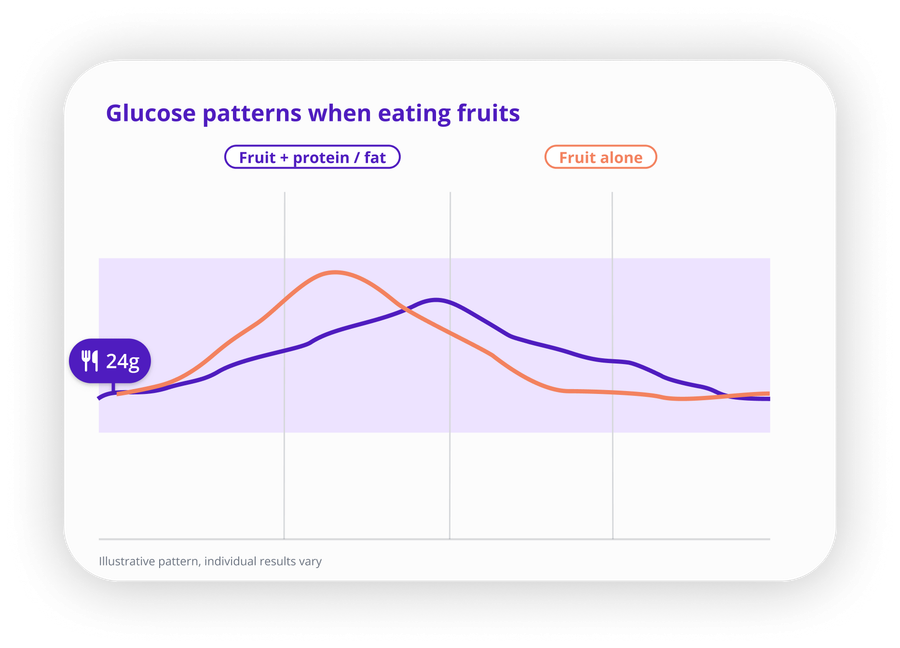
Eating fruit with Greek yogurt, nuts, cheese, or eggs slows how fast carbohydrates are digested and absorbed. Research published in Frontiers in Endocrinology found that consuming protein or fat before or alongside carbohydrates reduces and delays the glucose rise after eating, by slowing gastric emptying and supporting a more gradual insulin response.
An apple with a tablespoon of peanut butter will likely cause a gentler curve than that apple eaten on an empty stomach.
Watch portion size
A small apple has about 15 grams of carbs. A large apple can have 25 to 30 grams. The difference matters. A rough guide: one serving of whole fruit is about the size of your fist for whole fruits like apples or pears, or a cupped handful for berries or grapes.
Eat fruit as part of a meal, not alone
Fruit eaten on an empty stomach tends to spike faster because there is nothing else in your digestive system to slow absorption. Eating fruit at the end of a meal that already includes protein, fat, and fiber tends to produce a slower, smaller rise.
Track your own response
Individual glucose responses to the same food vary more than most people expect. A landmark study from the Weizmann Institute that monitored continuous glucose responses in over 800 people found that glycemic responses to identical foods varied dramatically between individuals, driven by differences in gut microbiome composition, insulin sensitivity, and other factors.
Berries may work well for you, or they may not. A banana might raise your glucose more at breakfast than after lunch. The only way to know is to check.
Your CGM or glucose meter shows you what works for your body. For practical tips on tracking meals and glucose without a CGM, see our guide on using fingerstick readings and meal notes to build patterns over time.
A Note on CGM Readings and Fruit
If you use a CGM, there is something worth knowing about how it reads glucose after eating fruit.
A 2025 study published in the American Journal of Clinical Nutrition found that CGMs can overestimate blood glucose levels after eating, and that the degree of overestimation varies by the food consumed. For fruit specifically, CGM readings were higher than capillary (fingerstick) measurements, which is the reference standard for glycemic index testing.
This does not mean your CGM is broken or that you should ignore it. But if you eat fruit and see a number that seems high, it is worth comparing with a fingerstick reading before drawing conclusions. The trend direction (rising, flat, falling) and the pattern across multiple meals are more informative than any single number.
Which Fruit Should You Choose?
Start with what you actually enjoy eating, then experiment with portion size and pairing.
If you are testing fruit for the first time after a diabetes diagnosis, or working toward tighter glucose control, lower glycemic load options like berries or apples are a practical starting point. They tend to give you more room for error on portion size.
Try a half-cup of berries one day, a full cup another. Check your CGM or glucose reading one to two hours after eating to see where your peak landed. Log what you ate, how much, and what you paired it with. After a few repetitions of the same fruit in the same portion, a pattern starts to emerge.
Some people also notice fruit affects their glucose more at certain times of day. People with type 2 diabetes in particular may see larger glucose rises from the same food at breakfast compared to later meals, which research links to more pronounced morning insulin resistance in that population. If you notice that pattern with fruit, it is worth logging and discussing with your care team.
SNAQ helps you log fruit servings, pair them with the rest of your meal, and see how the full meal context lines up with your CGM data. That makes it easier to compare how different fruits, portions, or pairings affect your glucose over time. Try SNAQ here.