You eat the same amount of carbs at two different meals. One sends your glucose up fast. The other barely moves it. This isn't random, and it's worth understanding why.
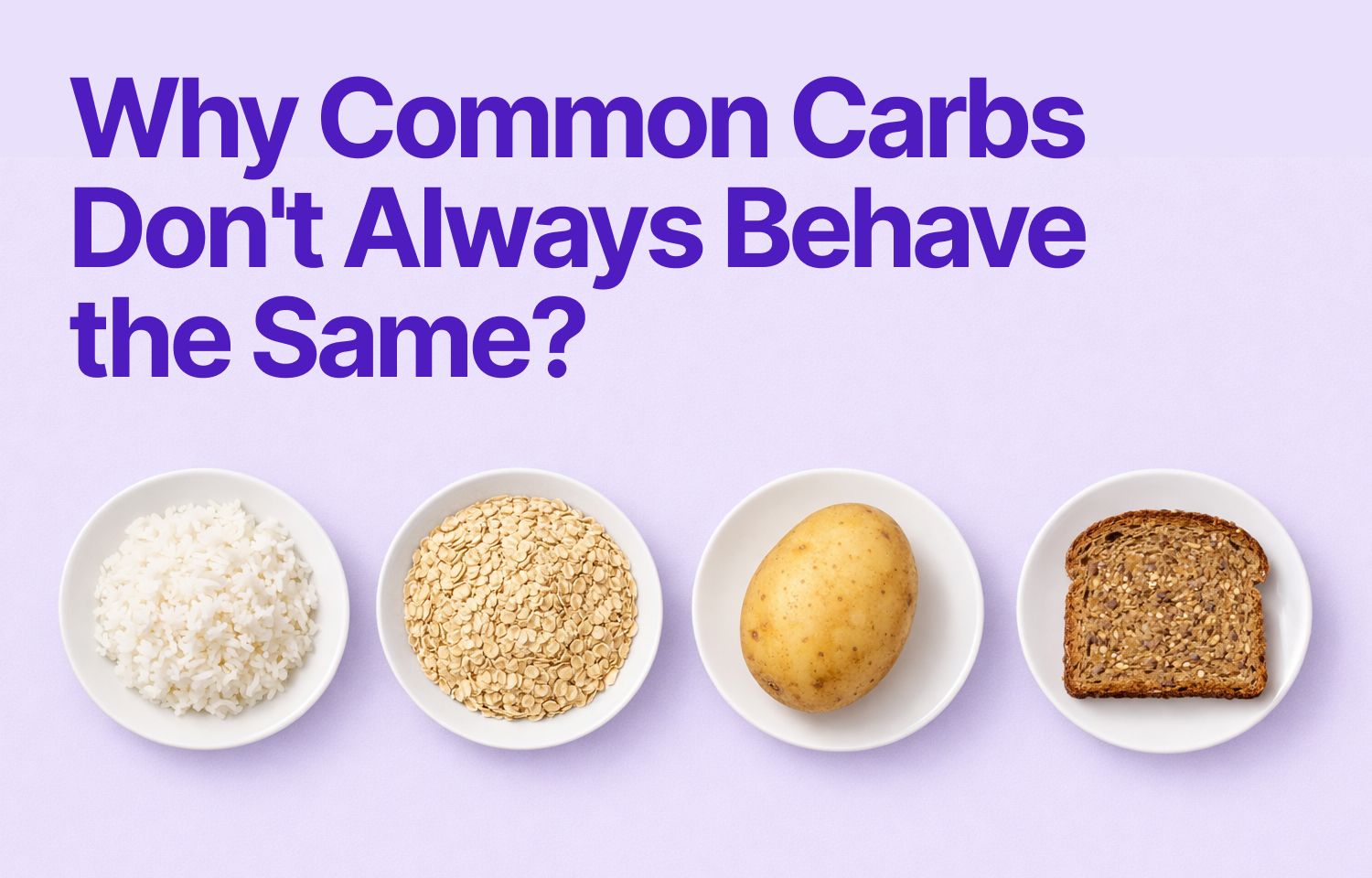
Rice, oats, potatoes, and bread are all familiar staples, but they don't behave the same way once you eat them. The shape of your glucose curve depends on how the food is processed, what else is on your plate, and how your own body responds that day.
Here's what actually drives those differences.
What Makes a Carb "Simple" or "Complex"
Simple carbohydrates break down quickly into glucose. They're often found in white bread, white rice, and many processed foods. Your body absorbs them fast, which can lead to quicker glucose rises.
Complex carbohydrates, like those in whole grains and legumes, take longer to digest. The fiber and structure slow absorption, usually resulting in a gentler glucose response.
This split isn't as clean as it sounds, though. A food labeled "whole grain" can still spike your glucose if it's been heavily processed. The structure of the food matters as much as the ingredient list.
The Glycemic Index Isn't the Whole Story
The glycemic index (GI) ranks foods from 0 to 100 based on how fast they raise blood sugar in a controlled lab test. White bread scores high. Steel-cut oats score low.
That's useful context, but it's not a prediction. GI values are measured in isolation, using a standard portion, in people without diabetes. When you eat a real meal with fat, protein, and fiber mixed in, the response changes. Foods with a low glycemic index can still surprise you depending on portion size and what else you're eating.
One person's low-GI oatmeal might spike another person's glucose. That's where individual variability comes in.
How Rice, Oats, Potatoes, and Bread Compare
White rice tends to cause a fast, sharp glucose rise. It's milled, which removes the fiber and leaves mostly starch. Your body breaks it down quickly.
Oats, especially steel-cut or rolled, have a lower GI. The beta-glucan fiber slows digestion and most people see a gentler curve. Instant oats behave more like white rice because the processing breaks down that fiber structure.
Potatoes vary widely depending on how you prepare them. A boiled potato eaten cold has resistant starch that blunts the glucose response. A baked russet or mashed potato can spike glucose almost as sharply as white rice. How you cook and serve them makes a real difference.
Bread depends heavily on what it's made from. Whole grain bread with visible seeds and a dense texture usually produces a moderate response. White sandwich bread acts more like white rice. Even within "whole wheat," milling and additives change the outcome.
Two foods with the same carb count can produce very different glucose curves.
What Else Changes How Your Body Responds
Your glucose response to the same food can shift from day to day. Here's why.
Insulin sensitivity fluctuates based on sleep, stress, activity, and where you are in your menstrual cycle (if applicable). Poor sleep or high stress can make the same bowl of oatmeal hit harder than it did last week.
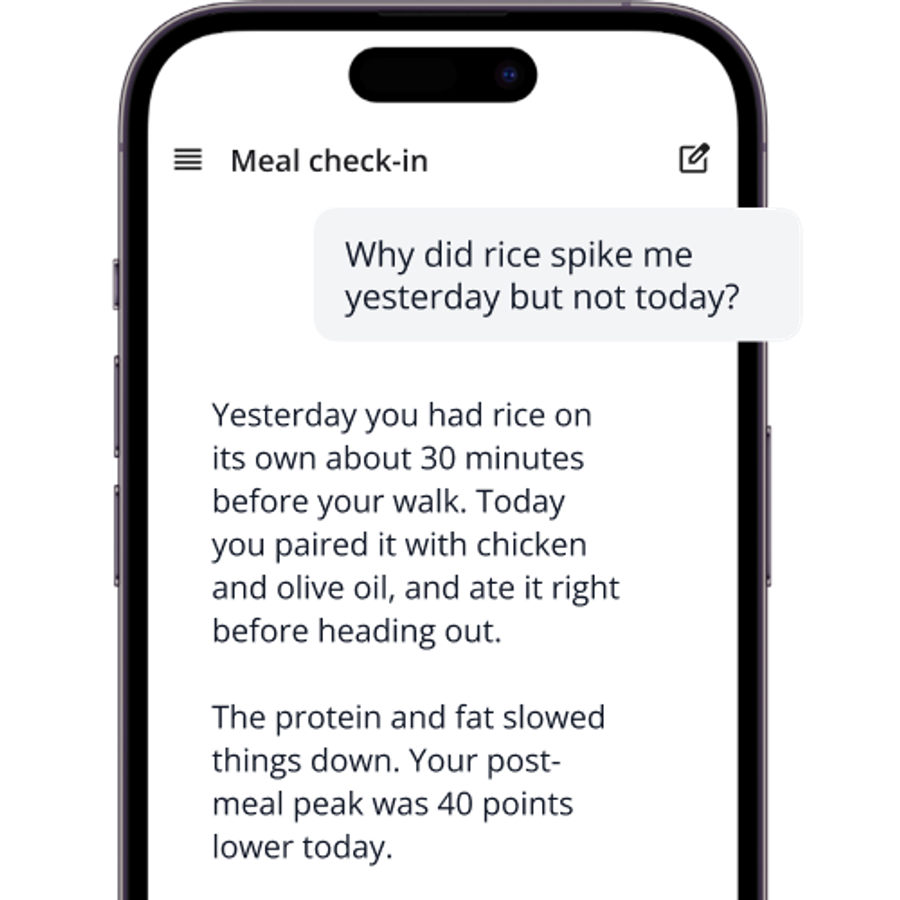
Meal composition matters a lot too. Adding fat (butter, olive oil, nuts) or protein (eggs, chicken, Greek yogurt) slows gastric emptying. That spreads the glucose rise over a longer window and often lowers the peak.
Timing and activity play a role as well. Eating the same carbs after a workout often produces a smaller spike because your muscles are pulling glucose out of your bloodstream to refill glycogen stores. Multiple factors impact your glucose levels, and understanding them helps you see patterns instead of guessing.
Gut bacteria and digestion speed also vary from person to person. Some people digest starches faster than others, even when eating identical meals. This is one reason CGM data looks so different from one person to the next.
Practical Strategies for More Stable Glucose
Pairing carbs with fat or protein is one of the most reliable ways to soften a glucose rise. A piece of toast with peanut butter will typically produce a lower, slower response than toast alone.
Choosing less-processed versions also helps when you have the option. Steel-cut or rolled oats instead of instant. Brown or wild rice instead of white. Sourdough or seeded bread instead of white sandwich bread. The more intact the grain structure, the slower the breakdown tends to be.
Portion size matters more than people expect. Even a lower-GI food can raise your glucose sharply if the portion is large enough. It's worth testing what works for you rather than assuming a food is always fine in any amount.
Temperature and preparation are worth paying attention to as well. Cooling cooked potatoes or rice creates resistant starch, which can lower the glucose impact when you reheat and eat them later. How you cook vegetables can also shift the response.
Your CGM will ultimately show you what works for your body. What spikes your friend might not spike you, and the reverse is equally true.
How SNAQ Helps You See the Patterns
Once you start testing different carbs, the data piles up fast. The challenge isn't collecting it, it's making sense of it.
SNAQ connects your meals to your glucose data so you can see exactly what happened after you ate. Snap a photo of your plate and you get an instant carb and macro breakdown, so you're not guessing whether that serving of rice was 30g or 60g. That meal then gets overlaid on your glucose graph, and over time you'll start to see which carbs consistently spike you and which ones don't. Weekly and monthly reports surface patterns you might miss day to day. If oatmeal works well some mornings but spikes you on others, SNAQ helps you see what changed.
Figuring out which carbs work for you, in what portions, and paired with what, takes time. SNAQ turns your CGM into a feedback tool that makes that process a lot faster. Download SNAQ here.