Quick answer: You don't need a continuous glucose monitor to build a clear picture of your glucose patterns. Structured fingerstick testing, paired with meal details, portion sizes, and daily context, gives you enough information to spot what's working, what isn't, and what's worth discussing with your care team.
Most people with Type 2 diabetes manage without a CGM. That's not a limitation. It's the reality for the majority of people living with this condition, and fingerstick testing with a good tracking system is a legitimate, effective approach.
The challenge isn't the absence of a sensor. It's knowing what to write down so the data you collect actually tells you something useful.
What Can Manual Tracking Actually Tell You?
Fingerstick tests give you reliable glucose readings at specific moments. They're accurate for decision-making, especially when you test at consistent times and pair each reading with meal and activity context.
What you lose without a CGM is the shape of the curve: how fast glucose rises after a meal, when it peaks, and how long it stays elevated. You won't catch every small dip or overnight drift.
What you gain is simplicity. No sensor to place, no Bluetooth connection, no compression artifacts. Just a meter, strips, and a tracking method that doesn't require a subscription.
Manual tracking works best when it's structured. Testing at random times without context makes it harder to spot meaningful patterns.
What to Track Every Time: The Four Categories
1. Blood Glucose Reading and Timing
Log the number and when you tested: fasting, before a meal, or 1 to 2 hours after eating.
Timing matters because the same glucose reading means something different depending on when it appears. A reading of 160 mg/dL two hours after a meal sits within a range many people expect. The same number before breakfast is worth flagging with your care team.
Pick a testing routine and follow it for at least a week before changing it. Consistency is what reveals patterns.
2. Meal Details
Write down what you ate, not just the carb estimate.
Good meal logging includes:
- Main foods on the plate.
- Approximate portion sizes (half a plate of rice, a fist-sized portion of chicken, two slices of bread).
- Sauces, oils, or toppings that add hidden carbs or fat.
- Whether the meal included protein, fat, or fiber alongside the carbs.
This context helps explain why two meals with similar carb counts sometimes produce different glucose responses. A bowl of oatmeal with nuts and a bagel with cream cheese may both contain around 50 grams of carbs, but fat and protein slow digestion and change the post-meal pattern.
For practical support with meal logging and carb estimation, carb counting apps can simplify the process, especially when you're starting out.
3. Portion Size and Setting
Portion size is harder to estimate than most people expect, especially at restaurants or when eating food prepared by someone else.
Note the setting:
- Home-cooked meal with measured servings.
- Restaurant meal with unknown portion size.
- Pre-packaged food with a nutrition label.
- Shared dish where portion was guessed.
This context helps explain why certain meals produce higher-than-expected readings. Restaurant servings are often 50 to 100 percent larger than home portions, and sauces or cooking oils add carbs and fat that aren't immediately visible on the plate.
4. Daily Context
Track anything that might influence glucose beyond food:
- Sleep quality or duration the night before.
- Stress level (work deadline, family event, illness).
- Physical activity (walked 30 minutes, skipped usual exercise, did yard work).
- Medications taken or missed.
- Illness, menstrual cycle, or other health changes.
You don't need paragraphs. A short note is enough: "Slept poorly, 5 hours" or "Walked after dinner."
These notes turn isolated readings into explainable patterns. If fasting glucose is consistently higher after poor sleep, that's a pattern worth discussing with your clinician, or adjusting for with meal timing and activity choices.
When Should You Test if You're Not on Insulin?
Testing frequency for Type 2 diabetes without insulin varies by individual care plan. Structured testing typically includes:
- Fasting glucose: First thing in the morning, before eating or drinking anything except water.
- Post-meal glucose: 1 to 2 hours after the start of a meal, especially meals you eat regularly or want to learn more about.
- Before bed: If your care team recommends it, to monitor overnight trends.
Some people test daily. Others test a few times per week in rotating patterns. The goal is consistency, not constant testing.
If you want to understand how a specific food affects you, test before the meal and again 1 to 2 hours later. Do this for the same meal across different days to see if the response is consistent.
Research has shown that structured self-monitoring supports better diabetes management when the data is reviewed and used to inform lifestyle adjustments, meals, or medication timing.
Where to Write It Down
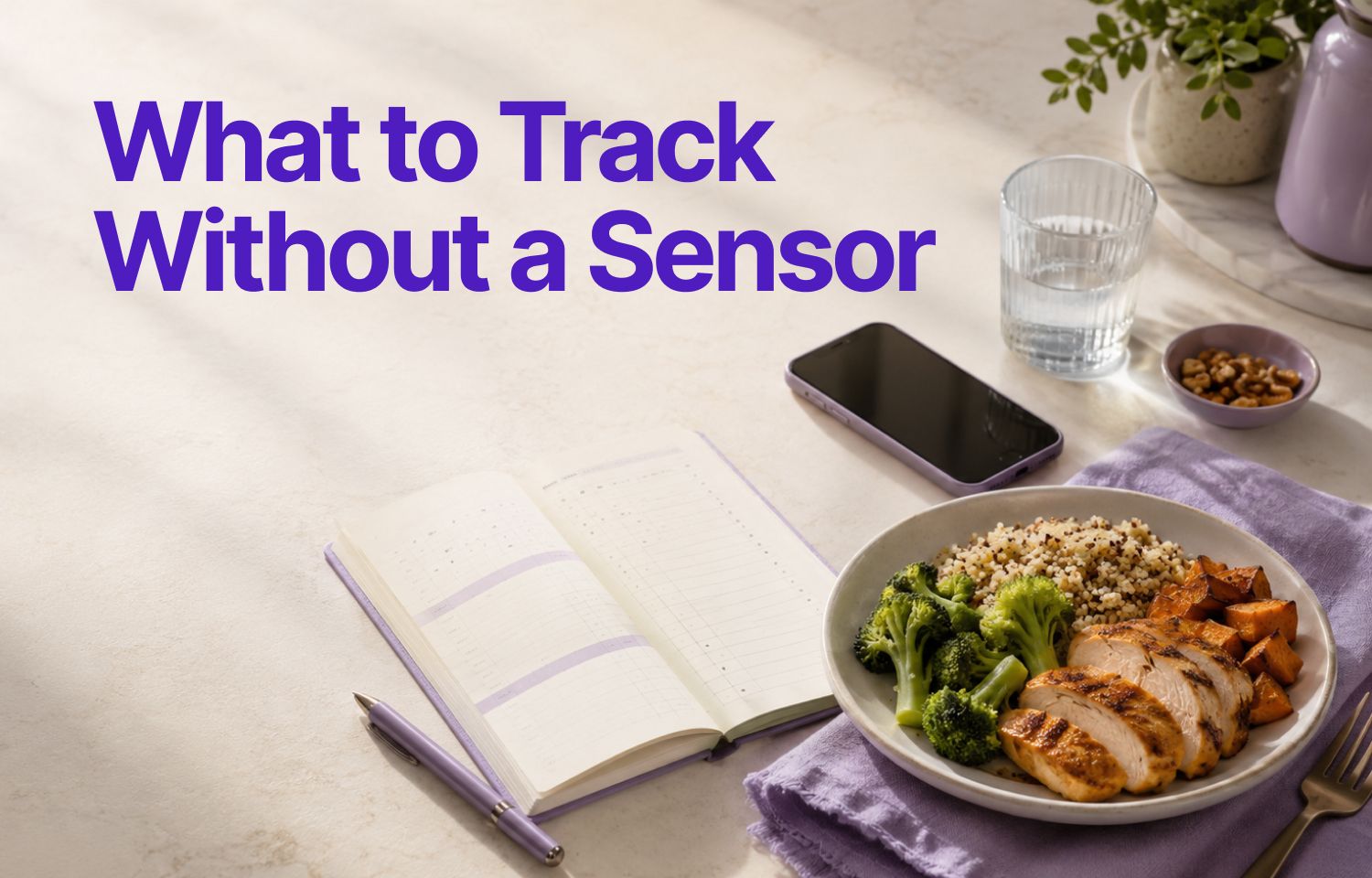
You need a system that keeps glucose readings, meals, portions, timing, and daily context in one place. The options aren't complicated:
- A paper logbook with columns for date, time, glucose reading, meal, portion, and notes.
- A notes app or spreadsheet on your phone.
- A diabetes tracking app that supports manual glucose entry and meal logging.
The best system is the one you'll actually use every day.
SNAQ is built for exactly this kind of tracking. You can log meals with photos or by voice, estimate portions and carbs, and enter your fingerstick readings alongside the meal context that makes them meaningful. No CGM required. Over time, that makes it easier to compare the same meal across different days and spot which foods, portion sizes, or timing patterns work better for you.
If you're managing Type 2 diabetes without a CGM, manual tracking with meal logging can give you enough structure to learn what affects your glucose most.
What Patterns Should You Look For?
After a week or two of consistent tracking, review your log for repeated signals:
- Fasting glucose trends: Is your morning reading consistent, rising, or falling over time?
- Post-meal patterns: Which meals consistently produce readings above your target range?
- Timing effects: Do late dinners produce higher morning readings? Does eating breakfast earlier help?
- Portion size impact: Do larger portions of the same food produce noticeably higher readings?
- Activity influence: Does a post-meal walk lower your 2-hour reading?
- Stress or sleep correlation: Are your readings higher on days after poor sleep or high stress?
You're looking for repeated relationships, not perfect explanations. If the same breakfast produces a post-meal reading above 180 mg/dL (the peak postprandial target set by the American Diabetes Association's Standards of Care) three times in a row, that's a pattern worth examining and discussing with your care team.
Manual tracking won't show you the curve shape. But it will show you which meals, portions, and daily habits consistently correlate with better or worse readings. That's enough to act on.
Common Tracking Mistakes to Avoid
Testing at random times without context. A glucose reading without meal timing or food detail is hard to interpret. Test at consistent times and write down what you ate alongside the number.
Logging carbs but skipping portion size. Carb counts are estimates. Portion size, setting, and how the food was prepared add the context that makes those estimates more useful.
Only testing after meals you think will spike. You need data from typical meals, not just the ones you expect to be high. Testing only after pizza doesn't tell you whether your usual dinner is working.
Ignoring daily context. If you don't note sleep, stress, or activity, it's harder to explain why readings vary on days when meals stayed the same.
Stopping too soon. One week of data may not be enough to spot meaningful patterns. Aim for at least two weeks before drawing conclusions or making changes.
Does Manual Tracking Actually Work Without a Sensor?
Continuous glucose monitors are powerful tools, but they're not required for effective Type 2 diabetes management.
Fingerstick testing with structured meal and context logging gives you enough to:
- Identify which meals produce higher post-meal glucose.
- Spot trends in fasting glucose over time.
- Test the effect of portion changes, meal timing, or post-meal activity.
- Support care-team conversations with concrete data, not just impressions.
Manual tracking is slower and requires more discipline. But it works when the data is organised, consistent, and paired with the context that makes glucose readings meaningful.
SNAQ keeps meal photos, portion estimates, carb totals, and manually entered glucose readings in one place. You can compare the same meal across different days, review trends over weeks, and keep your daily context notes alongside the numbers. No connected sensor needed. Try SNAQ to see if it fits your tracking routine.