

Quick answer: A few small studies suggest a tablespoon or two of vinegar before a carb-heavy meal may modestly slow how fast glucose rises afterward, likely by slowing digestion. The effect is inconsistent, so it's worth testing on your own glucose curve before you rely on it.
A tablespoon of diluted vinegar before lunch. It sounds simple, maybe too simple. Yet the practice keeps surfacing in glucose forums, wellness blogs, and now a handful of small studies.
The real question is whether you'd see a difference on your own glucose curve if you tried it.
What Vinegar Contains and Why It Might Matter
Vinegar's main active ingredient is acetic acid. Small studies suggest acetic acid may slow gastric emptying, which means carbohydrates move into the bloodstream more gradually after a meal.
In theory, slower digestion could lead to a smaller, more gradual glucose rise. That's been tested in a handful of short-term studies, mostly in people with Type 2 diabetes or insulin resistance. The results are modest, but they're there.
The Evidence: What the Studies Actually Show
One study from 2004 found that vinegar taken before a high-carb meal improved insulin sensitivity in people with insulin resistance or Type 2 diabetes. The effect was most noticeable in those who did not yet have a diabetes diagnosis.
A 2007 study looked at vinegar taken at bedtime in 11 adults with well-controlled Type 2 diabetes. Waking glucose was moderately lower in the vinegar group compared to water.
These studies used roughly 1 to 2 tablespoons of vinegar, taken just before a meal or at bedtime.
| Study | What They Tested | What They Found |
|---|---|---|
| Johnston et al., 2004 | A single dose of vinegar before a high-carb meal, in people with insulin resistance or Type 2 diabetes. | Improved insulin sensitivity, with the biggest effect in people who were insulin-resistant but not yet diagnosed with diabetes. |
| White & Johnston, 2007 | Vinegar taken at bedtime for two nights, in 11 adults with well-controlled Type 2 diabetes. | Waking glucose was moderately lower on vinegar nights than on water nights. |
How to read this: both studies were small and short, and they tested different things, one a single dose before a meal, the other repeated bedtime doses. Neither used continuous glucose monitoring, and neither tells us what happens over weeks or months.
The results are interesting. They are not revolutionary, and they don't even test the same thing. One is a single dose before a meal, the other is repeated bedtime doses measured the next morning.
Most studies had fewer than 30 participants. Most ran for days or weeks. None tested vinegar in people with Type 1 diabetes, and none tell you what happens if you kept it up for months.
If you're hoping vinegar will prevent glucose spikes entirely, the evidence doesn't support that.
If you're wondering whether it might flatten the post-meal curve slightly, in some people, some of the time, that's closer to what the data actually shows. If it does nothing for you, that's not you doing something wrong. That's just what a small, inconsistent effect looks like in a real body instead of a study average.
That's exactly why a study average can't tell you what will happen with your body and your usual meals. The only way to actually know is to look at your own curve.
Apple Cider Vinegar vs Other Vinegar Types
Apple cider vinegar gets the most attention online, but the key ingredient across all vinegar types is acetic acid.
White vinegar, red wine vinegar, and apple cider vinegar all contain similar amounts. There's no strong evidence that apple cider vinegar outperforms the others when it comes to glucose.
If you prefer the taste of apple cider vinegar, use it. If you have white vinegar in the pantry, that works too.
The type matters less than the acetic acid content and the timing.
Timing, Dosage, and Practical Limits
Most studies had people drink vinegar shortly before the meal, to slow gastric emptying before carbohydrates arrive.
Common approaches:
- 1 to 2 tablespoons diluted in a glass of water.
- Taken shortly before eating.
- Some people take it at bedtime to influence fasting glucose the next morning.
Always dilute it. Vinegar is acidic enough to bother your throat or teeth if you drink it straight, more on that, and on how to ease into it, in the cautions section below.
Some people mix it into salad dressing or a meal instead of drinking it straight. Most of the studies used it as a drink, though, so that's the form with the most evidence behind it.
What You Might See on Your CGM
If vinegar has an effect, your CGM might show a slightly smaller peak, a slower rise, or a curve that climbs more gradually over the first hour after eating.
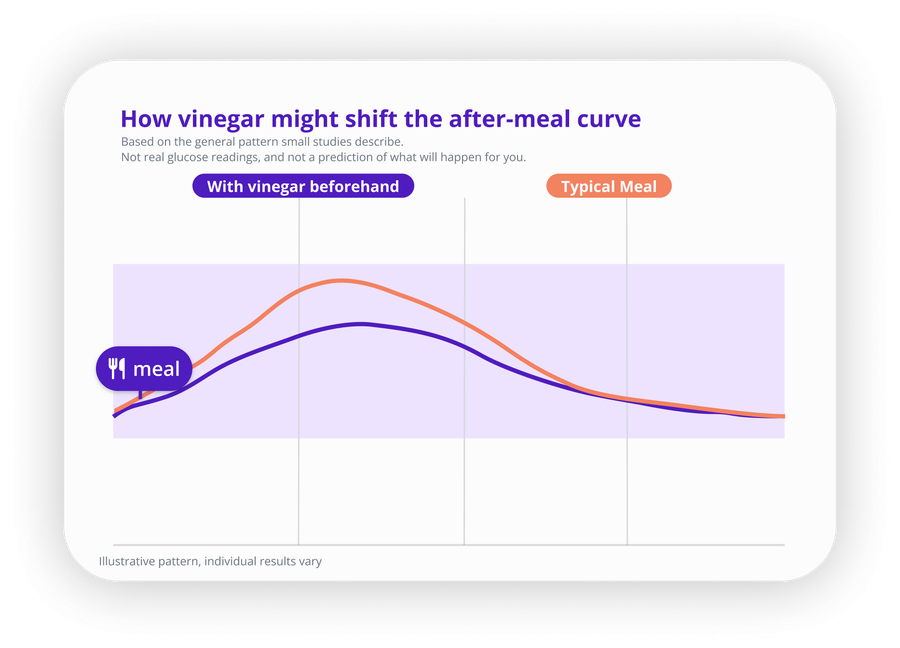
The difference would likely be subtle. You would not expect a dramatic flattening of the curve unless other factors, like meal composition, also changed.
Some people see no difference at all. Some see a small change on certain meals but not others. And some find the effect varies depending on what else they ate, how much sleep they got, or where they are in their menstrual cycle.
You need more than one meal to see a real pattern. Eat it a few times with vinegar, a few times without, and compare the curves. Logging the context each time, what you ate, when you took the vinegar, how you slept, beats trying to remember it later. That's the kind of comparison SNAQ is built for. Log the meal. Tag when you took the vinegar. Pull up the two curves side by side.
More people have access to a CGM to even attempt this than a few years back. Since 2025, the ADA's Standards of Care have included CGM for people with Type 2 diabetes who aren't on insulin, so this kind of self-testing is more within reach than it used to be.
When Vinegar Won't Help
Vinegar is not a substitute for medication, carb counting, or your diabetes care plan.
It won't prevent a spike if you eat far more carbs than your body can handle. It won't fix poor sleep, chronic stress, or a meal that was already heading high before vinegar showed up. Vinegar doesn't touch any of that.
It might take the edge off a moderate post-meal rise. It won't reverse insulin resistance or make your glucose less variable on its own.
If your glucose is spiking after meals, start with the factors that have stronger evidence: meal timing, carb portions, protein and fat balance, activity after eating, and medication adjustments with your care team.
Potential Downsides and Cautions
Vinegar is generally safe for most people, but it can cause:
- Digestive discomfort, especially on an empty stomach.
- Tooth enamel erosion if consumed undiluted or too frequently. Always dilute it, and consider drinking it through a straw.
- Nausea in people who are sensitive to acidic drinks.
If you're taking medication that slows digestion, such as a GLP-1 receptor agonist, adding vinegar might increase the risk of nausea or delayed gastric emptying. You can still try it. Just start small, around 1 tablespoon, and see how your stomach handles it before making it a regular habit.
If you have gastroparesis or chronic digestive issues, talk to your care team before making vinegar a regular habit.
How to Test Vinegar in Your Own Routine
Everything above is background. This is the part that actually answers the question for you.
The studies can't tell you whether vinegar does anything for your glucose specifically, only your own data can. Treat it like a small experiment.
Pick one meal you eat regularly. Log the meal carefully: food, portion size, timing, and any other context like activity or stress level.
Eat that meal without vinegar at least twice. Note the glucose curve each time.
Then eat the same meal again, this time with 1 to 2 tablespoons of vinegar diluted in water, taken shortly before eating. Repeat at least twice.
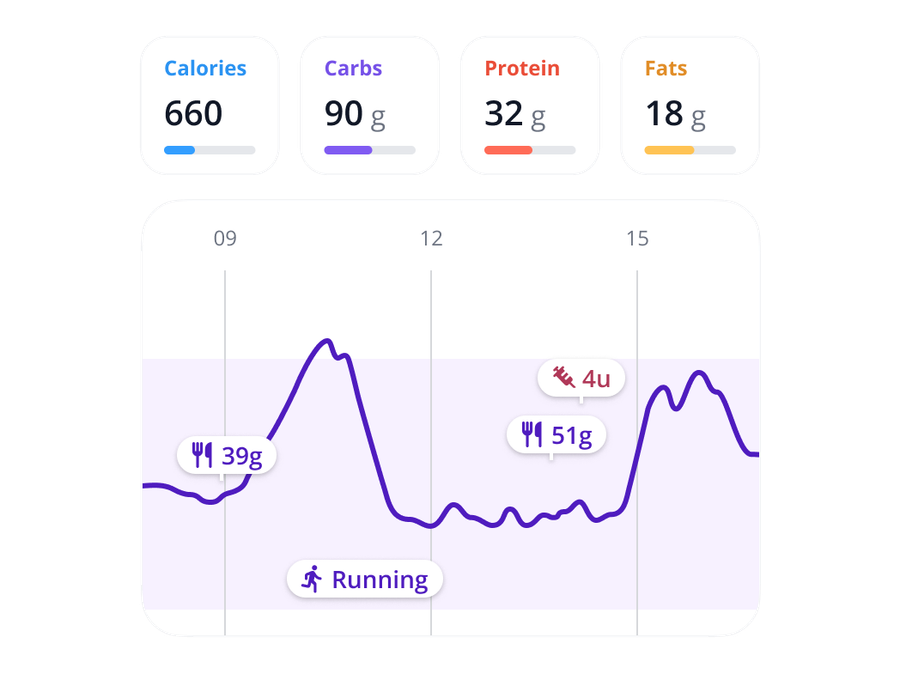
Compare the curves. Look for differences in peak height, time to peak, and how long it takes to return to baseline.
If the curves look similar, vinegar probably isn't doing much for that meal. If you see a consistent flattening effect, you might choose to keep using it.
This is the same setup mentioned earlier, just applied for real: a few repeats, logged, compared. No spreadsheet required, and no trying to remember what happened three Tuesdays ago.
Should You Add Vinegar to Your Routine?
Vinegar before meals isn't harmful for most people, and the downsides are minor if you dilute it and ease into it. But be honest about the evidence behind it: two small studies, testing different things, that don't agree on much beyond "maybe, a little."
If you're already managing meals well, sleeping enough, staying active, and working with your care team on medication, vinegar probably won't move your Time in Range (the share of the day your glucose sits in your target range) much either way.
If you're curious, test it. Your own curve is the only version of this experiment that actually applies to you.
Log the meal a few times, with vinegar and without. Let the comparison answer it. Download SNAQ to run the comparison.