Quick answer: Beans are both, but count them as a carb. Half a cup of cooked black beans carries around 20 grams of carbohydrate against about 7 grams of protein. The rise is usually slower and flatter than bread or rice, though the same portion can still look different on your curve depending on what else was on the plate.
A half cup of cooked black beans has roughly 20 grams of carbohydrate and 7 grams of protein. On a nutrition label that looks like a compromise. On a glucose curve it looks like a carb that is in no hurry.
Which matters more than it sounds. Beans get filed under protein in a lot of people's heads, especially once you start eating less meat, and that quiet bit of filing is where portions get away from you.
Why Beans Contain Both Macronutrients
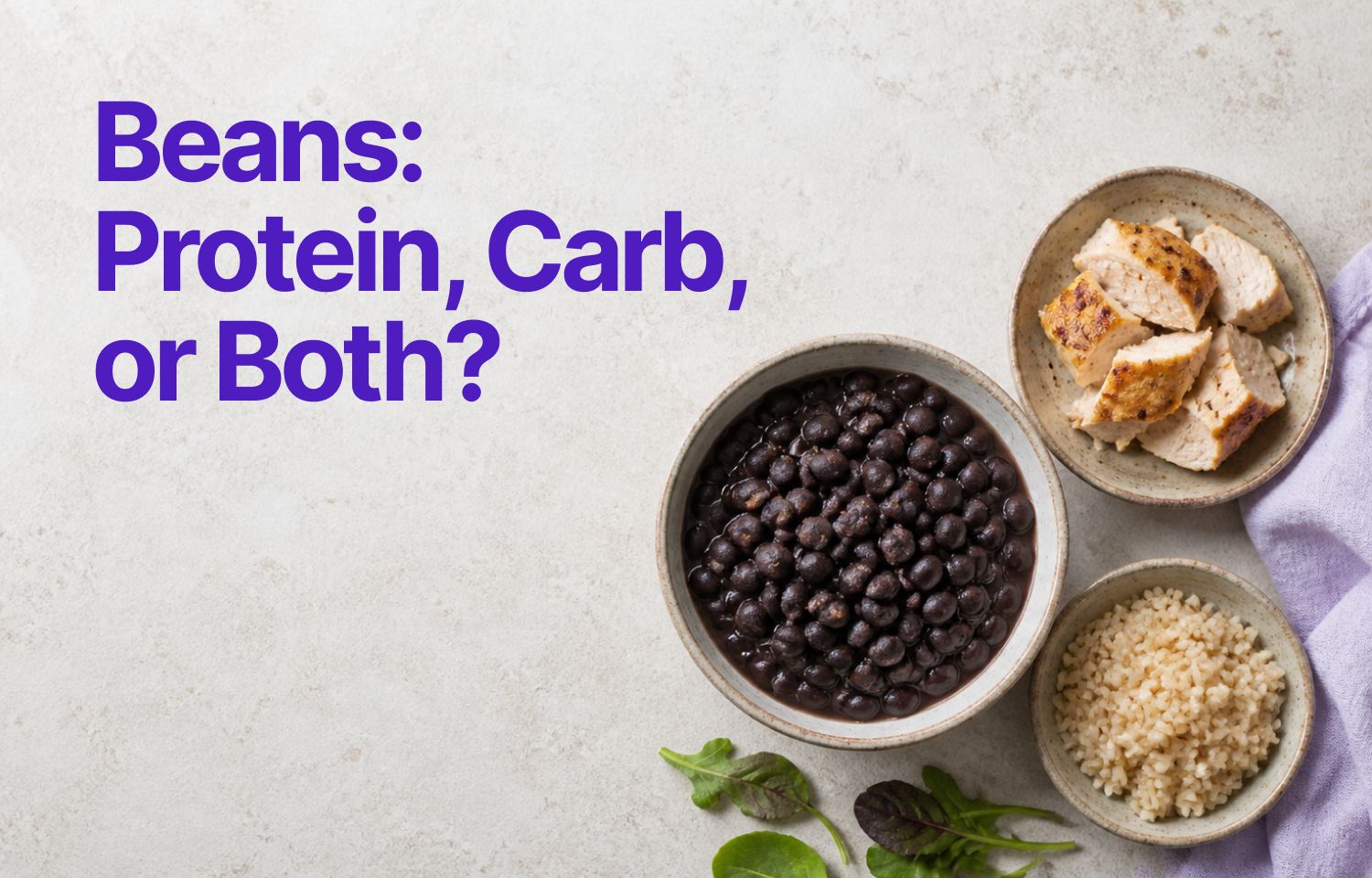
Beans, lentils and chickpeas are legumes. Chicken is almost entirely protein. Rice is almost entirely carbohydrate. Legumes refuse to pick a side.
Half a cup of cooked beans, the portion most labels and meal plans treat as one serving, usually gives you:
- 16 to 22 grams of carbohydrate, mostly starch and fiber
- 6 to 9 grams of protein
- Under 1 gram of fat
Nutritionally that mix is a gift. It is also why two people can look at the same bowl and count it completely differently.
Do Beans Count as Carbs or Protein in Diabetes Meal Planning?
Carbs. Count them as carbs.
Most diabetes meal planning frameworks, including guidance from the American Diabetes Association, treat beans as a carbohydrate source, and the reason is plain arithmetic. The carbohydrate in a serving runs two to three times the protein.
Now for the number that trips people up. Exchange-based meal plans often count half a cup of cooked beans as one starch serving, which is 15 grams of carbohydrate. The can says closer to 20.
Twenty on the label. Fifteen in the exchange list. Same beans.
The difference is roughly the fiber, and that gap is why beans are the hardest food to settle the net carbs argument on. Fiber can be close to a third of the total carbohydrate here, a far bigger share than bread, rice or potatoes ever give you. Subtract it and your count drops sharply. Leave it in and you may overestimate.
If you are new to tracking, start with total carbs. Total carbs are usually the more reliable starting point for whole foods like beans. Refine later, once you have watched your own curve a few times.
Is the Protein in Beans Enough on Its Own?
Nutritionally, beans are a real protein source, and for plant-based eaters a foundational one. It is just not enough protein to change how you count the food. Half a cup gives you 6 to 9 grams. Half a chicken breast gives you closer to 25 with no carbohydrate attached. Beans are a carb-forward food wearing a protein label.
Where the protein earns its place is in what you build around it:
- Black beans with grilled chicken and peppers
- Lentil soup with a side of tofu or fish
- Chickpea salad with feta and olive oil
Why Beans May Raise Blood Sugar More Slowly Than Other Carbs
Beans count as carbs. They still do not behave like white rice.
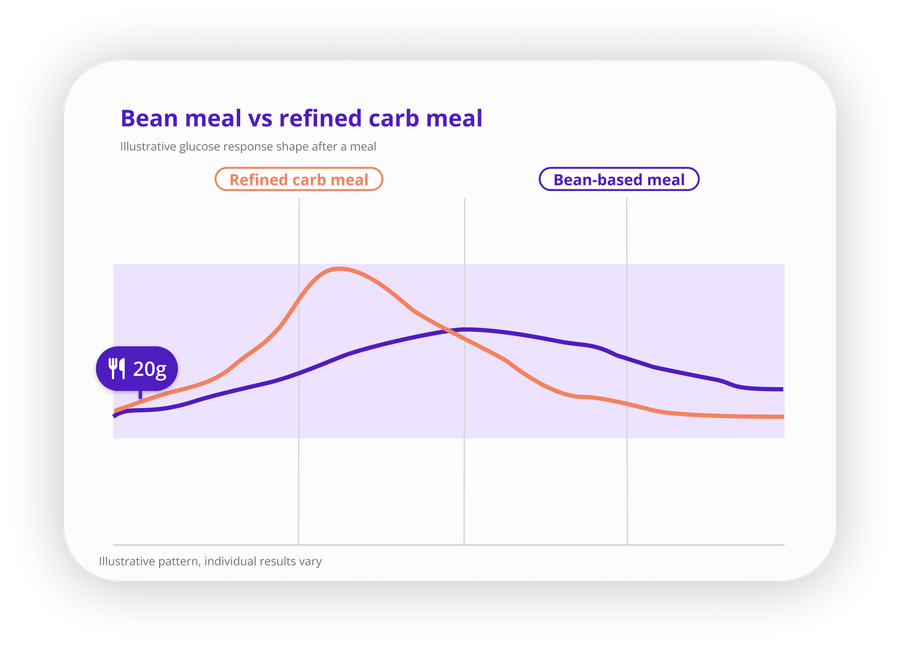
Glycemic index, or GI, ranks carbohydrate foods by how fast they raise blood glucose against a reference food. Under 55 is low. Common beans and lentils sit well inside that, somewhere around 25 to 40 depending on the variety, the cooking time and what was actually tested.
Two things are slowing them down. Fiber, which your body does not digest and absorb the way it handles starch. And resistant starch, which your small intestine largely walks past, so it never turns into glucose in that window.
A slower rise is usually a longer one too. Refined carbs spike hard and are done inside a couple of hours. Beans take their time getting up and take their time coming back down.
So if you have ever tested at the two hour mark, seen nothing dramatic, filed the meal away as fine, and then wondered why the rest of your afternoon felt off anyway, this is often where it started. Not a mistake on your part. Beans are just slow.
Worth checking further out than you would after a sandwich.
Which Types of Beans Are Best for Blood Sugar Control?
Honestly, less than people expect.
Lentils, black beans, kidney beans, chickpeas, navy beans and pinto beans all land in the low GI range. The published values differ a little, but those differences shift with cooking time and processing anyway, and they get swamped by things you control far more directly.
Portion, preparation and the rest of the plate move your response more than lentils versus pinto ever will. Pick the bean you will actually eat.
How Do Preparation and Portion Size Affect Glucose Response?
More than the variety does.
Portion. Half a cup is one serving. A cup is two. And a cup of beans in a burrito bowl does not look like two servings when it is sitting next to rice, which is exactly the problem. Measure a few times early on, then trust your eye and stop.
Form. Whole beans, refried beans and hummus are all the same legume underneath, broken down to different degrees. Grinding and mashing tears up the plant cell structure that was slowing digestion in the first place, so the response can shift even at an identical carb count.
Added ingredients. Baked beans are the clearest example. Half a cup can carry around 26 grams of carbohydrate with roughly 10 of those as sugar. That is the sauce talking, not the beans. Refried beans may bring lard or oil along too, so check the label or ask how the dish was made.
Company. Beans next to fat, protein and non-starchy vegetables often produce a gentler rise than the same beans buried under rice and tortillas.
| Food | Total carbs | Fiber | Protein |
|---|---|---|---|
| Lentilscooked, ½ cup | 20 g | 8 g | 9 g |
| Black beanscooked, ½ cup | 20 g | 7.5 g | 7.5 g |
| Kidney beanscooked, ½ cup | 20 g | 6.5 g | 7.5 g |
| Chickpeascooked, ½ cup | 22 g | 6 g | 7 g |
| Refried beanscanned, ½ cup | 16 g | 4 g | 6 g |
| Baked beans in saucecanned, ½ cup | 26 garound 10 g of it sugar | 7 g | 6 g |
Using Beans in a Vegetarian or Vegan Diabetes Diet
Here the protein-or-carb question stops being academic.
If you are moving away from meat, beans are the obvious replacement, and the swap feels like protein for protein. Nutritionally that mostly holds up. The carb count is where it falls apart. Trade a grilled chicken breast for a cup of chickpeas and you have added something like 45 grams of carbohydrate to a plate that previously had almost none.
Nothing about the meal looks different. The count is.
Plant-based eating still works well here. The plate just needs rebuilding rather than swapping one item for another. Vegetarian and vegan meal planning usually means adjusting portions, leaning harder on non-starchy vegetables and tracking total carbs across the day.
Beans deserve a place on the plate. They just want the same portion attention you would give rice.
How SNAQ Can Help You Learn How Your Body Responds to Beans
Everything above is the general pattern. Your curve may not match it.
SNAQ's AI Photo Analysis estimates the carb and protein content of a bean-based meal from a photo, so you are not hunting through a database for "black beans, cooked" every time you eat a burrito bowl. It gives you an estimate tied to the portion actually in front of you, which is the part almost everyone guesses at.
Connect your CGM and SNAQ lays your meal log over your glucose curve. That is what turns the slow-and-long pattern from a paragraph you read into something you can see. Where your peak actually landed. Whether the same lentil soup behaved differently at lunch than at dinner. What changed the day you put chicken next to it.
Log the same bean meal a few times and you stop guessing about it.