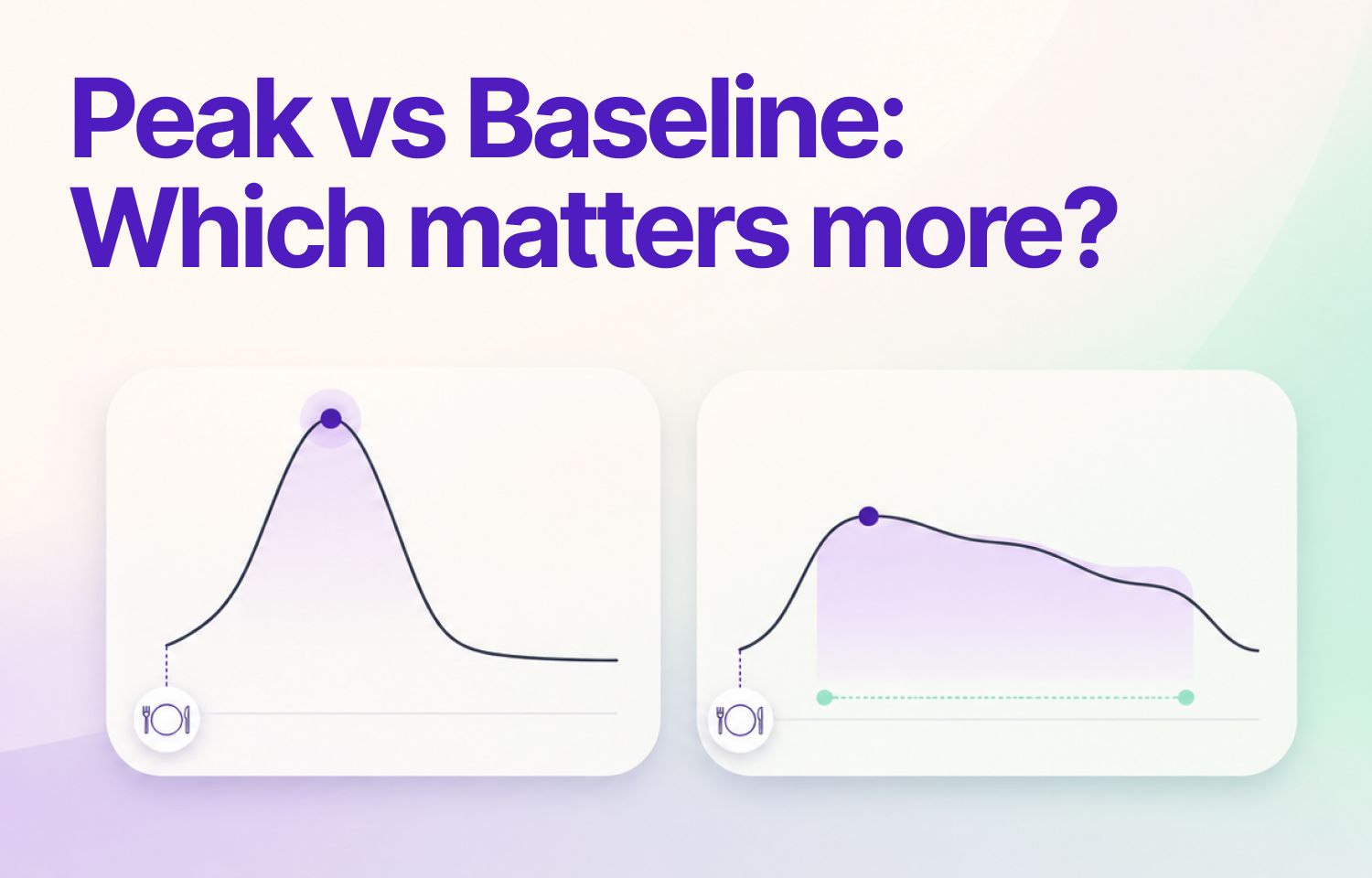
Time-in-Range (TIR) is the percentage of time your glucose stays between 70 and 180 mg/dL. The American Diabetes Association recommends a target of over 70% to reduce long-term complications.
Unlike A1C, which averages months of data into one number, TIR reflects your daily lived experience. Two people can have the same A1C but very different TIR scores, depending on how much their glucose fluctuates throughout the day.
For a deeper look at how TIR compares to other glucose metrics, see our comprehensive guide to glucose metrics.
What Affects Your TIR Most
Three factors influence time-in-range more than anything else: what you eat, how you move, and how your body responds to stress. Each one has research behind it, and each one is something you can adjust.
Diet: Timing and Composition Both Matter
Carbohydrate type, meal timing, and what you pair with carbs all shape your glucose response. Getting familiar with your own patterns is where most of the useful information comes from.
Low-GI Foods Reduce Spikes
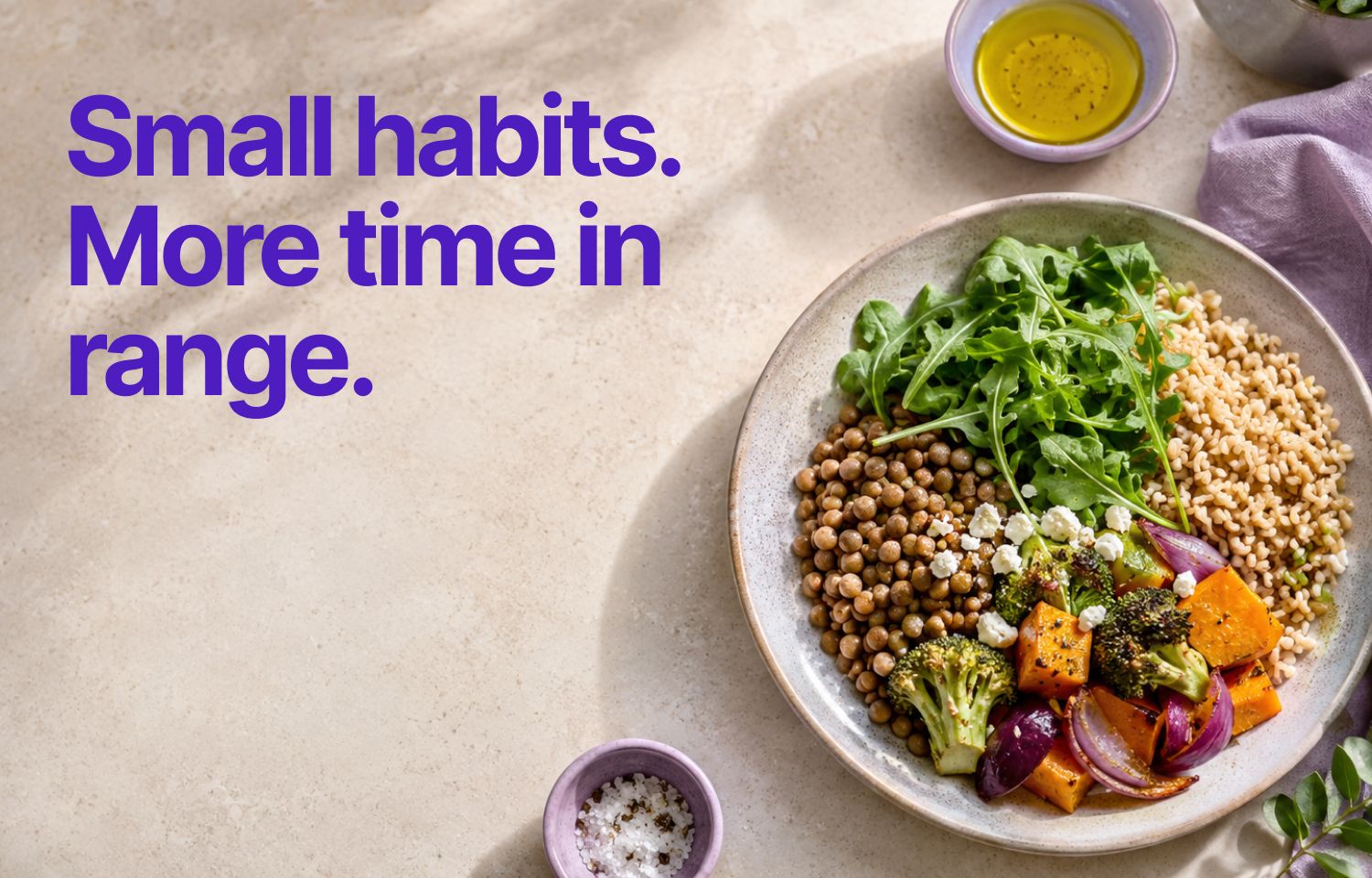
Foods with a low glycemic index (like lentils, steel-cut oats, and non-starchy vegetables) digest more slowly and tend to cause smaller, more gradual glucose rises. Pairing higher-GI foods with protein or fat can slow absorption and reduce the peak.
For example: toast with avocado typically produces a gentler rise than toast alone. Rice with chicken and olive oil will usually spike less sharply than plain rice.
That said, not all low-GI foods behave the same way for everyone. Individual responses vary. Our article on why low-GI foods still spike some people covers this in detail.
Spread Carbs Across the Day
Eating 60 grams of carbs at once will generally spike glucose higher than splitting those same 60 grams across two meals. Smaller, more spread-out carb loads tend to support better TIR, especially for people managing Type 1 or insulin-dependent Type 2 diabetes.
Track Meals Against Your CGM Data
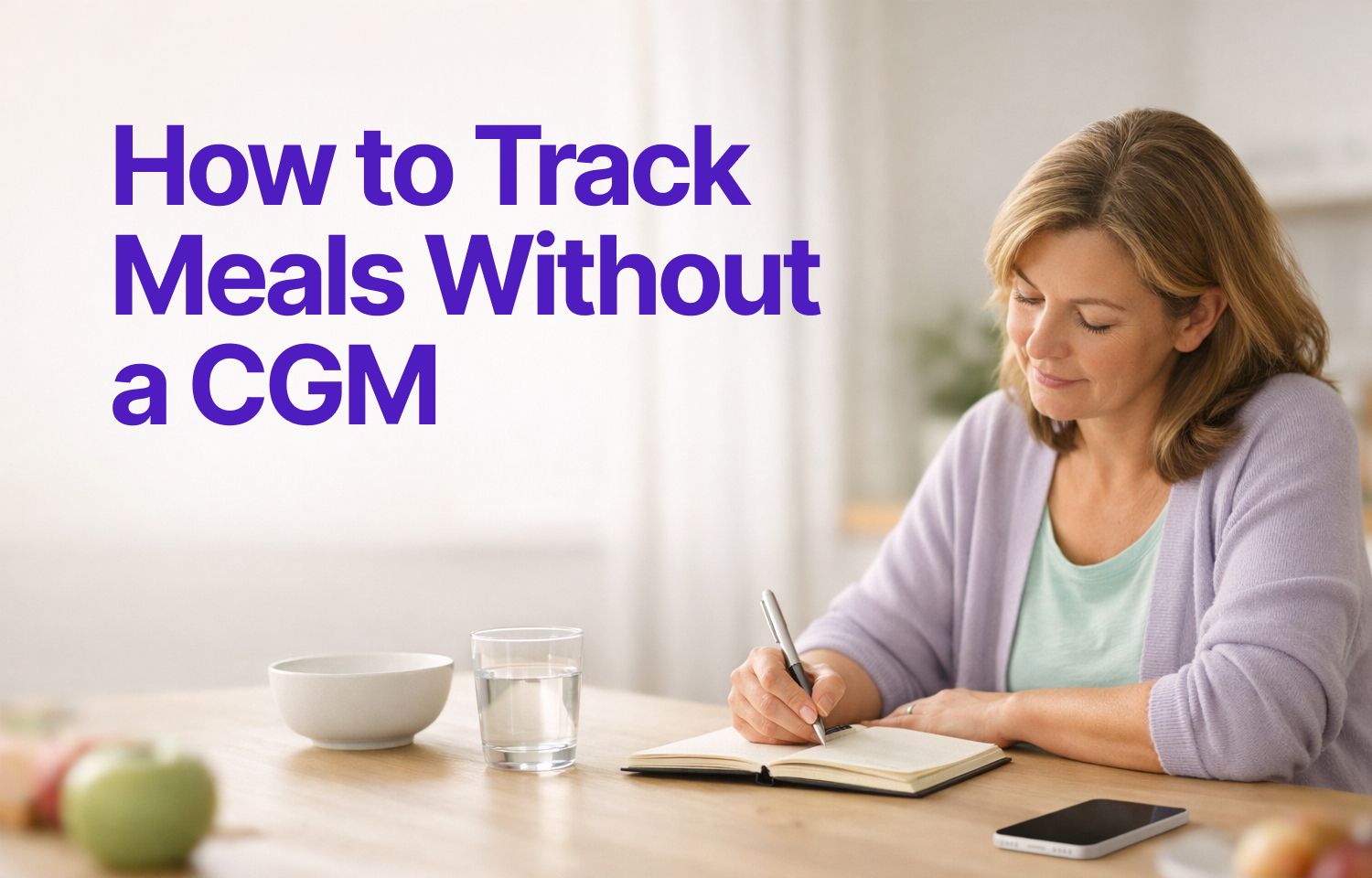
You can't improve what you don't measure. Logging meals with timestamps lets you match food to glucose curves and spot which meals are helping or hurting your TIR.
Physical Activity: Consistency Beats Intensity
Exercise improves insulin sensitivity and helps your body use glucose more efficiently. For TIR, regular moderate activity often works better than occasional intense workouts.
What Works
Walking after meals, even for 10 to 15 minutes, can reduce post-meal glucose rises. Cycling, swimming, and resistance training all improve glucose uptake over time.
Consistency is what drives results. Three 20-minute walks per week will likely improve TIR more than one 90-minute gym session followed by six sedentary days.
Timing Matters
Some people see the biggest benefit from exercising 60 to 90 minutes after eating, when glucose tends to peak. Others prefer morning movement to set the tone for the day. Your CGM data will show you which timing works best for your body.
If you use insulin, talk to your care team about how to plan exercise timing safely, particularly for longer or more intense sessions.
Stress Management: Often Overlooked, Always Relevant
Stress hormones like cortisol can raise blood glucose, even without eating anything. Chronic stress makes glucose harder to predict and can lower your TIR without any change to your diet or activity.
Practical Stress Tools
Mindfulness practices, short breathing exercises, or even a 5-minute walk outside can reduce cortisol spikes. Yoga and progressive muscle relaxation have both been studied in diabetes populations and show benefit.
Small, repeatable habits work. You don't need long sessions.
Using Your CGM to Spot Patterns
Your CGM gives you real-time feedback, but the value comes from looking at trends over days and weeks. Individual spikes are less useful than recurring patterns.
Look for Recurring Events
Do you spike every morning at 8 a.m., even on days you skip breakfast? That might be dawn phenomenon. Do you see lows every Tuesday evening? That could be tied to your weekly workout.
Once you identify the pattern, you can adjust food timing, activity, or meal composition around it.
Focus on Time Blocks
Some people do well in the morning but struggle after dinner. Others have tight control all day but wake up out of range. Breaking your day into segments (morning, afternoon, evening, overnight) helps you target the hours that need the most attention.
For practical strategies focused specifically on post-meal control, check out our guide on improving time-in-range after meals.
Pulling It All Together
Improving time-in-range comes from building small, sustainable changes over time. Not one perfect meal or one great week.
Start with one adjustment: log your meals with timestamps for a week, add a 10-minute post-dinner walk, or try one lower-GI swap at breakfast. Use your CGM data to see what moves the needle. Then build from there.
If you want to make pattern recognition easier and overlay your meals directly on your glucose graph, SNAQ connects with major CGMs to do exactly that. The app also offers Trend Insights to visualize weekly and monthly patterns, AI Photo Analysis to estimate carbs from meal photos, and an AI Coach to help you understand what's happening in your data. Download SNAQ here.
References
- American Diabetes Association. Standards of Medical Care in Diabetes—2023. Diabetes Care, 2023.
- Battelino T, et al. Clinical Targets for Continuous Glucose Monitoring Data Interpretation: Recommendations From the International Consensus. Diabetes Care, 2019.
- Evert AB, et al. Nutrition Therapy Recommendations for the Management of Adults With Diabetes. Diabetes Care, 2019.
- Colberg SR, et al. Physical Activity/Exercise and Diabetes: A Position Statement of the American Diabetes Association. Diabetes Care, 2016.
- Fisher L, et al. Stress, Coping, and Health Behavior Change in Diabetes: Findings From The Power Dial Study. Diabetes Care, 2008.